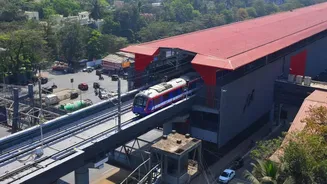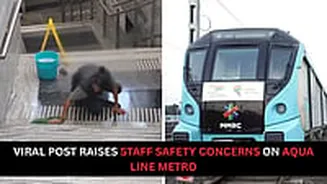






Mumbai: A recent social media post has drawn attention to worker safety practices on the city’s ambitious Metro Line 3 (Aqua Line), prompting a wider conversation around on-ground conditions for frontline
staff.
The post, shared on X (formerly Twitter), highlighted the contrast between the project’s scale and investment, estimated at ₹37,000 crore, and basic safety measures for workers. The user questioned why some staff appeared to be working without essential protective gear such as gloves and personal protective equipment (PPE), urging authorities to provide adequate kits.
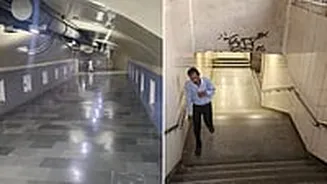
The discussion gained further traction alongside a circulating video that shows a woman engaged in cleaning work at a metro station, without visible protective gear while mopping the floor.
Such instances, even if isolated, bring into focus the importance of consistent safety standards across all levels of operations, particularly for personnel involved in maintenance and sanitation roles. Large-scale infrastructure projects like Metro Line 3 are often viewed as benchmarks of modern urban development, making worker welfare an equally significant aspect of their functioning.
Mumbai Metro Line 3 Crosses 4 Crore Ridership Mark
This social media post comes at a time when the Mumbai Metro Rail Corporation announced that its fully underground Metro Line 3 has crossed a major milestone of 4 crore (40 million) passengers in April 2026, reflecting its growing acceptance among commuters.
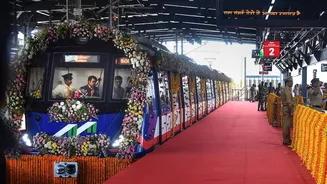
The 33.5-km-long corridor, Mumbai’s first fully underground metro line, has witnessed a steep growth trajectory since its phased rollout. Following the launch of Phase 1 between Aarey and Bandra-Kurla Complex (BKC) in late 2024, the line reached its first 1 crore riders in August 2025.
Subsequent expansions, including the extension to Acharya Atre Chowk and the full commissioning up to Cuffe Parade in October 2025, significantly boosted ridership numbers, with more Mumbaikars opting for the metro over congested roads and overcrowded suburban train networks.
According to official data, the corridor’s ridership accelerated sharply after the initial phase, adding its second and third crore passengers in quick succession and eventually reaching the 4 crore milestone within months. This growth has largely been driven by its strong connectivity, linking major commercial centres like BKC and SEEPZ with key residential and business districts in South Mumbai.
Despite the steady rise in ridership and the metro’s positioning as a world-class urban transport system, the concerns highlighted through the recent social media post raise important questions about on-ground worker safety practices. As the network continues to expand and serve millions, ensuring adequate safety measures for all staff remains an essential aspect of its overall functioning.
To get details on exclusive and budget-friendly property deals in Mumbai & surrounding regions, do visit: https://budgetproperties.in/