








As the sun dips below the horizon, painting the sky in magical hues—most travelers start back to their accommodations at the end of a day's adventures. But for a growing number of nature enthusiasts and
experience-seekers, it however, is the beginning. Across farms, forests, deserts, and oceans, night experiences reinstate the idea of slowing down, sharpening the senses and seeing the world in a different way.
Noctourism—led as curated travel experiences after sundown, has emerged as one of the most captivating travel trends, globally. From cold deserts to deep forests, on islands and even underwater, travelers are discovering the night’s own magic chasing bioluminescent coasts, star-studded skies, the Aurora borealis, or creatures that emerge only when the world grows dark and quiet. Moving beyond late-night parties or illuminated monuments, noctourism is allowing purposeful travelers to connect with nature's rhythms in the dark and witnessing biodiversity that daylight never reveals.
Hidden world
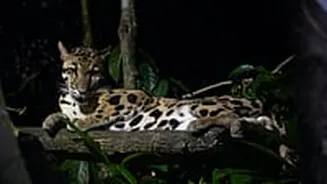
At KAAV Safari Lodge near Nagarhole Tiger Reserve in Karnataka, guests spending days hoping for tiger sightings gather with flashlights as dusk settles. But the evening's star performers are the forest's most overlooked residents—moths with delicate patterned wings, industrious beetles, architectural spiders weaving silk under moonlight, and frogs announcing the night in chorus. Called ‘Tiny Safari’, such activities delicately forces visitors to shift a perspective, and challenge conventional safari expectations, creating truly memorable moments.
Manav Khanduja, Co-Founder of Pugdundee Safaris, has witnessed this transformation firsthand. " night safaris and guided night walks allow guests to explore the wilderness for owls, nightjars, foxes, civets, and amphibians, he explains. the experience is as much about the thrill of being in the jungle at night as it is about gaining a deeper appreciation of its nocturnal life.< p fetchpriority="low" loading="lazy">
One of their guests spotted a rare flying squirrel at the Kanha Earth Lodge entrance post an evening safari, which became the sighting of the day (or night) as the entire staff and guests arrived to see it for the next hour in the darkness.
Method to crafting awareness
In Sri Lanka, Jetwing Vil Uyana celebrates noctourism with their Loris Trail. When the elusive Grey Slender Loris was discovered on the property in 2010, the hotel made a remarkable decision, to halt planned development and instead create a dedicated conservation site. Today, guests equipped with red-light headlamps, which allow observation without startling wildlife, embark on hour-long walks through three acres of protected habitat, with an impressive 90% sighting rate of these rare primates.
Nadhun Punchihewa, General Manager of Jetwing Vil Uyana, explains the broader nocturnal ecosystem. " as dusk falls, the landscape transforms, diurnal birds quieten, and sounds begin to echo through the forest. guided by red lamps, guests may encounter palm civets, fruit bats, and with a bit of luck, even fishing cats or rusty-spotted cats.< p fetchpriority="low" loading="lazy">
The diversity of night experiences extends beyond wildlife. At Taj Kumarakom, bamboo rafting on private lagoons reveals the backwaters' nocturnal personality. Mayank Mittal, the resort's General Manager, notes how the experience shifts perception, saying, "guests can hear the subtle sounds of wildlife and feel the gentle movements of the water, fostering a deep connection with the environment."
Safety meets spectacle
The intimacy of nocturnal exploration naturally raises questions about safety—for guests and for the wildlife. At the Singapore Night Safari for instance, nocturnal animals emerge, offering a rare chance to observe exotic creatures from unique habitats at their most active hours, but behind glass walls and within enclosures.
Thus, responsible operators pay attention to comprehensive protocols that prioritize both. Tiny safari is deliberately confined to the lodge's organically maintained grounds. "We want people to feel a sense of wonder, not fear," says Rajesh Shankar, General Manager at Kaav. Trained naturalists equipped with appropriate lighting guide guests at a comfortable pace, creating security through familiarity, rather than barriers.
Khanduja emphasizes that in India, night safaris on vehicles operate exclusively in buffer zones of tiger reserves or in multi-use areas already experiencing local activity, but never in core areas of the parks. " to ensure safety and minimal disturbance, all excursions are led by trained local guides, follow strict timing restrictions and have limited vehicle entry, he explains. clear guidelines, use of appropriate equipment, and a strong code of conduct are maintained so that the experience is not only safe for guests but also respectful of the wildlife.< p fetchpriority="low" loading="lazy">
Pre-tour briefings are essential for night adventures. Guests receive orientation to set their expectations from the activity, understand behavioural guidelines, and discuss practical requirements. Flash photography is strictly prohibited. Group activity sizes should be limited to be manageable, ensuring better supervision and reduced environmental impact. Red-light headlamps minimize disturbance to light-sensitive species while maintaining visibility.
Punchihewa details their emergency preparedness saying, "naturalists are trained in basic first aid and carry essential medical supplies during each tour, though incidents are rare”. At Taj Kumarakom, the shallow private lagoon and stable rafts provide inherent safety, supplemented by life jackets, trained associates accompanying each journey, and pre-boarding briefings.
Beyond entertainment
Perhaps noctourism's greatest impact lies in what they inspire afterward. These encounters are proving to be powerful educational tools, transforming how we understand ecosystems and our role in protecting them.
At Kaav, guests discover how insects recycle nutrients, enrich soil, and enable towering trees to grow. "People come hoping to meet the tiger," Shankar says with a smile, “but many leave remembering the fireflies, or the spider."
Khanduja sees night experiences as conservation catalysts. " they provide a unique window into a hidden world, sparking curiosity and wonder”, he explains. such encounters are powerful tools for education, “helping understand that ecosystems are fully alive and dynamic well beyond daylight”, he adds.< p fetchpriority="low" loading="lazy">
The economic dimension strengthens conservation impact. The Loris Trail at Jetwing in Sri Lanka is complimentary for in-house guests, while fees from external visitors supports the Loris Conservation Fund. This fund has established the Community Wildlife Education Centre and Library at Rangirigama Monastery as the area's first, providing local children access to environmental education resources.
Starlight and beyond
Pure astronomical experiences are the core of night travel. At Bagh Villas in Kanha, Celestron NexStar telescopes transform planet-watching into storytelling. Another, slightly bigger Celestron telescope sits on a tower in the Sillari zone celebrating Pench national park’s ‘Dark Sky Reserve’ status, combining conservation with cosmic wonder. Sangam Farms in Bhilwara enables stargazing by reducing light pollution next to the highway, and providing high-resolution equipment allowing guests to capture lunar images. They also host ‘Cinema Under The Stars’, where films are projected outdoors with plush seating, warm blankets, and the hush of open farmlands.
In the Thar desert, Relais & Chateaux Mihir Garh stages its evocative Shikar Dinner under starlit skies. Guests arrive by camel or decorated carts, guided by flickering lamps to a campfire glowing against the cold desert night. The ‘Khad’ experience involves slow cooked meat in underground clay pots—unfolding under the stars, with Kaalbelia music, chaar pai seating, and distant calls of jackals. A setting reminiscent of times gone by.