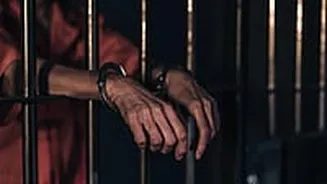









We speak often of liberty, fairness, and constitutional pride, yet our prisons tell a more troubling story. The country’s prisons hold about 5.30 lakh inmates across more than 1,300 facilities, and roughly
three-fourths of them are undertrials. The occupancy in prisons hovers around 121 per cent, and in some states the overcrowding is so severe that jails operate at nearly twice their sanctioned strength.
It reveals a reality in which the majority of those behind bars are not convicts but citizens waiting for the state to decide whether it believes them to be guilty at all.
Leaders across institutions speak earnestly of protecting the vulnerable, of compassion, of inclusion. Yet thousands remain in custody without the dignity of a timely hearing. If the state truly placed its citizens at the centre of governance, it would not allow liberty to be trapped in procedural delay. Public sermons on a just society cannot reconcile with the grinding indifference that lets so many lives fester in uncertainty.
And the damage does not end with the person detained. Children grow up with the memory of a parent taken away, carrying questions they cannot resolve and anxieties they cannot name. Families slide into debt, siblings abandon studies, and entire households recalibrate their lives around an absence the state will never acknowledge. The punishment radiates outward until it reshapes the futures of those who were never part of the alleged offence.
India takes pride in describing itself as a nation anchored in dignity and equality. Yet the everyday reality of undertrial incarceration exposes an uncomfortable hierarchy. The principle of equality before the law becomes fragile when liberty has no voice.
There is also an economic absurdity hidden beneath this crisis. The state spends public money to confine people it has not yet found guilty, diverting scarce resources into sustaining overcrowded prisons instead of strengthening courts, investigations, or legal aid. This is a misallocation that weakens the state twice over. It pays to restrict liberty while starving the very institutions that could restore it.
We also pay a price that reaches far beyond individual suffering. India’s hopes for economic growth and global influence rest on the energy and potential of its people. Yet we allow thousands of young citizens to lose their most productive years in overcrowded cells while their cases stagnate. These are years that could have supported families, contributed to the economy, and strengthened communities. A nation that wastes its human capital in this manner undermines its own aspirations.
The conditions inside prisons deepen the harm. Facilities stretched far beyond capacity cannot safeguard mental or physical well-being. Privacy diminishes. Medical care struggles to keep pace. The psychological burden of uncertainty corrodes resilience. Instances of self-harm and emotional collapse do not reflect guilt; they reflect despair. They reflect lives placed on hold not by wrongdoing but by the slow machinery of the state.
The roots of this crisis are structural and longstanding. Courts operate with chronic shortages. Investigations proceed without the resources required for efficiency. Procedural adjournments accumulate without accountability. Bail, intended to shield the innocent from unnecessary confinement, often becomes inaccessible to those who need it most. We have normalised delay until it resembles an administrative habit rather than an institutional failure.
When individuals remain in custody for long stretches before their cases are heard, the state edges into the role of punisher. Delay has become a surrogate for judgement. People lose years not because a court has evaluated evidence but because institutions fail to function. This is a profound breach of the state’s responsibility. A democracy cannot delegate punishment to inertia.
What makes this even harder to accept is that the suffering is preventable. These are not tragedies imposed by fate but outcomes shaped by institutional design and political choices. The system moves swiftly when it wishes to control, yet moves slowly when it is required to protect.
We have a legal system that has made justice distant, inscrutable and indifferent. A society that seeks cohesion and confidence cannot look away from the damage inflicted at this scale.
Yet the crisis is not beyond remedy. States that have reviewed long detentions and modernised case processing have shown that meaningful change is possible. India has demonstrated its ability to transform complex public systems through ambition, design, and political will. The justice system deserves the same clarity of purpose. With strengthened judicial capacity, improved investigation, transparent bail practices, and regular review of detentions, the country can begin to restore the balance between individual freedom and state authority.
At its heart this is a test of the Republic’s moral resolve. A constitutional democracy cannot deprive citizens of liberty without timely adjudication. The right to due process is the basis of our Republic. It is the very foundation of the relationship between the state and the citizen. When we allow detention to stretch on without resolution, we weaken the social contract and diminish the promise of our own Constitution.
Perhaps the most dangerous consequence of all is the quiet erosion of faith in the Republic itself. When citizens see that liberty can be taken swiftly but restored slowly, they begin to doubt whether the system ultimately serves them at all.
Freedom delayed is not only justice denied; it is dignity denied and potential extinguished. Undertrial incarceration, as practised today, stands in opposition to the ideals India claims as its identity. Reform is not a matter for another day; it is an obligation that cannot be postponed without consequence. A republic confident in its values must ensure that no citizen loses years to the slow machinery of delay before the law has even spoken.
Dr Srinath Sridharan is a policy researcher and corporate adviser. X: @ssmumbai