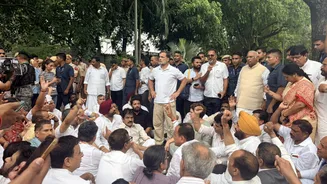








As thousands of students gathered on the streets of Delhi demanding justice over the alleged NEET-UG paper leak, one face quietly emerged as a powerful symbol of the movement. Away from the slogans and speeches,
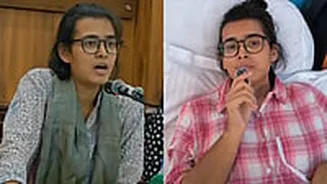
29-year-old JNU scholar Neha Bora drew nationwide attention through her 23-day hunger strike that highlighted growing concerns over loopholes in India's examination system.
Hunger strike that grabbed national attention
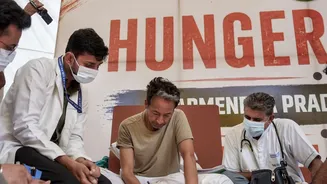
Neha was among three leaders of the All India Students' Association (AISA), alongside Manish Kumar and Aameen Amitoj, who joined an indefinite hunger strike with education reformer and activist Sonam Wangchuk at Jantar Mantar in Delhi.
The protest called for the resignation of Union Education Minister Dharmendra Pradhan following allegations surrounding medical entrance examination paper leaks.
After 23 days without food, the three students ended their fast on July 20, AISA announced.
Health took a serious toll
The prolonged fast came at a significant personal cost. According to AISA, each of the three protesters lost more than 12 per cent of their body weight during the hunger strike. Their falling blood sugar levels also reportedly began affecting vital organs.
Neha, who started the protest weighing 66 kilograms, is said to have lost around 7.5 kilograms. Doctors later advised her to immediately end the fast and seek medical treatment after her blood sugar dropped to worrying levels.
Who is Neha Bora?
Neha Bora is a 29-year-old PhD scholar at Jawaharlal Nehru University (JNU) and currently serves as the National President of AISA.
Originally from Uttarakhand, Neha completed her undergraduate studies at Delhi University before pursuing her master's degree at Ambedkar University. As per media reports, she is now researching at JNU's School of Arts and Aesthetics, where she also became actively involved in student politics.
More than a student leader
Apart from her academic journey, Neha is also known as a theatre artist and activist. Over the years, she has spoken publicly on several social and political issues, including the privatisation of education, mob lynching, justice for Bilkis Bano and the humanitarian crisis in Gaza.