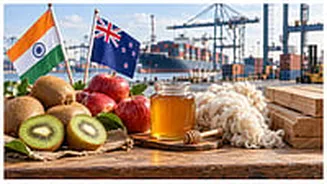








Mumbai: The India-New Zealand Free Trade Agreement will come into force on October 20, 2026, opening the door to lower import duties on a range of goods shipped from New Zealand.
The pact was signed on
April 27 by Commerce and Industry Minister Piyush Goyal and New Zealand Trade and Investment Minister Todd McClay. An FTA reduces or removes trade barriers, including customs duties, between participating countries.
Goyal said Dussehra, or Vijay Dashami, had been chosen for the agreement’s entry into force. However, the eventual benefit for Indian shoppers will depend on whether importers and retailers pass tariff savings through to prices.
Tariff relief across products
India has offered concessions on 70 per cent of its tariff lines covering New Zealand goods, while keeping the remaining 30 per cent outside the agreement.
Duties on wood, wool, sheep meat, raw hides and leather will be eliminated immediately. Tariffs on petroleum oils, vegetable oils, malt extract, and selected electrical and mechanical machinery will decline gradually over three, five, seven or ten years.
Pharmaceuticals, polymers, aluminium, iron and steel products will receive duty reductions, although tariffs will not disappear completely.
Cheaper kiwi, apples and honey?
Selected food products will receive lower duties only within prescribed import quotas and subject to minimum prices.
Kiwi fruit currently attracts 33 per cent duty. In the first year, up to 6,250 tonnes can enter duty-free, increasing to 15,000 tonnes by the sixth year. The concession applies between April 1 and October 15, with a minimum import price of $1.80 per kg.
Apples presently face 50 per cent duty. A quota of 32,500 tonnes in year one will rise to 45,000 tonnes by year six. Eligible shipments will attract 25 per cent duty between April 1 and August 31, subject to a minimum price of $1.25 per kg. Imports exceeding the quota retain the prevailing tariff.
Manuka honey, currently taxed at 66 per cent, will receive a phased 75 per cent tariff reduction over five years for up to 200 tonnes annually, with a minimum price of $20 per kg. Other eligible imports could face 16.5 per cent duty from year five, subject to a $30 minimum price.
Albumins, including milk albumin, will attract 11 per cent duty within a quota rising from 1,000 tonnes to 3,000 tonnes by year five.
Key exclusions remain
Milk, cream, whey, yoghurt, cheese and butter remain excluded. Onions, chana, peas, corn, almonds, sugar, artificial honey, vegetable fats and oils, and arms and ammunition are also protected. These safeguards aim to protect sensitive farming and manufacturing sectors. Consequently, price reductions will vary widely and, for several products, emerge only gradually.