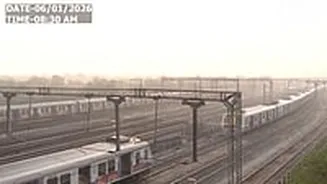









Mumbai: Mumbai residents were greeted on Tuesday by what seemed like a picture-perfect winter morning, marked by clear blue skies, gentle winds and a noticeable drop in temperatures. The early hours offered
a brief sense of relief and freshness, giving the impression of a crisp and comfortable day ahead. However, the calm did not last long, as a thick layer of smog soon settled over the city, sharply reducing visibility and once again exposing Mumbai’s escalating air pollution crisis.
Despite optimistic weather predictions from the India Meteorological Department (IMD), air quality quickly emerged as the city’s biggest concern. The IMD had forecast a bright and pleasant day, with temperatures expected to range between 18 degrees Celsius and 30 degrees Celsius.
Overall AQI Slips To Severe Category
Data from air quality monitoring platform AQI.in revealed that Mumbai’s overall Air Quality Index (AQI) touched 319 during the early morning hours, placing it squarely in the ‘severe’ category. Vulnerable sections of the population, including children, the elderly and individuals suffering from respiratory or heart-related conditions, were advised to limit outdoor exposure.
The primary contributors to the persistent pollution continue to be dust and fine particulate matter released from the city’s extensive construction activity. Major infrastructure projects such as metro rail lines, flyovers, coastal road extensions and road-widening works are underway across Mumbai. Alongside these, rapid private real estate development has further added to the pollutant load. Vehicular emissions, especially during peak traffic hours, have compounded the problem, making air quality management increasingly challenging.
Several areas across Mumbai emerged as major pollution hotspots. Chembur recorded a dangerously high AQI of 398, categorised as ‘severe’ and posing serious health risks even for otherwise healthy individuals. Bandra followed with an AQI of 368, while the Wadala Truck Terminal stood at 358. Jogeshwari West and Santacruz both reported AQI levels of 346, also within the severe range.
While suburban regions showed relatively lower pollution levels, they were far from safe. Borivali East and Kandivali East recorded AQI readings of 227 and 230 respectively, falling under the ‘unhealthy’ category. Borivali West, Govandi and Goregaon East also reported poor air quality, highlighting the widespread nature of Mumbai’s pollution problem.
As per standard air quality classifications, AQI levels between 0 and 50 are considered ‘good’, 51 to 100 ‘moderate’, 101 to 200 ‘poor’, 201 to 300 ‘unhealthy’, and levels above 300 fall under the ‘severe’ or ‘hazardous’ category.
To get details on exclusive and budget-friendly property deals in Mumbai & surrounding regions, do visit: https://budgetproperties.in/