







Mumbai: Despite the legal framework, the pagdi system remains a complicated and unresolved issue. The state government has now decided to intervene in what it describes as an ambitious effort, its first
in decades, to break the deadlock. During the recent winter session of the Maharashtra legislative assembly, Deputy Chief Minister Eknath Shinde, who holds the Urban Development portfolio, announced a move towards a “pagdi-free Mumbai” through redevelopment of pagdi buildings.
Announcement Leads To More Confusion
However, the announcement has created more confusion than clarity. Tenants say they are unaware of the government’s intended steps, as no detailed policy or roadmap has been released. Pagdi disputes have lingered for decades, with unique challenges in each case. Around 28,000 court cases related to pagdi properties are pending, mostly eviction suits by landlords, leading tenants to suspect the government is fasttracking evictions.
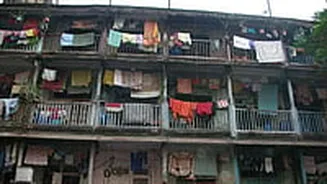
Lakhs of people live in old, dilapidated pagdi buildings across Mumbai, facing unresolved disputes over ownership, repairs, and redevelopment for over 60 years. Thousands of such buildings house generations of families in uncertain and unsafe conditions. Vidula Warawdekar, convener of the Pagdi Tenants Action Committee, said living conditions in pagdi buildings are worse than in slums.
“Landlords cut water supply and do not allow even basic renovations. Every time a tenant sells the house, the owner takes 33 per cent to 50 per cent of the amount. Police often refuse to register FIRs, MHADA is not repairing the buildings, and the BMC says it is not under its jurisdiction. Not a single authority helps us. The government must take the initiative and resolve this long-pending issue,” she said.
Tenants allege developers, bureaucrats, and politicians are involved in profiting from these properties, claiming a conspiracy to transfer prime land to builders. They advocate government-led redevelopment, granting ownership flats to both landlords and tenants while compensating builders. Senior architect Chandrashekhar Prabhu criticised the approach, stating information on cessed buildings redevelopment is inadequate and misleading.
“In the name of redevelopment, tenants’ rights have been trampled upon, and MHADA has lost billions of rupees due to collusion between political leaders, builders and officials. It is crucial to expose the reality behind the government’s claims,” he said.
The sudden announcement has raised suspicions, with activists viewing it as a pre-election tactic ahead of BMC elections. RTI activist Jitendra Ghadge said, “The ruling government is fully aware of the political and social impact of the Ladki Bahin scheme, which directly empowered women at an individual level. In the same spirit, abolishing the Pagdi system in Mumbai would directly benefit millions of families by granting them ownership of their homes. Such a move would effectively function as a largescale direct benefit scheme.
It is therefore Eknath Shinde announced to make Mumbai the Pagdi-free free in the assembly”. From the landlords’ side, Ashok Gupta, a member of the property owners’ association and vice-president of the Marine Drive Citizens’ Association, said, “Most buildings on Marine Drive follow the pagdi system. However, Marine Drive falls under the heritage precinct, and therefore, these buildings cannot be redeveloped. Additionally, there are height restrictions on these buildings due to their heritage status.
If we talk about non-heritage pagdi buildings, tenants will get the same area in the redeveloped buildings, so they do not have much to worry about. However, landlords have to demolish the existing structures, construct new buildings, and hand them over to the tenants, which seems difficult. The cost of rehousing and construction will have to be borne by the landlords."
An anonymous landlord highlighted legal and financial hurdles: unclear titles, mortgaged properties, pending cases, and lack of coordination among authorities. “When, how, and who will make Mumbai pagdi-free remains a question,” he added. In expensive Mumbai, the pagdi system once offered affordable housing as semiownership, enduring for generations. As the city grapples with ageing infrastructure and safety concerns, hopes rest on a balanced policy protecting tenants’ rights, addressing landlords’ concerns, and making housing safer and sustainable.
To get details on exclusive and budget-friendly property deals in Mumbai & surrounding regions, do visit: https://budgetproperties.in/