








A high-stakes military strike by the United States Navy off the coast of Oman has ignited a major diplomatic standoff between Washington and New Delhi. The incident involved a commercial oil tanker staffed
by Indian seafarers resulting in three confirmed deaths. As India registers a fierce official protest, there may be a lingering question if this deadly attack on a third-party merchant ship amount to an act of war?
To understand the situation, we have to look closely at what happened in the waters of West Asia, why the US opened fire and how maritime law defines military actions against civilian vessels.
What happened off the coast of Oman?
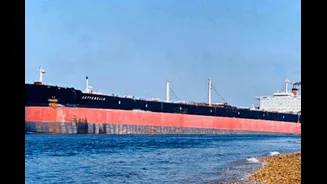
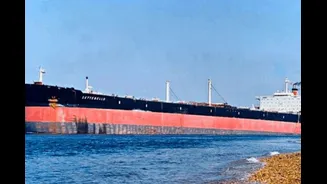
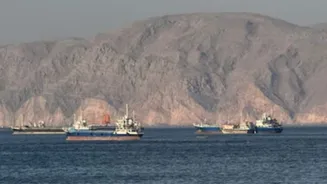
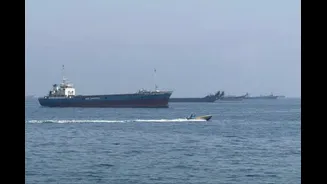
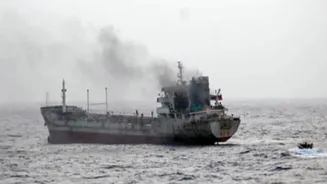
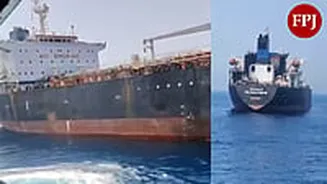
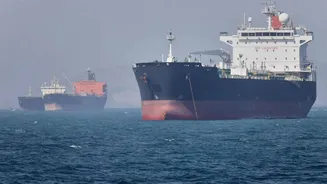
The incident took place in the volatile waters near the Strait of Hormuz, a critical choke point for global oil transportation. The Palau-flagged merchant tanker, MT Settebello, which was carrying an all-Indian crew of 24 members, was intercepted by American naval forces.
According to a report in The Indian Express, deck cadet Aditya Sharma had alerted his family that the ship received two explicit warnings from the US Navy before the encounter turned violent. US forces subsequently launched a targeted strike hitting the vessel's engine room.
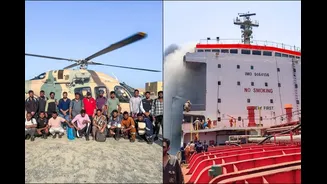
While emergency teams successfully rescued 21 crew members, three Indian seafarers—deck cadet Aditya Sharma, engine fitter Shivanand Chaurasiya and chief engineer Patnala Suresh—went missing and were later confirmed dead after two bodies were recovered from the wreckage.
Why did the US Navy target a civilian oil tanker?
According to statements issued by the United States Military's Central Command (CENTCOM), the MT Settebello was targeted because it was allegedly attempting to bypass a naval blockade. Washington has heavily restricted maritime traffic heading to and from Iranian ports. CENTCOM stated that the ship was actively transporting Iranian oil in violation of these sanctions.
The American military maintained that firing directly into the engine room was a calculated tactical manoeuver designed to disable the vessel's propulsion and halt its journey, rather than to destroy the ship entirely or cause heavy casualties.
How India responded to the strike
The Indian government reacted swiftly and with sharp condemnation. External affairs ministry spokesperson Randhir Jaiswal on Thursday voiced deep anxieties regarding a series of recent maritime incidents affecting Indian nationals in West Asia, connecting the strike directly to broader, ongoing regional conflicts.
India on Wednesday officially summoned the US Chargé d’Affaires, Jason Meeks, in New Delhi to lodge a formal, high-level diplomatic protest known as a démarche.
Union Minister for Ports, Shipping and Waterways Sarbananda Sonowal labelled the deaths a profound loss to the global maritime community and directed state departments to ensure the immediate repatriation of the 21 survivors alongside the swift return of the deceased sailors' remains.
Adding to the tension, a separate Guinea-Bissau-flagged vessel, the MT Jalveer, which was also carrying 20 Indian sailors, came under a separate attack near Oman's Shinas port just a day later, highlighting the extreme risks currently facing merchant sailors in the area.
Does this attack legally constitute an act of war?
Whether an attack on a neutral commercial vessel qualifies as an "act of war" depends heavily on which legal lens are being used.
From the US perspective, the operation falls under the laws of an enforced naval blockade in international waters. Under traditional laws of naval warfare, if a merchant ship belonging to a neutral country deliberately attempts to breach a lawfully established blockade, it forfeits its protected civilian status.
In the eyes of US military lawyers, the vessel becomes a legitimate military target, meaning an interception is viewed as a standard enforcement action rather than an unlawful act of aggression or war against the sailors' home country.
However, international legal frameworks present a more contested view. The San Remo Manual on International Law Applicable to Armed Conflicts at Sea says a neutral commercial vessel can only be targeted under strict conditions. it must persistently refuse orders to halt, actively resist a physical visit and search by military personnel or clearly integrate itself into the military operations of an enemy nation.
If the MT Settebello did not meet these specific thresholds of active resistance or military integration, using lethal force against it remains a highly controversial violation of international norms.
Did the strike violate the Geneva Conventions?
The primary legal structures designed to protect non-combatants during maritime warfare are the Geneva Conventions of 1949—specifically the Second Geneva Convention—alongside Customary International Humanitarian Law.
When it comes to targeting civilians, the law states that merchant sailors retain civilian protections unless they choose to participate in hostilities. However, when a vessel enters a known conflict zone and attempts to slip past a military blockade, international law shifts the burden of safety. A blockading military is permitted to use force to stop a non-compliant ship, provided the response is proportional.
The potential for a direct violation of the Geneva Conventions hinges heavily on what happens immediately after the weapons are fired. Article 18 of the Second Geneva Convention explicitly mandates that all parties to a maritime conflict must take all possible measures, without any delay, to search for, collect and protect the shipwrecked, wounded and missing.
If evidence reveals that military forces deliberately neglected the survivors, failed to render aid or purposely delayed alerting search-and-rescue teams while sailors were missing at sea, it would constitute a clear violation of international humanitarian law.