






The introduction of Merchant Discount Rate (MDR) on certain Unified Payments Interface (UPI) transactions is unlikely to drive consumers back towards cash, Reserve Bank of India Deputy Governor S C Murmu
said.
He added that the new framework would help the digital payments ecosystem recover operational costs while supporting future growth.
Speaking at an event organised by the Bengal Chamber of Commerce and Industry in Kolkata, Murmu dismissed concerns that MDR could lead to increased dependence on cash.
“I don't think this will have any impact, unlike some voices about whether cash will go up because of this MDR on UPI,” he said.
MDR aimed at strengthening UPI ecosystem
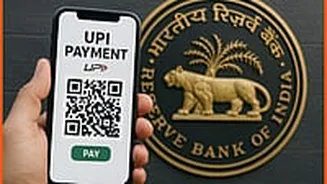
The National Payments Corporation of India (NPCI), which manages UPI, has announced that a 0.4% MDR will apply to person-to-merchant transactions above ₹2,000 from October 15. The fee will be capped at ₹300 for transactions of ₹75,000 and above.
Transactions between individuals, including transfers among family and friends, will remain free. Merchant payments up to ₹2,000 will also continue without MDR.
While the charge will be paid by merchants, concerns have been raised that businesses may pass the cost on to customers, potentially affecting payment preferences. However, the RBI said a fair distribution of MDR across ecosystem participants would support investment in technology, infrastructure and payment networks.
“It will help UPI in continuing to scale, innovate and serve consumers and businesses across the country. A fair and appropriate distribution of MDR across ecosystem participants will support continued investment in technology, infrastructure and acceptance networks,” the RBI said.
Cash continues as store of value despite digital growth
Murmu also highlighted the continued relevance of cash despite rapid digital payment adoption. He said cash usage remains significant among rural communities, small businesses, older populations and low-income groups.
According to RBI data, currency in circulation stood at ₹42.86 trillion at the end of August 2026, rising from ₹41.66 trillion in FY26.
At the same time, UPI transactions continued to expand, with transaction volume growing 22.5% year-on-year in August. Murmu said the coexistence of rising digital payments and cash reflects the different roles played by cash, including its function as a store of value.