








Israel and Iran exchanged fire on Monday, marking a serious escalation in hostilities, while Yemen's Houthi rebels launched a missile at Israel, threatening
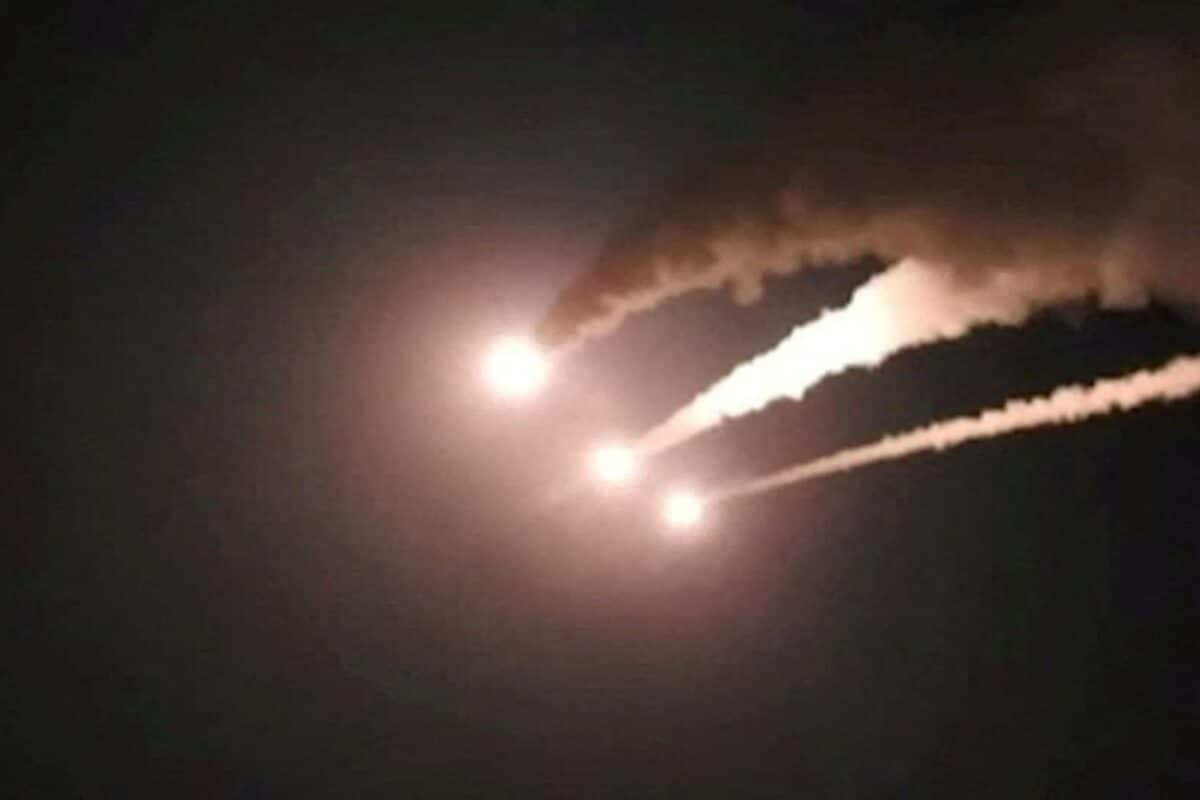
to disrupt shipping in the Red Sea. This confrontation is the most severe since a ceasefire was established two months ago, raising concerns about a potential return to widespread conflict in the Middle East. Israeli officials reported that three waves of Iranian missiles targeted the nation, with explosions audible in central Israel as air defense systems attempted to intercept the incoming fire. This Iranian offensive followed Israeli airstrikes on central and western Iran, which were carried out in retaliation for missile launches from Tehran, representing the most significant crossfire since the ceasefire on April 8.
In the wake of these escalations, Damascus International Airport temporarily closed its airspace until 11 p.m. (2200 GMT) on Monday, as reported by Syria's General Authority of Civil Aviation, due to the ongoing exchange of fire between Israel and Iran. Additionally, air defense systems around Tehran and other cities activated just before noon, with ongoing reports of attacks contributing to the rising tensions.
Oil prices reacted sharply to the military actions, with Brent crude increasing by $4.40 to $97.49 a barrel and U.S. crude rising by $3.95 to $94.49 a barrel. The hostilities complicate efforts to finalize a tentative ceasefire deal between the U.S. and Iran, which was reached last week.
Israeli military sources stated that their strikes specifically targeted truck-mounted surface-to-air missile launchers in Iran, which had been deployed to enhance Iran's military capabilities that had previously been diminished during the ongoing conflict.
Amid these developments, an Iranian official asserted that the United States would bear responsibility for any escalation resulting from Israel's actions. Iranian Foreign Ministry spokesman Esmail Baghaei emphasized that the Israeli regime would not act without U.S. coordination, indicating the complex interplay of regional and international politics.
Reports from Israeli rescue services indicated that there were no immediate injuries from the missile attacks, although they were actively searching for debris from the interceptions. As the situation unfolded, the Israeli military urged civilians to take shelter, with similar alerts issued in neighboring Jordan.
The Houthi rebels, aligned with Iran, claimed responsibility for a missile attack on Israel and threatened to target Israel-affiliated vessels in the Red Sea. Brig. Gen. Yahya Saree's statement was broadcast on the Houthis’ al-Masirah satellite channel, marking yet another escalation as the nominal ceasefire in the Iran conflict faces increasing challenges from crossfire incidents.
Iran claimed responsibility for the missile attacks, stating that they targeted military bases in Israel as part of Operation Nasr, or 'Victory.' The Iranian Revolutionary Guard described the missile strikes as a response to Israeli attacks on radar installations in Iran.
Israel's military reported that it had targeted a petrochemical complex in southwestern Iran during its retaliatory strikes. The Israeli strikes were noted to have hit a facility in Mahshahr, Khuzestan province, although details regarding the extent of the damage were not disclosed.
As the conflict intensified, Israel issued an all-clear alert after warning of a second wave of missiles from Iran, indicating that the situation remained fluid. Sirens sounded across central and southern Israel as the military detected incoming fire, with notable activity near Israel's main nuclear research site in Dimona, a location previously targeted during earlier conflicts.
Reports indicated no casualties in Israel from the missile launched from Yemen, while the Israeli military updated civilian guidelines, canceling schools nationwide as a precautionary measure. This marked the first nationwide school cancellation since the previous round of hostilities with Iran in April.
Israel also reported detecting a missile launched from Yemen, prompting sirens across the country. The Houthi rebels have previously targeted Israel during the Israel-Hamas conflict but had not been fully engaged in the broader Iran war until now. Additionally, Saudi Arabia issued missile alert sirens in areas housing U.S. military forces, indicating the broader regional implications of the escalating conflict.
In a statement to The Financial Times, President Trump remarked on his influence over Israeli military decisions, stating, 'He won’t have any choice. I call the shots. I call all the shots. He doesn’t call the shots.' The White House, however, refrained from commenting on the strikes and their coordination with U.S. forces.
In response to the ongoing military actions, Iran closed its airspace around Tehran's Imam Khomeini International Airport, its main airfield, following the Israeli strikes. The situation continues to develop as both nations navigate the precarious dynamics of military engagement and international diplomacy.