



What is the story about?

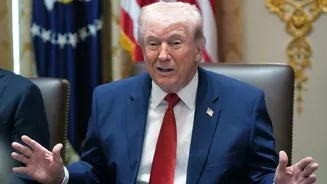
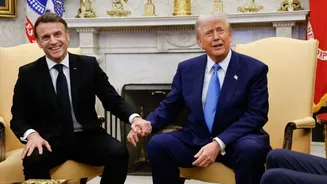
U.S. President Donald Trump announced on Monday that Israel and Hezbollah have reached an agreement to reduce hostilities following his discussions with
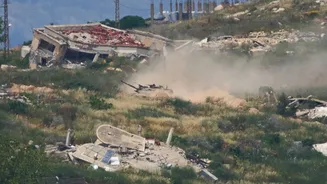
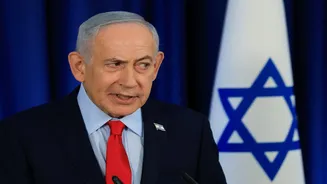
Israeli Prime Minister Benjamin Netanyahu and communications with Hezbollah through intermediaries. Trump shared this information in a social media post after his conversation with Netanyahu, noting that Israeli forces had recently conducted their most significant incursion into Lebanon in over 25 years. He emphasized that there would be no Israeli troops entering Beirut and that those en route had already been recalled.
During his announcement, Trump stated that Hezbollah had consented to ceasefire terms, claiming, "all shooting will stop — that Israel will not attack them, and they will not attack Israel." Netanyahu confirmed their conversation but framed it as a cautionary measure, asserting that he had warned Trump of Israel's intent to target locations in Beirut if Hezbollah's attacks continued. The Israeli military plans to persist with its operations in southern Lebanon, Netanyahu added.No immediate response was available from Hezbollah regarding these developments. The two factions had been under a ceasefire since mid-April; however, Hezbollah resumed its attacks following Israeli strikes in Lebanon, which Israel characterized as acts of self-defense. This escalation complicates efforts to finalize a ceasefire in the broader conflict involving Iran, as Tehran insists that any agreement must encompass Lebanon.
Lebanese officials reported that Hezbollah had approved a proposal from U.S. Secretary of State Marco Rubio, which stipulated that Israel would refrain from striking the southern suburbs of Beirut in exchange for Hezbollah's non-aggression towards northern Israel, as conveyed by the Lebanese Embassy in Washington.
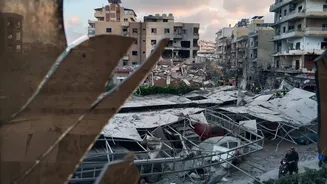
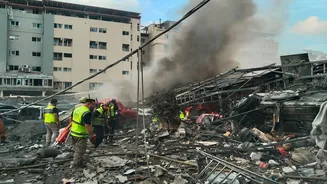
Shortly after Trump's announcement, Israel detected missile launches from Lebanon and advised residents in parts of northern Israel to seek shelter. The situation escalated as Israel's government ordered strikes on Beirut's southern suburbs in response to Hezbollah's rocket fire targeting northern Israel, including areas near Haifa.
A joint statement from Netanyahu and Israeli Defense Minister Israel Katz indicated that these military actions were a response to repeated violations of the ceasefire by Hezbollah, which they claimed included attacks on Israeli cities and citizens. An Israeli military spokesperson later urged residents of the suburbs to evacuate, warning that further attacks from Hezbollah would provoke Israeli responses in the Dahiyeh area, known for its strong Hezbollah support.
As tensions mounted, many residents were seen fleeing Dahiyeh, causing traffic congestion on routes out of the area. Mohammed Farhat, a 23-year-old university student, fled with his family from the suburb of Haret Hreik, expressing concern for their safety, saying, "We are worried. I am used to it but left for my parents."
Overnight airstrikes by Israel in southern Lebanon resulted in six fatalities, including a Syrian national, according to the state-run National News Agency. The Israeli military also reported intercepting two projectiles launched from Lebanon, along with a suspicious aerial target near its operations in southern Lebanon, with no injuries reported.
Hezbollah claimed responsibility for attacks on Israeli troops in Zawtar al-Sharqieh and asserted that it targeted Israeli military infrastructure in Tiberius. These hostilities occurred just before the scheduled resumption of direct talks between Israel and Lebanon in Washington, where Lebanese negotiators aim to expand the scope of protected areas within the country to establish a comprehensive ceasefire.
Despite the escalating violence, Beirut has largely avoided airstrikes since the ceasefire began, with only two targeted attacks on its southern suburbs in May. Saudi Arabia condemned Israel's military actions in Lebanon, calling for international intervention to prevent further incursions.
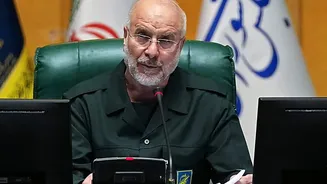
Lebanese parliament chief Nabih Berri, a key ally of Hezbollah, assured that the group is committed to a ceasefire but questioned who would compel Israel to cease its aggressions. President Joseph Aoun reiterated the government's commitment to resolving the ongoing conflict, stating that negotiations are "safer" than war.
At the United Nations, Assistant Secretary-General Martha Pobee addressed the Security Council, declaring that Israel's military actions violate Lebanon's territorial integrity and the 2006 resolution mandating Israel's withdrawal from Lebanon. She also criticized Hezbollah for failing to disarm as required by the same resolution.
U.S. Ambassador Mike Waltz remarked that a swift de-escalation and peace could be achieved if Hezbollah adheres to its promised ceasefire and if the Lebanese government asserts its sovereignty. Lebanon's U.N. Ambassador Ahmad Arafa praised the Trump administration for its diplomatic efforts, acknowledging the recent push for peace.
The ongoing conflict between Israel and Hezbollah has resulted in the deaths of 3,433 individuals in Lebanon and displaced over one million people. The Israeli military reported a soldier's death in southern Lebanon due to a Hezbollah drone attack, while Netanyahu's office indicated that at least 26 Israeli soldiers and a defense contractor have died in or near southern Lebanon, alongside two civilian fatalities in northern Israel.
Reporting contributed by Mroue and Chehayeb from Beirut, Melzer from Tel Aviv, and Associated Press writers Matthew Lee in Washington, Geir Moulson in Berlin, and Edith M. Lederer at the United Nations.