






What is the story about?

TRIKORFO, Greece (AP) — Can a centuries-old ritual of spiritual renewal rekindle a New Year’s resolution to build healthy eating habits before it fades
in the spring? For six weeks every year, millions of Orthodox Christians around the world adopt a largely vegan diet, abstaining from meat, dairy products, eggs, and fish with backbones while also avoiding oil and wine on weekdays during the 40-day Lenten period leading up to Orthodox Easter.
The annual adherence to a plant-based, Mediterranean-style meal plan drives a communal rediscovery of vegetables and oil-free cooking methods in majority-Orthodox countries.In Greece, even McDonald’s franchises participate in the Lenten spirit by adding seasonal menu items that comply with most of the Greek Orthodox Church's dietary guidelines. The menu includes shrimp wraps, shrimp salad, vegetable spring rolls, and plant-based McVeggie burgers, though not all items are oil-free.
While following Eastern Orthodox dietary guidelines before Easter is often referred to as fasting, the emphasis is on abstaining from certain foods rather than complete food deprivation. The rules are flexible and can be adjusted to meet individual needs.
Christian traditions vary between East and West ahead of Easter, not only in their methods for determining the date but also in dietary practices. Catholics are encouraged to give up personal indulgences during Lent, while members of the Orthodox Church typically forgo animal products except for shellfish.
Greeks abandon beloved dishes such as moussaka and souvlakia, along with dairy products like milk and cheese. Vertebrate fish such as anchovies, mullet, and hake are also excluded, while shrimp, oysters, and calamari are permitted.
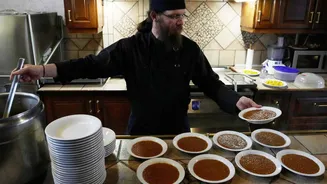
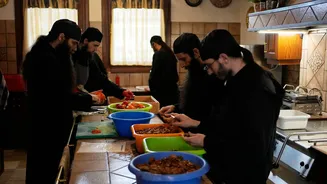
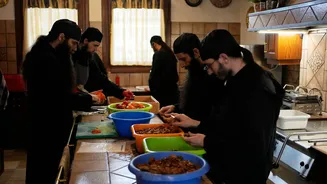
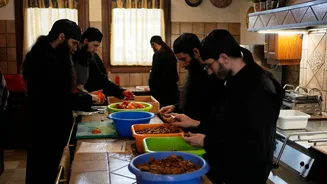
On a lush coastal hillside in central Greece, 40 monks at the Monastery of St. Augustine and Seraphim adhere closely to these dietary rules. The monks, identifiable by their black robes and full beards, cultivate and harvest much of their produce from the monastery's gardens, yielding an abundance of zucchini and tomatoes.
The monks' Lenten meals are simple yet flavorful. They have developed techniques to recreate familiar tastes and textures, such as coating oven-roasted potatoes with tahini instead of oil to maintain their crunch and using homemade vegetable stock to enrich lentil dishes.
As they dine, the monks listen to prayers read aloud.
Father Nektarios Moulatsiotis, the monastery's approachable abbot, emphasizes that the practice of fasting and following a restricted diet is crucial for the reflection and focus necessary for spiritual preparation for Easter. He likens this process to endurance training.
“In the same way someone goes to the gym to shape their body,” Nektarios stated, “the church is a gym for the soul.”
He notes that occasional hunger pangs are not to be resisted; rather, they are integral to the process. The underlying principle is straightforward: less indulgence leads to greater clarity.
“You cannot really pray, study, chant, or engage in any spiritual exercise with a full stomach,” he remarked with a laugh.
Nektarios contends that a nutritious yet disciplined diet offers benefits that extend beyond religious contexts, fostering self-control and heightened awareness.
Orthodox monks observe several fasting periods throughout the year, limiting what, when, and how much they eat. Researchers have studied their dietary customs for decades to determine if these practices might provide insights into preventing heart disease, type 2 diabetes, and strokes.
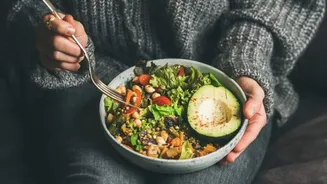
Nevertheless, the benefits of consuming a balanced diet rich in whole grains, vegetables, fruits, and legumes are well-documented. Reducing intake of meat, saturated fats, and processed foods typically yields positive health responses.
“Fasting certainly has benefits, provided it’s done correctly,” stated Eirini Babaroutsi, a sports nutritionist at the Hellenic Athletics Federation. For instance, Orthodox Christians often increase their fiber intake during Lent, which enhances digestive health.
“It also matters what we do eat, not simply what we avoid,” Babaroutsi explained. “With the right combinations, we can obtain all the nutrients we need.”
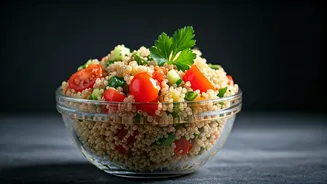
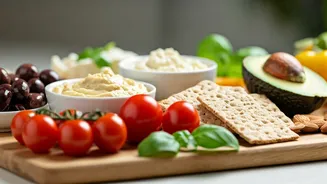
Meals that comply with the guidelines are not limited to ingredients found in Orthodox-majority countries in Southern and Eastern Europe. Babaroutsi recommends including porridge with oat milk, vegetable wraps with olive paste, and high-quality peanut butter as beneficial international additions.
There are several important considerations to keep in mind.
A six-week fasting cycle is generally not advisable for older adults and young children, Babaroutsi noted. The Eastern Orthodox Church also exempts individuals with serious health conditions, specific dietary needs, and pregnant or nursing women from strict adherence.
Engaging in a binge after Lent as a reward is also discouraged, as overindulging following a period of abstinence can strain the body, according to Babaroutsi.
For those hesitant to fully commit, it's worth noting that many Greeks participate only during Holy Week, which begins on April 5, Palm Sunday, and ends on April 11, the day before Orthodox Easter this year.
Supermarkets and bakeries in Greece facilitate adherence to the fast by offering family-friendly meals and a variety of seasonal goods.
These include jars of pickles and olives, bags of chickpeas and other pulses, squid rings in freezer cases, the creamy pink fish roe known as taramosalata, and slabs of unleavened bread shaped like small surfboards.
At the bustling central fish market in Athens, vendors call out over piles of Lent-compliant clams, octopus, and mussels, serving seafood in paper cones.
Gerasimos Mantalvanos, the market’s general manager, observed that many customers tend to overindulge when traditional lamb dishes and sweets arrive on Easter Sunday. However, he noted that a spirit of moderation typically returns afterward.
“It is beneficial for eating habits to change periodically throughout the year,” Mantalvanos remarked. “So a period of fasting, a little fish, and some abstinence from meat are good for the body. It serves as a kind of small detox, a brief respite.”
–––
AP photographer Thanassis Stavrakis and videojournalist Srdjan Nedeljkovic contributed.