



What is the story about?

There is something quietly extraordinary about April in India. While the rest of the world marks the new year on a cold January morning, large parts of this
country wait for the sun to shift, the harvest to arrive, and the earth to warm before deciding that the year has truly begun. And when that moment comes, it does not arrive quietly. April is the month when India celebrates itself — not as a single nation observing a single occasion, but as a sprawling, noisy, joyful collection of cultures that have each found their own way to mark the same fundamental truth: that the season has turned, the earth has been generous, and life is worth celebrating.
Bihu: Assam's Gift to the Calendar
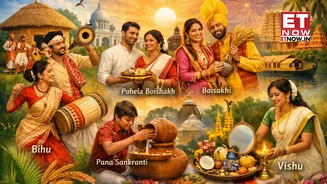
In Assam, the arrival of April means one thing above everything else — Bohag Bihu, the most beloved of the three Bihu festivals that punctuate the Assamese year. Falling in mid-April and stretching across several days, Bohag Bihu is the Assamese new year and a harvest celebration rolled into one irresistible occasion.
The festival begins with Goru Bihu, a day dedicated entirely to cattle — the animals that have worked the land through the year are bathed, fed special foods, and honoured with genuine reverence. It is an acknowledgement that the harvest does not happen by human hands alone.
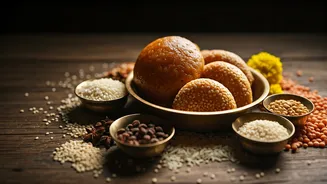
What follows is an explosion of colour, music, and movement. Young men and women gather in open fields to perform the Bihu dance — a form that is earthy, energetic, and unique to Assam. The dhol beats fast, the pepa flutes carry the melody, and the dancing does not stop until the energy in the field runs out. New clothes are worn, traditional gamosas are exchanged as tokens of love and respect, and food — particularly pitha, the Assamese rice cake — appears in homes across the state.
Bohag Bihu is also the season of romance in Assamese tradition. Young people have historically used the festival as an occasion to meet, court, and celebrate the beginning of new relationships alongside the new year. There is a vitality to Bihu that is hard to describe to someone who has not stood in a field in Assam in April and felt the drumbeats move through the ground.
Pohela Boishakh: Bengal's New Year in Full Colour
West Bengal, Assam and Tripura share Pohela Boishakh, the Bengali New Year, which arrives in mid-April with a cultural intensity that is entirely its own. In Kolkata, the day begins with Rabindra Sangeet — the songs of Rabindranath Tagore, whose presence is never far from any significant Bengali occasion — and moves into processions, art exhibitions, cultural performances, and the reopening of business ledgers in a tradition called Hal Khata.
The Hal Khata is particularly interesting. Traders and shopkeepers open fresh account books on Pohela Boishakh, invite their longstanding customers for sweets and conversation, and begin the commercial year anew. It is a practice that blends the mercantile and the celebratory in a way that feels Bengali distinctly.
Across the border in Bangladesh, Pohela Boishakh is the largest secular festival of the year, celebrated with processions, traditional music, and an outpouring of cultural pride that transcends religious identity.
Baisakhi: Punjab's Harvest and History Combined
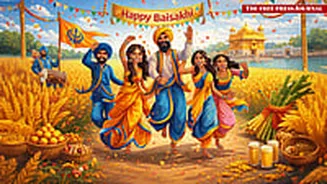
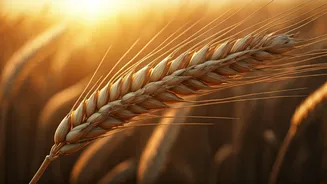
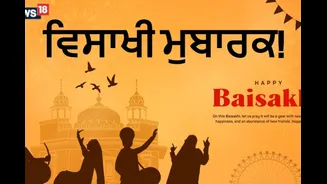
In Punjab and Haryana, April 13 carries a double significance that sets Baisakhi apart from almost any other regional festival in India. It is simultaneously the thanksgiving for the rabi harvest — the wheat that has been cut and gathered — and the anniversary of the founding of the Khalsa Panth by Guru Gobind Singh in 1699. For Sikhs around the world, the two meanings are inseparable.
The day begins at the Gurdwara, with prayers and the reading of the Guru Granth Sahib in a spirit of deep gratitude. From there, it moves into the open air. Bhangra, the most recognisable folk dance in India, takes over — men in bright turbans and kurtas throwing themselves into the rhythm with an abandon that is both athletic and joyful. Giddha, the women's counterpart, is no less energetic, with its clapping, singing, and playful verses.
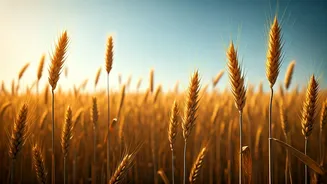
The agricultural dimension of Baisakhi is visible in every direction in rural Punjab. Freshly harvested wheat fields, the smell of mustard in the air, the sounds of celebration drifting across flat farmland — the festival is rooted in the physical reality of a community that has always understood its prosperity as a gift from the land.
Baisakhi is also celebrated with considerable fervour in the diaspora, from Canada to the United Kingdom, where Punjabi communities have carried the tradition far from its origins without losing any of its spirit.
Puthandu: Tamil Nadu Welcomes the New Year
On April 14, Tamil Nadu marks Puthandu — the Tamil new year, when the sun enters the first degree of Mesha Rasi and a new cycle begins. It is a day of deliberate auspiciousness, built around the belief that what you see and feel at the start of the year will shape everything that follows.
The most important tradition of Puthandu morning is the Kanni — the auspicious sight. Families arrange a tray the night before, placing on it items of beauty and abundance: flowers, fruits, raw rice, gold jewellery, a mirror, holy texts, and currency. The first thing a person is meant to see on Puthandu morning is this arrangement, eyes still half-closed with sleep, so that the year begins with a vision of prosperity.
Homes are cleaned, kolam patterns are drawn with rice flour at the entrance, new clothes are worn, and families gather for a meal that balances all six tastes — sweet, sour, salty, bitter, astringent, and spicy — in the traditional dish of mango pachadi. The six tastes are understood as a metaphor for life itself: a mixture of everything, to be received with equanimity.
Puthandu is also the occasion for visiting temples, offering prayers, and spending time with extended family — all the things that new year celebrations across cultures tend to share, dressed here in distinctly Tamil colours.
Add the Odia new year section after the Bengali new year section and before the concluding section:
Pana Sankranti: Odisha Welcomes Maha Vishuba
In Odisha, April 14 marks Pana Sankranti — also known as Maha Vishuba Sankranti — the traditional Odia new year that coincides with the sun's entry into the Mesha Rashi. It is one of the most sacred days in the Odia calendar, observed with equal measures of religious devotion and communal festivity across the state.
The festival takes its name from Pana — a traditional sweet drink prepared from bela fruit, water, jaggery, milk, and black pepper that is offered first to the deity and then distributed freely among devotees and neighbours. On this day, large earthen pots of Pana are hung outside homes and temples, available to anyone who passes by. It is an act of generosity that the festival places at its very centre — the new year begins not by keeping but by giving.
Pana Sankranti is inseparable from the worship of Hanuman, whose birthday — Hanuman Jayanti — falls on the same day. Temples across Odisha, particularly those dedicated to Hanuman, draw enormous crowds from early morning. The Shree Jagannath Temple in Puri and temples dedicated to Maa Tarini in Ghatagaon observe the occasion with special rituals and prayers that connect the agricultural new year to deep spiritual tradition.
The day also carries a strong folk dimension. In rural Odisha, it marks the onset of summer and is associated with prayers for rain, a good harvest in the coming season, and the protection of cattle. Young boys traditionally climb trees and swing from branches — a custom believed to invite the rains — while women draw intricate designs at the entrance of their homes and prepare special foods for the family feast.
For the Odia diaspora spread across India and beyond, Pana Sankranti remains one of the most emotionally resonant dates of the year — a thread that connects them to the red soil, temple bells, and unhurried rhythms of the state they carry within them wherever they go.
Vishu: Kerala's Mirror of Fortune
A day after Puthandu, on April 15, Kerala celebrates Vishu — its own new year, built around a similar philosophy of auspicious first sights but expressed in a distinctly Malayali way.
The Vishukkani is Kerala's equivalent of the Tamil Kanni tradition. The night before, the eldest woman of the household arranges a large bell metal vessel called an uruli with a specific collection of items: a Krishna idol, a golden cucumber, a coconut, betel leaves, coins, rice, a lit lamp, and the yellow konna flowers that are Vishu's most recognisable symbol. The golden shower tree blooms precisely in time for Vishu, and its flowers are considered as essential to the festival as any other element.
Children are led to the Vishukkani with their eyes closed on the morning of the festival, opened only when they stand before the arrangement. The Vishu Kaineettam follows — the giving of money by elders to younger family members, a tradition that children across Kerala anticipate for weeks in advance.
Fireworks light up the Kerala sky on Vishu night in a manner that surprises first-time visitors. The festival is quieter in some ways than Bihu or Baisakhi, more domestic and intimate, but no less deeply felt.
Ugadi: New Year Across the Deccan
In Andhra Pradesh, Telangana, and Karnataka — where it is known as Yugadi — this festival marks the beginning of the Hindu lunar new year according to the Panchanga, the traditional calendar. Ugadi typically falls in late March or early April, and 2026 has placed it squarely within the same festive window.
The Ugadi Pachadi is to this festival what mango pachadi is to Puthandu — a dish made with raw mango, neem flowers, jaggery, tamarind, green chilli, and salt that encodes an entire philosophy of living. The bitterness of neem alongside the sweetness of jaggery is not accidental. It is a reminder that life serves its portions without asking your preference, and that the new year must be welcomed with an openness to both.
The Panchanga Sravanam — the public reading of the new year's almanack by a learned priest — is a beloved community tradition, drawing gatherings at temples and public spaces where predictions for the year ahead are listened to with a combination of genuine belief and good-natured hope.
One Country, Many New Years
What strikes you, looking at all of these festivals together, is not how different they are but how much they share. Every one of them is rooted in agriculture — in the turning of the season, the gathering of crops, the gratitude of communities that have worked the land and seen it reward their effort. Every one of them involves new clothes, special food, family gatherings, and some form of prayer or offering. Every one of them begins with a gesture toward the future — an auspicious sight, a new ledger, a dance in an open field.
India does not have one new year. It has many. And in April, several of them arrive at once, overlapping and echoing each other across thousands of kilometres of geography and dozens of languages, all saying the same thing in their own distinct voice.
The season has changed. The harvest is in. Let the year begin.