






What is the story about?

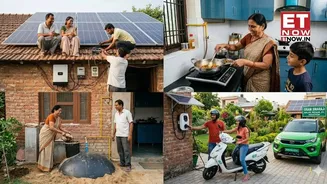
Energy Saving Tips For Households: Amid rising energy prices and supply chain disruption triggered by the West Asia conflict, India is navigating green
energy transition. Rising power, petrol and gas bills have pushed many households to shift to renewable energy solutions.
Indians switching to EVs
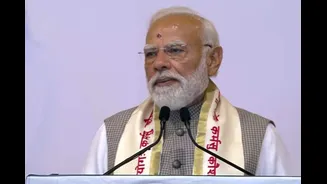
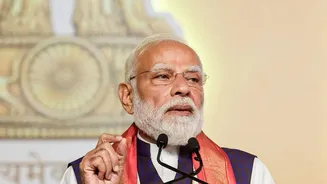
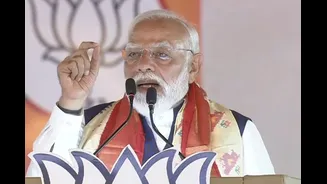
Over the years, India’s mobility landscape has witnessed a transformative switch. In his address in Hyderabad on Sunday, Prime Minister Narendra Modi urged Indians to move away from petrol and diesel dependence through a combination of behavioural shifts: using metro rail and public transport where available, car-pooling when private vehicles are unavoidable, and preferring railways for the movement of goods. He also appealed to the citizens to increase adoption of electric vehicles (EVs) wherever possible.Exploring alternative cooking options
The US-Israel-Iran conflict has triggered LPG crisis in India following which many households are now exploring alternative cooking options in case of a shortage or price increase.
Induction cooktops boast an impressive 90 per cent efficiency since heat is generated directly in the vessel, minimising heat loss. To match the heat output of a full LPG cylinder, an induction stove would need about 78 units of electricity. Even with a steep tariff of Rs 8 per unit, the electricity bill would come out to be around Rs 624, translating to a monthly saving of roughly Rs 300 over LPG.
Additionally, induction cooking requires compatible cookware, such as stainless steel or cast-iron pots with flat bottoms. Purchasing a complete set of such cookware can add several thousand rupees to the initial investment.
Studies show that despite these expenses, the low daily operating costs of induction cooking allow a typical household to recoup its investment in about a year.
Induction cooktops also keep the kitchen cooler and are easier to clean, reducing the need for increased ventilation and additional cleaning.
Govt boosts RE installation
The government is mulling incentives for the installation of floating solar panels to ensure that renewable energy capacity is added nationwide and does not remain concentrated in a few states, an official said on Monday.Speaking at the CII Annual Business Summit here, New and Renewable Energy Secretary Santosh Sarangi said that the energy transition that India has envisioned focuses on affordability, availability and sustainability.
He noted that the NITI Aayog projects by 2050, we would require 1,800 GW of RE, along with a similar quantum of battery energy storage systems (BESS), that is about 2,000 GWh of BESS.
Going forward, he said, keeping the policy options nimble and designing schemes which will promote RE (renewable energy) in a big way is going to be the way forward.
He suggested that renewable energy installations, which are only happening in states like Rajasthan and Gujarat, need to be decentralised.
"Going forward, we are thinking of introducing an incentive mechanism... for floating solar projects, which will also ensure that RE deployment at the grid scale also moves away from these regions to the rest of the country," he said.
He talked about plans to bring in a demand creation mechanism to promote ingot wafer manufacturing in the country, and also some incentive mechanism to promote polysilicon manufacturing.
Taking note of the issue of renewable energy curtailment, he said that the issue needs to be addressed on a very urgent and priority basis.
(With PTI Inputs)