







What is the story about?

WASHINGTON (AP) — The White House said on Friday that Congress should “preempt state AI laws” that it views as too burdensome, laying out a broad framework
for how it wants Congress to address concerns about artificial intelligence without curbing growth or innovation in the sector. The legislative blueprint outlines a half-dozen guiding principles for lawmakers, focusing on protecting children, preventing electricity costs from surging, respecting intellectual property rights, preventing censorship and educating Americans on using the technology.
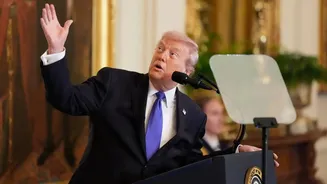
The announcement comes as state governments have forged ahead on their own regulations for AI while civil liberties and consumer rights groups lobby for more regulations on the powerful technology. However, the industry and the White House have pushed back, arguing that a patchwork of rules would hinder growth. In December, Trump signed an executive order blocking states from crafting their own regulations.“The Trump Administration is committed to winning the AI race to usher in a new era of human flourishing, economic competitiveness, and national security for the American people,” the White House stated in announcing its framework. “Achieving these goals requires a commonsense national policy framework that both enables American industry to innovate and thrive and ensures that all Americans benefit from this technological revolution.”
Four states — Colorado, California, Utah, and Texas — have already passed laws that set certain rules for AI in the private sector, but the White House is calling for “strong federal leadership” to ensure the public can trust how artificial intelligence is utilized in their lives. The state-level laws include limitations on the collection of certain personal information and a demand for greater transparency from companies.
As backlash against data centers has intensified amid rising power prices, the White House had previously increased pressure on AI companies and the power sector to do more to address the issue. This included having AI companies sign voluntary pledges earlier this month to establish their own power generation plants.
The framework advises against intervening in the legal disputes between artists and creators and the technology companies that have utilized large amounts of copyrighted works to develop AI systems capable of generating new text, images, and sound.
The Trump administration “believes that training of AI models on copyrighted material does not violate copyright laws,” according to the document, while recognizing that “arguments to the contrary exist and therefore supports allowing the Courts to resolve this issue.”
Numerous lawsuits are pending from writers, publishers, visual artists, music record labels, and others. Judges have largely favored AI developers in permitting the “fair use” of copyrighted works to create something new, but some have raised concerns regarding how the materials were obtained. A federal judge in September approved a $1.5 billion settlement between artificial intelligence company Anthropic and authors who allege that nearly half a million books were illegally pirated to train its chatbot.
—
O'Brien reported from Providence, Rhode Island.