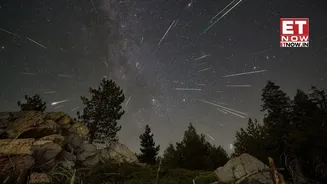


The Ursid meteor shower is set to give skywatchers a final astronomical highlight as the year concludes, according to report. While the display is quieter
than some of the more prominent meteor showers seen earlier in the season, astronomers say it still offers a rewarding experience for observers under clear, dark skies, according to The Economic Times. Meteor showers occur when Earth travels through streams of debris left behind by comets or asteroids. As these tiny fragments enter the atmosphere at high speeds, they burn up and create brief flashes of light commonly known as shooting stars. Unlike sporadic meteors that appear throughout the year, showers like the Ursids happen annually at predictable times. This year, the Ursid meteor shower is expected to reach peak activity late Sunday night and into the early hours of Monday. The shower will remain active until December 26 and will be visible across the Northern Hemisphere. According to the American Meteor Society, observers may see about five to ten meteors per hour during peak conditions, with the possibility of short-lived surges reaching up to 25 meteors an hour, ET said. Visibility will depend on sky conditions and moonlight. Although the Ursids generally produce fewer meteors than major showers such as the Geminids, viewing conditions are expected to be favourable this year as the thin crescent moon is unlikely to wash out the display. Astronomers note that watching the Ursids does not require telescopes or special gear. Choosing a location away from city lights and allowing time for eyes to adjust to the darkness can significantly improve the experience. “The darker your sky, the better the shower is going to be,” astronomer Peter Brown of Western University in Canada was quoted as saying, as per the report. The meteors appear to originate from the direction of Ursa Minor, also known as the Little Dipper, though they can be spotted anywhere across the sky. Experts advise limiting exposure to bright lights, including mobile phone screens, to maximise visibility, The Economic Times added. Though subtle in nature, the Ursid meteor shower offers a serene and visually pleasing spectacle, giving astronomy enthusiasts an opportunity to close the year with a quiet but memorable view of the night sky.
What NASA says about meteor showers
According to NASA, meteor showers are recurring celestial events that take place when the Earth moves through clouds of dust and debris left behind by comets and, in some cases, asteroids. While a few meteors can be spotted on most clear nights, a meteor shower is marked by a noticeable increase in activity, with multiple meteors appearing within a short span of time. These showers tend to occur annually or at predictable intervals, depending on Earth’s orbit and the path of the parent object that created the debris trail.