




What is the story about?

DUBAI, United Arab Emirates (AP) — Kuwait briefly shut its main airport Wednesday after Iranian drones heavily damaged a passenger terminal building, killed
one person, and wounded dozens — the latest in back-and-forth attacks by Tehran and Washington that have tested a fragile ceasefire. Semiofficial Iranian news agencies reported that Tehran had ceased communication with mediators regarding an extension of the ceasefire in the conflict involving the U.S. and Israel. A regional official indicated that Iran sought a separate ceasefire in Lebanon before resuming talks, while U.S. President Donald Trump claimed that negotiations were still ongoing.
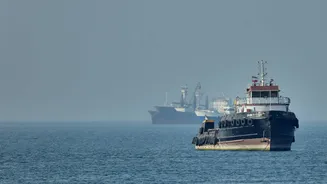
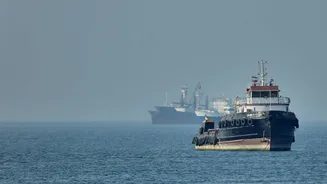
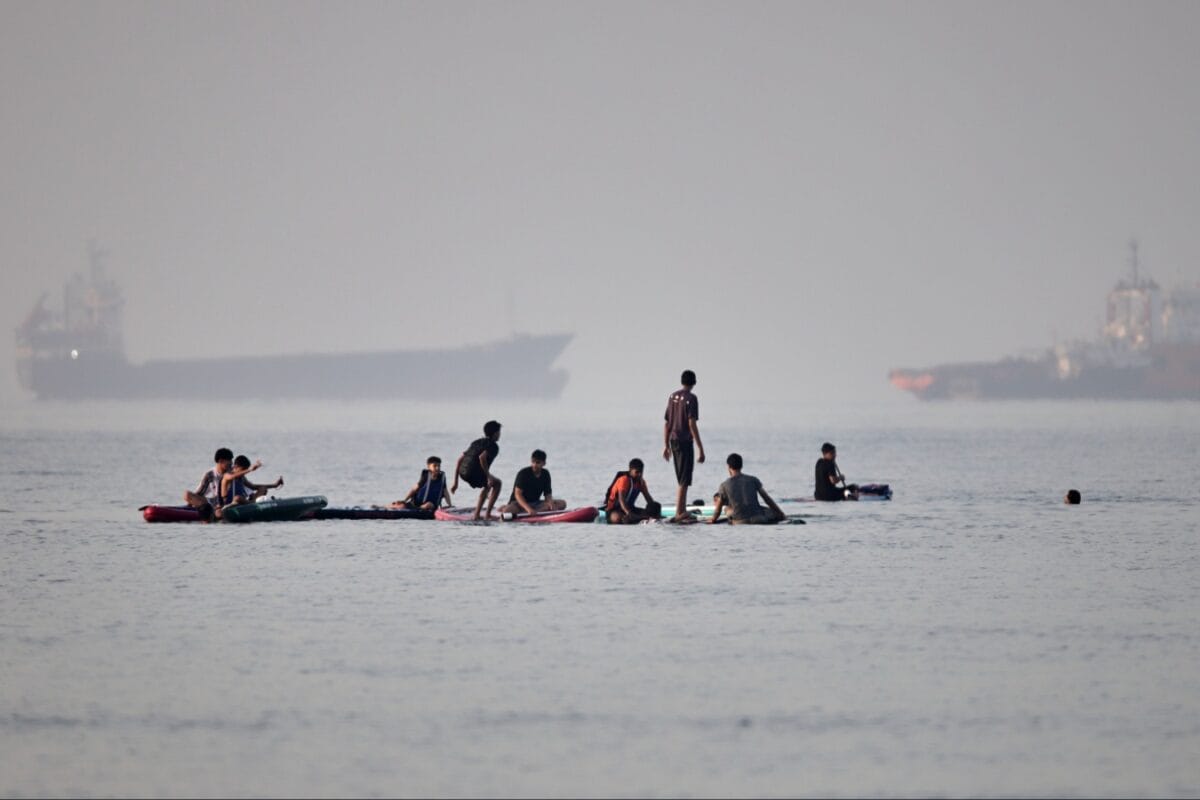
The negotiations have continued for weeks amid ongoing exchanges of strikes in the Gulf region, alongside Israel's expanding conflict with the Iranian-backed Hezbollah in Lebanon, further straining the situation.Iran maintains control over the Strait of Hormuz, a vital waterway for global oil and natural gas, while the U.S. continues its blockade of Iranian ports. The ongoing conflict has led to high global fuel prices, impacting economies far beyond the region.
Defense Ministry spokesperson Brig. Gen. Saud Abdulaziz Al-Otaibi stated that 'a number of hostile drones' targeted a passenger building at Kuwait International Airport, which had just reopened after months of closure due to the war that began on February 28 with U.S. and Israeli strikes on Iran.
Authorities confirmed one fatality and 63 injuries, including both passengers and airport workers. Health Ministry spokesman Abdullah Al Sanad reported that some of the injuries were serious, and the deceased was identified as an Indian national by India’s embassy.
Kuwait's Defense Ministry reported that it had intercepted and destroyed over a dozen missiles and drones launched from Iran. The Foreign Ministry asserted that Kuwait reserves the right to respond to Iran, stating it would 'neither accept nor tolerate' such attacks.
The airport partially reopened later, with Kuwait Airways resuming flights from a different terminal, although no other flights were operating at that time.
Meanwhile, the U.S. military reported that two Iranian missiles disintegrated during their flight towards Kuwait, and U.S. forces successfully intercepted multiple drones targeting American personnel in the country.
The military also indicated that U.S. and Bahraini forces intercepted missiles directed at Bahrain, which hosts the U.S. Navy's 5th Fleet. Bahrain’s Defense Ministry confirmed that its military destroyed three missiles and several drones launched by Iran.
Iran’s paramilitary Revolutionary Guard acknowledged targeting the headquarters of the 5th Fleet and U.S. military facilities in a different country, though it did not specify Kuwait.
Both the U.S. and Iran have stated that their actions are retaliatory, stemming from prior attacks or attempted attacks.
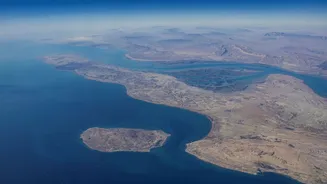
The U.S. military also conducted strikes on an Iranian military ground control station located on Qeshm Island in the Strait of Hormuz.
Iran's Foreign Ministry condemned these U.S. strikes, claiming they targeted a telecommunications tower and constituted 'acts of aggression' that violated the ceasefire.
A senior Emirati diplomat called for a 'firm, unified, and cohesive Gulf position' against Iran following these attacks, stating, 'This aggression does not target a specific state, but rather all of us,' as expressed by Anwar Gargash on X.
Iran’s Fars and Tasnim news agencies, both believed to have ties to the Revolutionary Guard, reported that Iran’s negotiators had halted communication with ceasefire mediators amid rising tensions in Israel’s concurrent struggle against Hezbollah in Lebanon.
A regional official involved in the mediation, who spoke on condition of anonymity, informed The Associated Press that Iran had not communicated since asserting that a ceasefire must be enforced in Lebanon for negotiations to progress.
Trump characterized reports of a cessation in talks as 'false and erroneous,' asserting that discussions had continued regularly, including on multiple recent days.
Israeli forces have advanced deeper into Lebanon than at any point in over 25 years, while Hezbollah has retaliated with rocket and drone attacks. Although a ceasefire has been officially declared in Lebanon, neither side has formally withdrawn or announced its conclusion, despite ongoing hostilities.
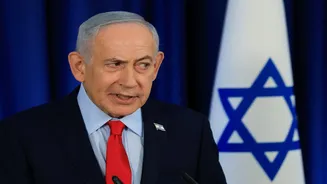
Lebanon has become a contentious issue in Trump's efforts to broker a ceasefire agreement with Iran. Tehran insists that any broader truce must address the fighting in Lebanon, while Israeli Prime Minister Benjamin Netanyahu aims to keep the issues distinct and faces domestic pressure to engage Hezbollah as elections approach this fall.
The ongoing conflict has revealed a rift between close allies Israel and the U.S., with the U.S. advocating for restraint.
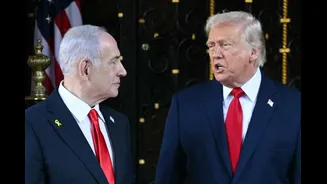
In a podcast interview released Wednesday, Trump confirmed a report that he had referred to Netanyahu as 'crazy' during a Monday phone call, which was characterized by an expletive. He expressed to The New York Post’s 'Pod Force One' that he felt 'a little bit perturbed' that Israel's conflict with Hezbollah was hindering negotiations with Iran.
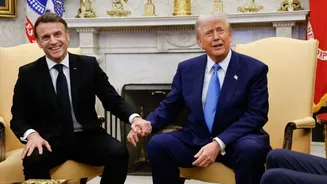
Despite this, Trump maintained that his relationship with Netanyahu remains strong, stating, 'we’ve worked very well together.'