






What is the story about?

DUBAI, United Arab Emirates (AP) — Israel and Iran traded fire early Monday in retaliatory strikes that threatened to drag the Middle East back into a full-scale
regional war, while Yemen’s Houthi rebels also fired at Israel and warned they would target Israel-affiliated ships in the Red Sea, further escalating tension. Israel launched strikes on central and western Iran early Monday in response to missile fire from Tehran, and Iran retaliated with waves of attacks. It was the first exchange of fire since an April 8 ceasefire was reached. Explosions could be heard in central Israel as air defenses sought to intercept incoming Iranian fire. Sirens also sounded across neighboring Jordan.
Iran's paramilitary Revolutionary Guard stated it had targeted two military bases in Israel, describing the attacks as part of Operation Nasr, or “Victory.” The Guard said it launched the missiles after Israel targeted radar sites in three areas of Iran. Israel’s military confirmed it targeted truck-based surface-to-air missile launchers.
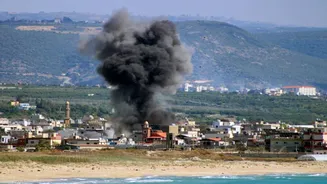
Tehran warned of retaliation on Sunday after Israel struck Beirut’s southern suburbs without warning in defiance of Washington’s request days ago to stand down.
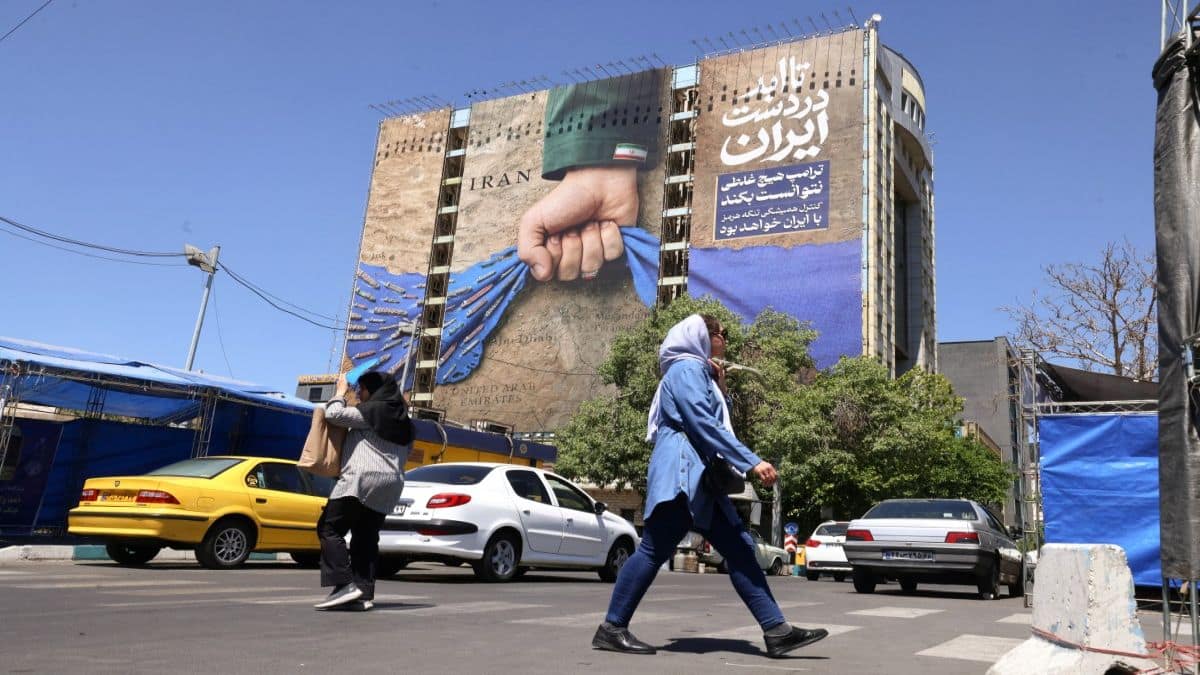
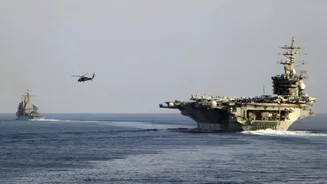
Monday marked the 100th day of the Iran war, which began on February 28 when Israel and the United States killed Supreme Leader Ayatollah Ali Khamenei and other senior Iranian leaders. The war raged until Iran and the U.S. reached a ceasefire on April 8, but efforts to achieve a permanent end to hostilities have been challenged by Iran's control over the Strait of Hormuz, through which a significant portion of the world’s traded oil and natural gas once passed in peacetime, as well as ongoing fighting between Israel and the Lebanese Shiite militia Hezbollah.
With global energy supplies threatened, and Iran holding a vast stockpile of highly enriched uranium while Yemen's Houthi rebels became involved in the fighting on Monday, the risk of the war fully erupting again appears to be rising.
Two regional officials indicated that concerted diplomatic efforts were underway Monday to salvage the ceasefire between Iran and the United States following the exchange of strikes between Israel and Iran. Officials from Egypt, Saudi Arabia, Turkey, Pakistan, and Qatar have urged the U.S. administration to pressure Israel to limit its strikes on Iran and Beirut. They have also urged Iranian officials to cease attacks on Israel. Both officials spoke on condition of anonymity because they were not authorized to speak to reporters.
One official involved in mediation efforts between Iran and the U.S. expressed anger over the Israeli strike on Beirut’s southern suburbs, which occurred while Pakistan’s interior minister was in Tehran, aiming to advance U.S.-Iranian negotiations.
The mediators conveyed to the U.S. administration that the Israeli strike on Beirut aimed to disrupt their efforts to reach a deal and stated that “Trump has to stop Netanyahu’s reckless maneuvers.”
The White House did not respond to inquiries about the Israeli strikes and whether they were conducted in coordination with the U.S. Speaking before Israel's strikes on Iran, a senior U.S. official mentioned that U.S. President Donald Trump had called Israeli Prime Minister Benjamin Netanyahu to urge him not to retaliate immediately for the Iranian missile attack. The official, who spoke on condition of anonymity, stated that Trump believed he had convinced Netanyahu to wait.
Trump “got Bibi to hold off for the time being,” the official remarked. The official provided no further details regarding the call, and there was no immediate comment from Netanyahu’s office. Trump earlier expressed a desire for the Iranians to cease missile attacks and return to the negotiating table. He also indicated that Israel’s strikes in Lebanon earlier Sunday were not coordinated with the U.S. and expressed dissatisfaction with them.
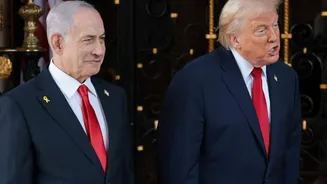
Before the Israeli strikes on Iran, Trump insisted he dictated the terms to Netanyahu on how the war should be conducted. “He won’t have any choice,” Trump said in a telephone interview with The Financial Times. “I call the shots. I call all the shots. He (Netanyahu) doesn’t call the shots.”
Yemen’s Iran-backed Houthi rebels claimed an attack on Israel on Monday and stated that Israel-affiliated vessels would again be targeted in the Red Sea, posing risks to the Red Sea, the Gulf of Aden, and the narrow Bab el-Mandeb Strait connecting them.
The statement from Brig. Gen. Yahya Saree was broadcast on the Houthis’ al-Masirah satellite news channel. During the Israel-Hamas war in the Gaza Strip, the Houthis reportedly killed at least nine mariners and sank four ships in over 100 attacks, often targeting vessels with little or no ties to Israel.
The assaults significantly disrupted shipping in the Red Sea, through which approximately $1 trillion of goods passed each year before the conflict. They also caused substantial interruptions to transit through Egypt’s Suez Canal, which links the Red Sea to the Mediterranean. The canal remains a crucial source of hard currency for Egypt, generating $10 billion in 2023 as its broader economy struggles.
The Houthis' renewed threats also arise as Saudi Arabia relies on its East-West Pipeline to export oil through the Red Sea as an alternative to the Strait of Hormuz.
Iranian state television reported explosions being heard in Isfahan, Karaj, Tabriz, and Tehran, although it did not provide immediate elaboration. A witness in Tehran noted hearing at least one large blast west of the country’s capital. Iran closed the airspace around Tehran’s Imam Khomeini International Airport, the country’s main airfield, following the Israeli attack.
Officials did not disclose details on what had been struck or any damage reports. Iran’s paramilitary Revolutionary Guard indicated that Israel used air-launched ballistic missiles in its attack on Monday morning, without further elaboration. The semiofficial Fars and Mehr news agencies stated that Israeli strikes had hit a petrochemical factory in the city of Mahshahr in Khuzestan province, although they did not elaborate on the damage. The Israeli military later confirmed the strike on the petrochemical plant.