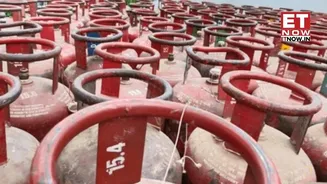









LPG cylinder price today: The ongoing Middle East crisis, involving the US, Israel and Iran, has largely impacted India’s Liquefied Petroleum Gas (LPG)
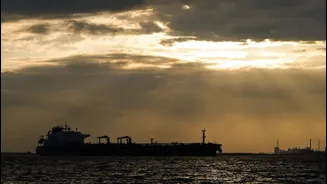
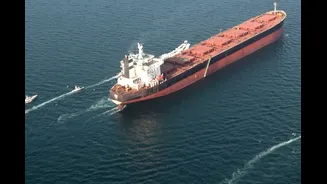
imports, with the government stepping up measures to safeguard fuel supplies, expand gas access and support Indian nationals abroad. For the unversed, India imports around 60 per cent of its LPG requirements from global markets and most of imports pass through the Strait of Hormuz. Since the start of the conflict, the government time and again reiterated that there is no shortage of LPG in the country. Since the West Asia war between Iran and US-Israel began on February 28, weekly transit of oil vessels and tankers through the critical Strait of Hormuz reached the highest in the past week, with the seven-day rolling average for transits on Friday, Bloomberg reported.
LPG Prices Today, April 5
After Rs 60 price hike in 14.2 kg domestic LPG cylinder prices last month and Rs 144.5 price increase of 19 kg commercial cooking gas, the prices underwent another revision this month.
On April 1, oil companies revised rates for commercial cylinders, raising the price of 19-kg units by between Rs 195 and Rs 218, while smaller 5-kg cylinders became costlier by Rs 51.
Domestic rates
| City | Price (Rs./cylinder) |
| New Delhi | 913 |
| Bengaluru | 915.50 |
| Hyderabad | 965 |
| Mumbai | 912.50 |
| Chennai | 928.50 |
| Kolkata | 939 |
Commercial (19kg) LPG cylinder rates
| City | Price (Rs./cylinder) |
| New Delhi | 2,078.50 |
| Bengaluru | 2,161 |
| Hyderabad | 2,320.50 |
| Mumbai | 2,031.50 |
| Chennai | 2,246.50 |
| Kolkata | 2,208.50 |
The Delhi government has tightened norms around the supply of commercial LPG cylinders, making it mandatory for businesses to show progress towards shifting to piped natural gas (PNG) wherever the network is available.
The updated directive, issued by the Food, Supplies and Consumer Affairs Department, modifies an earlier policy on commercial LPG distribution. Under the revised rules, commercial and industrial users will be eligible for LPG supply only if they are registered with the respective oil marketing company (OMC) and have either applied for a PNG connection or indicated willingness to switch once the facility reaches their area.
For regions where PNG infrastructure is still unavailable, businesses will need to submit a formal declaration stating their intent to transition to PNG in the future.
To ensure compliance, OMCs have been assigned the responsibility of verifying consumer records. They must collect relevant documents at least once to confirm that users are properly registered and have either applied for PNG or committed to doing so. The verified data will also be shared with Indraprastha Gas Limited (IGL) to facilitate further processing.
The move comes amid efforts to manage LPG demand more efficiently and curb misuse. Earlier, additional commissioner Arun Kumar Jha had highlighted that Delhi has nearly 56 lakh domestic LPG connections and stressed the need for proper registration to avoid diversion.
He had also underlined the rapid expansion of PNG infrastructure across the city, noting that areas with pipeline access should actively move away from LPG.
Meanwhile, the department has set up a dedicated control room to track developments and address complaints. Residents can report any suspicious activity related to LPG usage via helpline numbers between 9 am and 7 pm, with authorities assuring swift action on verified inputs.