







What is the story about?

NEW YORK (AP) — Experts have raised concerns regarding the Centers for Disease Control and Prevention's (CDC) lack of response amid a hantavirus outbreak
on a cruise ship, which has garnered international attention and involves American passengers. Despite the outbreak, which has resulted in several fatalities, the CDC has not actively engaged in disease investigation or public communication, leading health experts to question the agency's current role in public health management.
Current Situation and Expert Opinions
President Donald Trump stated, “We seem to have things under very good control,” during a press conference. However, experts contend that the outbreak has not escalated significantly, primarily due to hantavirus's limited transmission capabilities compared to diseases like COVID-19.Lawrence Gostin, an international public health expert at Georgetown University, remarked, “The CDC is not even a player. I've never seen that before.” This sentiment reflects a growing belief among professionals that the CDC's diminished involvement signifies a broader decline in its influence on global health.
Dr. Jeanne Marrazzo, chief executive officer of the Infectious Diseases Society of America, referred to the outbreak as “a sentinel event” that highlights the nation’s lack of preparedness for emerging health threats, stating, “Right now, I’m very sorry to say that we are not prepared.”
Details of the Outbreak
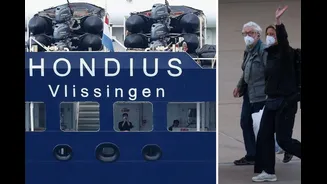
The outbreak began early last month when a 70-year-old Dutch man fell ill aboard a cruise ship traveling from Argentina to Antarctica. He passed away within a week, followed by the deaths of his wife and a German passenger.Hantavirus was confirmed as a cause of illness on May 2, prompting the World Health Organization (WHO) to classify it as an outbreak. Approximately two dozen Americans were on board, with some disembarking while others remained.
WHO Takes the Lead
Traditionally, the CDC has collaborated with the WHO during health crises, providing expertise and resources to manage outbreaks effectively. However, this time, the WHO has taken the lead, determining that the outbreak does not pose a pandemic threat.Jennifer Nuzzo, director of Brown University’s Pandemic Center, commented, “I don’t think this is a giant threat to the United States,” but noted that the current circumstances illustrate the CDC's weakened status.
Impact of Administration Policies
The situation has unfolded against the backdrop of the Trump administration's controversial policies, including withdrawing from the WHO and limiting CDC interactions with international counterparts. This has resulted in significant layoffs within the agency, affecting its operational capacity.Health Secretary Robert F. Kennedy Jr. has stated intentions to “restore the CDC’s focus on infectious disease, invest in innovation, and rebuild trust through integrity and transparency.”
CDC's Limited Communication
While the CDC has issued statements asserting that the risk to Americans is “extremely low,” experts criticize the agency's lack of comprehensive communication. Nuzzo remarked, “Not only was that not helpful, it actually does damage because a core principle of public health communications is humility.”The CDC's acting director, Dr. Jay Bhattacharya, indicated that the agency is coordinating with federal and international authorities, but many details have emerged from anonymous sources rather than official announcements.
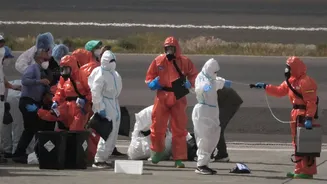
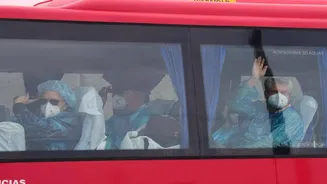
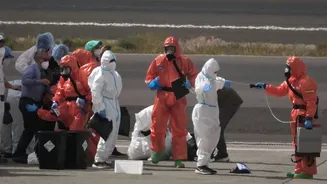
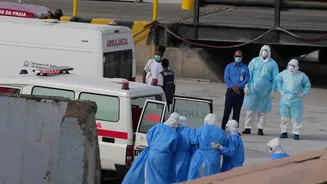
On Friday, health officials confirmed the deployment of a team to the Canary Islands to assist American passengers aboard the ship, with plans for a second team to facilitate quarantines at Offutt Air Force Base in Nebraska.
Comparison to Previous Outbreaks
Experts have drawn parallels between the current situation and the 2020 COVID-19 outbreak aboard the Diamond Princess cruise ship. The CDC's response during that incident included personnel deployment, public briefings, and coordination with international health authorities.Dr. Tom Frieden, a former CDC director, noted that the agency was “right on top of it, very visible, very active in trying to manage and contain it,” contrasting sharply with the current subdued approach.
Gostin emphasized that unilateral agreements with individual nations are insufficient for addressing global health crises, stating, “You can't possibly cover a global health crisis by doing one-on-one deals with countries here and there.”