







What is the story about?

Route 66 marks its 100th anniversary this year. Despite losing its status decades ago as a main artery from Chicago to Los Angeles, it hasn't lost its allure
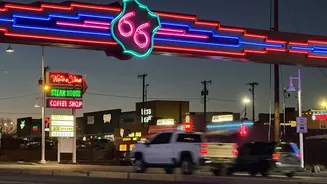
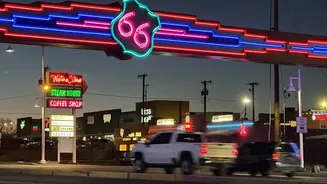
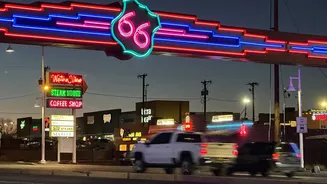
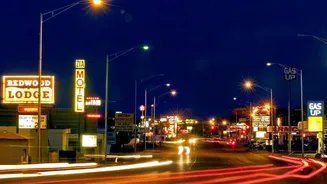
to tourists worldwide or its cultural cachet. With neon lights, kitschy motels and attractions, culinary offerings, and roadside diners, each town along the route has its own history and magic.
This unique guide features first-person experiences and insight from Associated Press photographers on how they captured images of Route 66 and suggestions they have for others looking to do the same. They discuss how they approached the project, what they found along the route, and what made for memorable moments.Photographer Jeff Roberson described his journey, noting the challenge of covering 1,100 miles in roughly four days. He emphasized the importance of planning and making contacts in advance. Roberson observed that Route 66 remains a vital part of the tourist economy in the Midwest, with businesses showcasing their connection to the iconic highway.
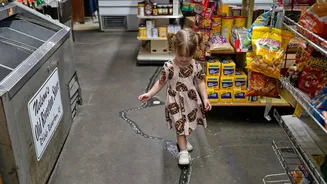
Roberson also highlighted the prevalence of Route 66 signs and encouraged photographers to look beyond them, focusing instead on landscapes and people. His favorite photo was taken at Nelson’s Old Riverton Store in Kansas, a historic location where he captured a young girl balancing on a painted crack in the floor designed to resemble the road.
Photographer Julio Cortez shared his experience of exploring Oklahoma and Texas. He aimed to embody the perspective of first-time travelers along the route. In Oklahoma, he discovered a busy drive-in theater and met a tourist from British Columbia. In Texas, he found a steakhouse offering a free meal to anyone who could finish a 72-ounce steak within an hour.
Cortez noted that while some sites like Cadillac Ranch are must-sees, he also found value in less obvious locations, such as the Round Barn in Arcadia, Oklahoma. He captured moments of serendipity while interviewing travelers who shared their connections to Route 66.
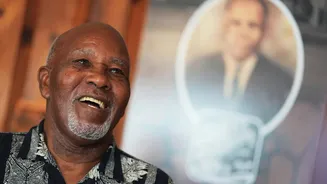
Multiplatform journalist Susan Montoya Bryan sought to convey the deeper meaning of Route 66 through the stories of those living along its path. She met Laguna Pueblo artist and poet Max Early, who shared his reflections on the road's significance to his community. Bryan also captured the vibrant scenes of Albuquerque, the longest intact urban stretch of Route 66, through time-lapse photography.
Photographer Jae C. Hong focused on the human aspect of Route 66, aiming to showcase the culture and emotion of the people who inhabit the area. He documented contrasts between ghost towns and thriving communities, capturing unexpected moments that conveyed the essence of the historic road.
To enhance their photographic skills, the photographers shared tips for capturing neon lights and nostalgic scenes. They advised shooting at sunset for vibrant colors and encouraged photographers to connect with the people they encounter, as each individual has a unique story to tell.
Localize It is a resource produced regularly by The Associated Press for its customers’ use. Questions can be directed to the Local News Success team at localizeit@ap.org. View guides published in the last 30 days here.