





![[WATCH] 'Real Madrid, Ramadan and rest' - Mohammed Siraj how last-minute World Cup call-up changed February plan](https://g-mob.glance-cdn.com/public/fc/image/ByYT_LEmlrD0.webp)


The Delhi High Court on Wednesday, December 17, strongly criticised the Delhi government for its failure to regulate the sale and transfer of used vehicles,
warning that lapses in the system could have serious public safety implications.
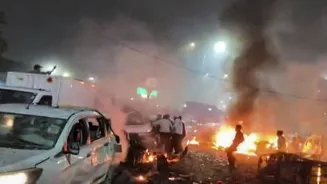
A division Bench comprising Chief Justice Devendra Kumar Upadhyaya and Justice Tushar Rao Gedela was hearing a public interest litigation (PIL) that highlighted gaps in the enforcement of rules governing the second-hand vehicle market. During the hearing, the Bench referred to the recent bomb blast near the Red Fort, noting that the attack had been carried out using a second-hand car, underscoring the urgency of the issue.
Expressing concern over the lack of accountability in vehicle ownership transfers, the court questioned how vehicles continue to change hands multiple times without corresponding updates in official records. “A car changes four hands, but the original owner remains the same. How are you permitting this? Will you act only after two or three more bomb blasts take place?” the Bench wondered.
The court directed the Delhi government to file a detailed counter affidavit and made it clear that no further adjournments would be granted. The matter is scheduled to be heard next in January 2026.
The petition was filed by Towards Happy Earth Foundation, which pointed to serious shortcomings in the implementation of Rules 55A to 55H of the Central Motor Vehicles Rules. These provisions, introduced in December 2022, were intended to regulate authorised dealers involved with registered used vehicles and bring transparency to the sector.
Also read: Delhi bans non-BS-VI vehicles, stops fuel without PUC from Thursday: What drivers need to know
However, the petitioner argued that the framework has failed in practice due to regulatory gaps and procedural challenges. One of the key deficiencies highlighted was the absence of a statutory mechanism to track dealer-to-dealer transfers. In reality, most used vehicles pass through several dealers before reaching a final buyer, but the rules recognise only the first transfer to an authorised dealer. This breaks the chain of custody and defeats the objective of accountability, the plea stated.
As a result, only a small fraction of India’s estimated 30,000-40,000 used vehicle dealers have been able to obtain authorised dealer registration. In Delhi, not a single dealer has been registered under the framework, allowing lakhs of vehicles to circulate without clear records of actual possession, the petition claimed.
The PIL also referred to the Red Fort terror incident, noting that the vehicle used in the attack was over 11 years old and had been sold multiple times, yet remained registered in the name of its original owner.
Advocate Samar Bansal appeared for the petitioner, assisted by advocates Vijay Kasana, Sanyam Khetarpal, Vaibhav Sharma and Rahul Gupta.