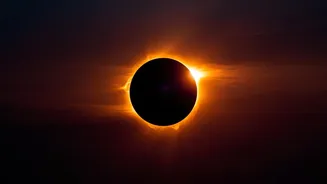

The agency’s Space Weather Prediction Center (SWPC) confirmed that an S4-level severe solar radiation storm is underway, a classification last recorded during the major solar events of October 2003.
Calling the development unprecedented in recent decades, the SWPC said, "This is the largest solar radiation storm in over 20 years," noting that the previous S4-level event occurred more than two decades ago, as per News18.
Solar radiation storms are caused when highly energetic particles from the Sun travel rapidly towards Earth, posing risks primarily to satellites, aviation at high latitudes and space missions.
An S4 severe solar radiation storm is now in progress - this is the largest solar radiation storm in over 20 years. The last time S4 levels were observed
was in October, 2003. Potential effects are mainly limited to space launch, aviation, and satellite operations. pic.twitter.com/kCjHj4XYzB
— NOAA Space Weather Prediction Center (@NWSSWPC) January 19, 2026
Geomagnetic storm follows CME impact
Shortly after the radiation storm intensified, severe geomagnetic activity was also detected. The SWPC reported that G4-level geomagnetic storm conditions were reached at 2:38 pm EST after a coronal mass ejection (CME) shock struck Earth’s magnetic field.
G4 storms are classified as “severe” and are capable of causing disturbances to satellite operations, navigation systems and power infrastructure.
Read more: NASA's Moon exploration after 5 decades: Here's all about Artemis II Moon Mission
NOAA stated that while such storms can lead to voltage regulation issues, satellite anomalies and GPS signal disruptions, most impacts are expected to remain manageable with appropriate mitigation measures. Infrastructure operators and satellite controllers have been alerted as a precaution, the agency added, as per News18.
Experts describe event as ‘historic’
Space physics researcher and aurora photographer Vincent Ledvina described the development as a rare milestone in modern space weather monitoring.
"We have now officially crossed the S4/ SEVERE radiation storm boundary! The last S4 radiation storm occured on October 29, 2003 before the infamous G5 Halloween storms. This is a historic event," Ledvina posted on X (formerly Twitter).
We have now officially crossed the S4 / SEVERE radiation storm boundary! The last S4 radiation storm occured on October 29, 2003 before the infamous G5 Halloween storms. This is a historic event. https://t.co/Lq88TKoh7S pic.twitter.com/pDg1fxb6RP
— Vincent Ledvina (@Vincent_Ledvina) January 19, 2026
Meteorologist Max Velocity also cautioned that the geomagnetic storm could produce striking visual effects. "MAJOR GEOMAGNETIC STORM is coming TONIGHT!" he wrote on X.
He added that auroras could be visible across a wide geographic range. "Northern Lights could be visible as far south as FLORIDA! Get those cameras ready!"
MAJOR GEOMAGNETIC STORM is coming TONIGHT! ????
Tonight has the potential to be a big show of Northern Lights. A G4 Geomagnetic storm is possible, which is the 2nd strongest storm possible. Northern Lights could be visible as far south as FLORIDA! Get those cameras ready! pic.twitter.com/1OVlxRRzA1
— Max Velocity (@MaxVelocityWX) January 19, 2026
Aurora visibility and public advisory
According to NOAA, sustained or intensifying G4 conditions could cause the auroral oval to expand significantly, potentially making the northern lights visible across much of the central United States and as far south as northern California, weather and sky conditions permitting.
For the general public, NOAA has advised staying updated through official channels and observing auroras only where local conditions allow. The Space Weather Prediction Center in Boulder, Colorado, said it will continue to closely monitor the evolving situation and issue further updates as needed, as per News18.
Read more: No Indian private satellite on failed PSLV mission was insured: Report