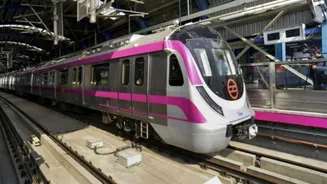








The Union Cabinet, chaired by Prime Minister Narendra Modi, on Wednesday, December 24, approved Delhi Metro’s Phase 5A expansion project at a total cost
of ₹12,014.91 crore, clearing the way for three new corridors spanning over 16 km to boost connectivity across the national capital.
The project funding will be shared by the Government of India, the Delhi government and international funding agencies, stated the press release. The construction timeline for Phase 5A has been set at three years.
Three new corridors approved
The approved Phase 5A project includes three corridors—R.K. Ashram Marg to Indraprastha (9.913 km), Aerocity to IGD Airport Terminal 1 (2.263 km), and Tughlakabad to Kalindi Kunj (3.9 km). With the completion of these corridors, the Delhi Metro network is expected to cross the 400-km mark.
Together, the three stretches will comprise 13 stations, of which 10 will be underground and three elevated.
Central Vista, Kartavya Bhawan connectivity
A key highlight of the expansion is direct metro connectivity to the Central Vista area. The R.K. Ashram Marg–Indraprastha corridor will link all Kartavya Bhawans, providing doorstep access to office-goers and visitors.
The press release said the corridor is expected to benefit around 60,000 employees and nearly two lakh visitors daily. It will also bypass Connaught Place, helping reduce congestion in one of the city’s busiest commercial zones.
Airport and South Delhi links strengthened
The Aerocity–IGD Airport Terminal 1 and Tughlakabad–Kalindi Kunj stretches will be extensions of the Aerocity–Tughlakabad corridor, improving connectivity between South Delhi and the domestic airport via areas such as Saket, Chhatarpur and Kalindi Kunj.
The R.K. Ashram Marg–Indraprastha corridor will extend the Botanical Garden–R.K. Ashram Marg line, improving access between West, North and Old Delhi and Central Delhi.
Stations planned along new corridors
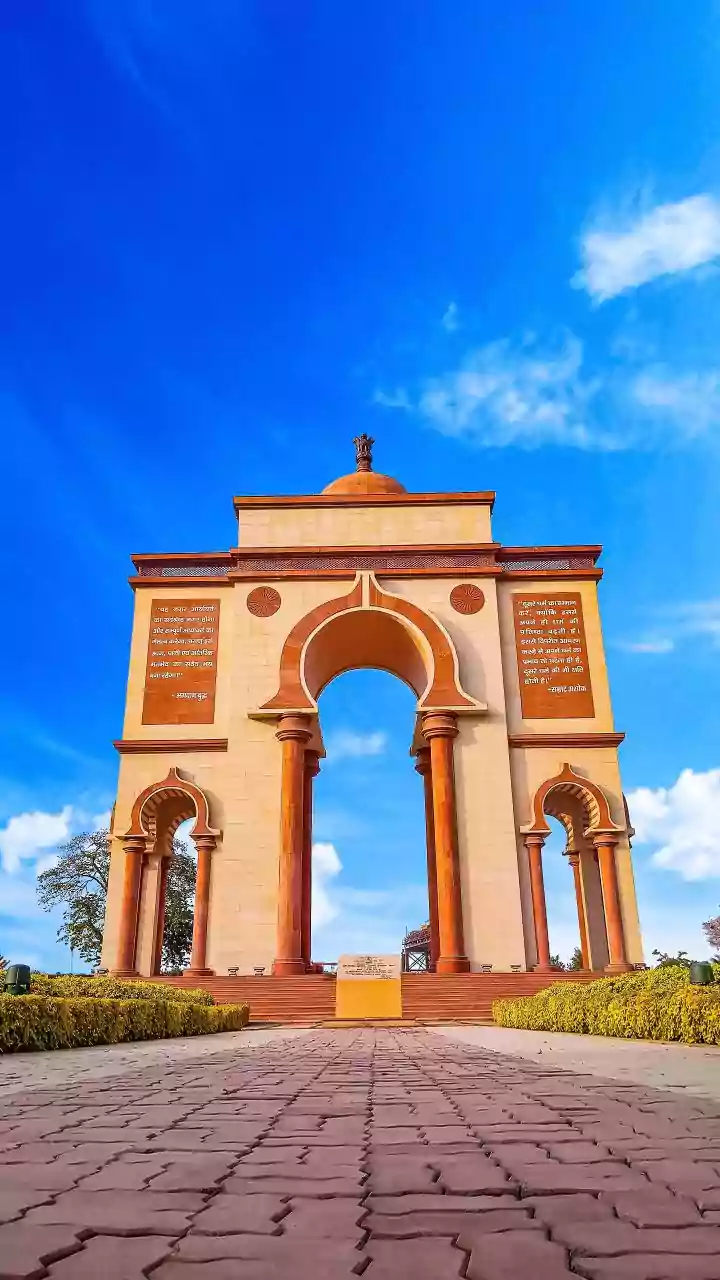
Stations on the R.K. Ashram Marg–Indraprastha stretch will include R.K. Ashram Marg, Shivaji Stadium, Central Secretariat, Kartavya Bhawan, India Gate, War Memorial–High Court, Baroda House, Bharat Mandapam and Indraprastha.
The Tughlakabad–Kalindi Kunj section will include Sarita Vihar Depot, Madanpur Khadar and Kalindi Kunj stations, while the Aerocity station will be extended to IGD Terminal 1.
Construction approach and environmental impact
Construction will be carried out using tunnel boring machines and the earth removal method to minimise disruption to traffic. Official release said the new corridors are expected to ease road congestion, reduce pollution and lower dependence on fossil fuels, improving overall ease of living in the capital.
Phase IV work and ridership
Meanwhile, construction of Delhi Metro Phase IV—spanning 111 km and 83 stations—is underway, with about 80.43% of civil construction on the three priority corridors already completed. These corridors are expected to be commissioned in stages by December 2026.
Delhi Metro currently operates 12 lines covering nearly 395 km with 289 stations across Delhi and the NCR. It carries an average of 65 lakh passengers daily, with peak-day ridership touching 81.87 lakh in August 2025, making it the largest metro network in India and among the biggest globally.