








What is the story about?
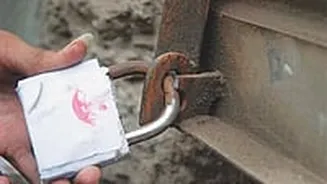
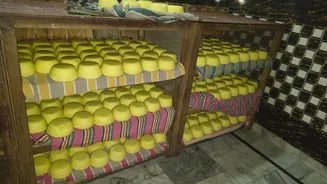
In a major crackdown, the Uttar Pradesh Food Safety Department raided an illegal khoya manufacturing unit in Sardhana, Meerut, and seized a large quantity of adulterated material.
According to information shared by the Food Safety and Standards Authority of India (FSSAI), officials confiscated nearly 70 tins of refined oil and eight sacks of skimmed milk powder during the operation.
Around 800 kilograms of substandard and adulterated khoya were destroyed on-site to prevent it from entering the market. The food safety team also collected nine samples from the spot for further laboratory analysis.
In a similar incident earlier, the Food Safety and Drug Administration (FSDA) seized 1,270 kg of adulterated khoya in Agra. The consignment was reportedly brought from Dholpur in Rajasthan.
Valued at around ₹2.64 lakh, it was sold for ₹210 per kg. Due to its low quality and strong odour, the product was immediately destroyed after two samples were obtained for laboratory investigation.
Here's how to spot adulterationSmell Test: Pure khoya has a rich, milky aroma, whereas contaminated khoya may smell sour or synthetic.
Texture test: Authentic khoya is soft and gritty. If it is sticky or unusually hard, it may be combined with non-dairy ingredients.
Warm water test: Mix a tablespoon of khoya with warm water. Then add a little bit of iodine to it. If the mixture turns blue, it is adulterated with starch. Pure khoya will show no colour change.
How to make homemade khoya
To make pure homemade khoya, start by bringing milk to a boil in a heavy-bottomed pan. Next, lower the heat and stir continuously to prevent the liquid from sticking or burning to the bottom. As the milk thickens over 30 to 40 minutes, regularly scrape the solids off the sides of the pan and mix them back in.
The process is complete when the milk reduces into a soft, dough-like consistency with a slightly yellow texture.
According to information shared by the Food Safety and Standards Authority of India (FSSAI), officials confiscated nearly 70 tins of refined oil and eight sacks of skimmed milk powder during the operation.
Around 800 kilograms of substandard and adulterated khoya were destroyed on-site to prevent it from entering the market. The food safety team also collected nine samples from the spot for further laboratory analysis.
#UttarPradesh #StateFoodSafetyDept ने मेरठ के सरधना में एक खोया निर्माण इकाई पर छापा मारकर 70 टीन रिफाइंड तेल और 8 बोरी स्किम्ड मिल्क पाउडर सीज़ किया गया।
मौके पर 9 नमूने जांच हेतु लिए गए एवं लगभग 800 किलोग्राम अमानक खोया नष्ट कराया गया। #FSSAIAction #FSSAIinStates pic.twitter.com/UP3eX2rFEp
— FSSAI (@fssaiindia) May 19, 2026
In a similar incident earlier, the Food Safety and Drug Administration (FSDA) seized 1,270 kg of adulterated khoya in Agra. The consignment was reportedly brought from Dholpur in Rajasthan.
Valued at around ₹2.64 lakh, it was sold for ₹210 per kg. Due to its low quality and strong odour, the product was immediately destroyed after two samples were obtained for laboratory investigation.
Here's how to spot adulterationSmell Test: Pure khoya has a rich, milky aroma, whereas contaminated khoya may smell sour or synthetic.
Texture test: Authentic khoya is soft and gritty. If it is sticky or unusually hard, it may be combined with non-dairy ingredients.
Warm water test: Mix a tablespoon of khoya with warm water. Then add a little bit of iodine to it. If the mixture turns blue, it is adulterated with starch. Pure khoya will show no colour change.
How to make homemade khoya
To make pure homemade khoya, start by bringing milk to a boil in a heavy-bottomed pan. Next, lower the heat and stir continuously to prevent the liquid from sticking or burning to the bottom. As the milk thickens over 30 to 40 minutes, regularly scrape the solids off the sides of the pan and mix them back in.
The process is complete when the milk reduces into a soft, dough-like consistency with a slightly yellow texture.