







What is the story about?
Abhishek Singh, CEO of IndiaAI Mission and Additional Secretary at MeitY, said the government is looking beyond discussions and aiming for tangible outcomes from the summit.
“By and large, it will be a vision for artificial intelligence (AI) for tomorrow, how different countries can share knowledge, can share expertise, how we can build up AI narrative for the Global South, how we can create global AI commons, how we can build tools for ensuring safe and trustworthy AI.”
He indicated that multiple announcements are expected, including fresh investments and MoUs from global and Indian companies. Big tech firms such as Google, Microsoft and Amazon have already signalled funding support, and more commitments to India’s AI startup ecosystem could follow.
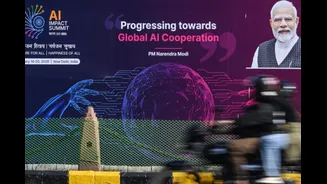
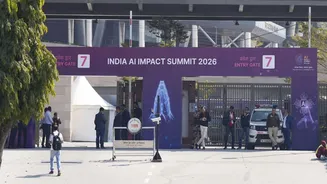
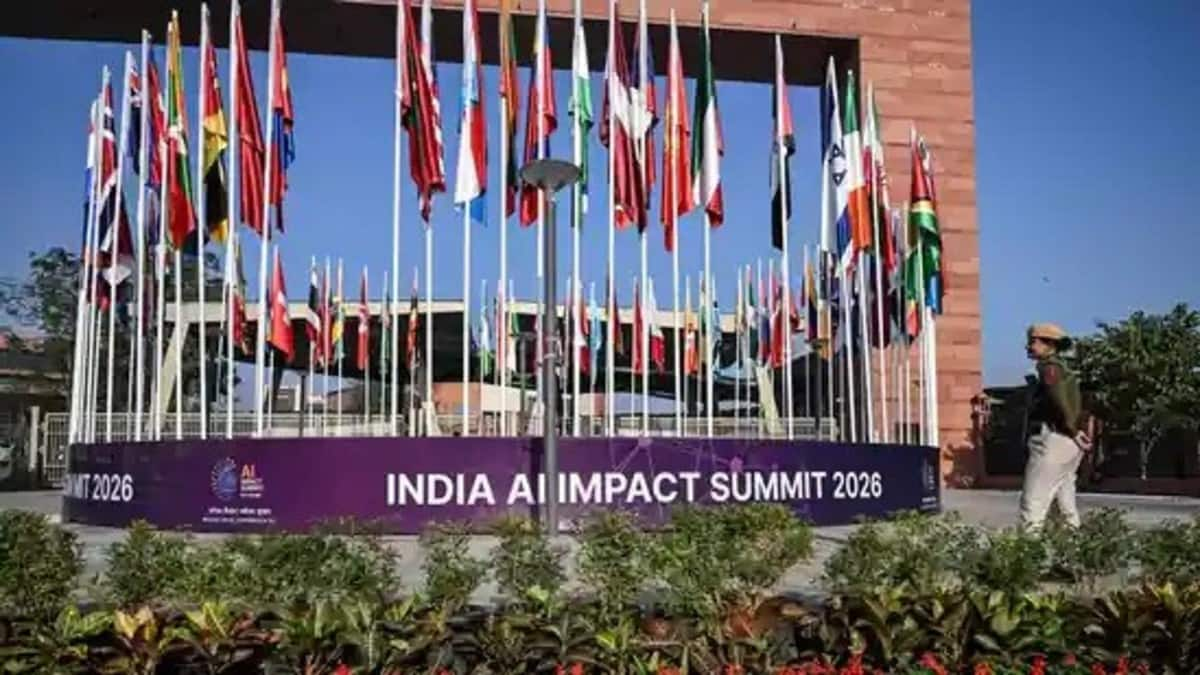
Global technology leaders have gathered in New Delhi for the India AI Impact Summit, a five-day event inaugurated by Narendra Modi at Bharat Mandapam. The summit, themed around people, planet and progress, is expected to see participation from global executives such as Sundar Pichai, Sam Altman, Bill Gates and Salil Parekh.
Read Here | India AI Summit to address job risks, reskilling needs: MeitY Secretary
On sovereign AI, Singh said India will prioritise models trained on Indian datasets and languages to improve access to public services. The focus will be on voice-enabled governance and democratising information.
India is also positioning itself strongly across four layers of the AI stack — energy, data centres, foundation models and applications — while working towards chip design capability in the next three to five years.
Addressing concerns around market volatility and tech sell-offs, Singh said stock market movements should not affect long-term AI strategy. “While there might be feeling that in short term, some services are getting disrupted, but in the long term, it will lead to creation of more value, because the strength that we have is our talent.”
Singh sees robots and humanoids not as a threat to jobs, but as a major opportunity for India. He believes there will be rising global demand for robots in the coming years, even if India itself may not immediately need them at scale.
He added that India’s IT sector must adapt through skilling and reskilling, especially in areas such as agentic AI and edge AI. While challenges remain around curriculum changes, job transitions and AI misuse, Singh believes India has an opportunity to become a global hub for AI transformation services.
Also Read | Sarvam Edge: Indian AI firm pushes offline models to reduce cloud spending as AI Impact Summit nears
“By and large, it will be a vision for artificial intelligence (AI) for tomorrow, how different countries can share knowledge, can share expertise, how we can build up AI narrative for the Global South, how we can create global AI commons, how we can build tools for ensuring safe and trustworthy AI.”
He indicated that multiple announcements are expected, including fresh investments and MoUs from global and Indian companies. Big tech firms such as Google, Microsoft and Amazon have already signalled funding support, and more commitments to India’s AI startup ecosystem could follow.
Global technology leaders have gathered in New Delhi for the India AI Impact Summit, a five-day event inaugurated by Narendra Modi at Bharat Mandapam. The summit, themed around people, planet and progress, is expected to see participation from global executives such as Sundar Pichai, Sam Altman, Bill Gates and Salil Parekh.
Read Here | India AI Summit to address job risks, reskilling needs: MeitY Secretary
On sovereign AI, Singh said India will prioritise models trained on Indian datasets and languages to improve access to public services. The focus will be on voice-enabled governance and democratising information.
India is also positioning itself strongly across four layers of the AI stack — energy, data centres, foundation models and applications — while working towards chip design capability in the next three to five years.
Addressing concerns around market volatility and tech sell-offs, Singh said stock market movements should not affect long-term AI strategy. “While there might be feeling that in short term, some services are getting disrupted, but in the long term, it will lead to creation of more value, because the strength that we have is our talent.”
Singh sees robots and humanoids not as a threat to jobs, but as a major opportunity for India. He believes there will be rising global demand for robots in the coming years, even if India itself may not immediately need them at scale.
He added that India’s IT sector must adapt through skilling and reskilling, especially in areas such as agentic AI and edge AI. While challenges remain around curriculum changes, job transitions and AI misuse, Singh believes India has an opportunity to become a global hub for AI transformation services.
Also Read | Sarvam Edge: Indian AI firm pushes offline models to reduce cloud spending as AI Impact Summit nears