
A bench led by Chief Justice Surya Kant asked the Centre, the amicus curiae and other parties to suggest names of environmentalists, scientists and mining experts within four weeks. The court said the committee will function under its direction and supervision.
During the hearing, lawyers informed the court that illegal mining was continuing at some places despite earlier directions. The bench directed the Rajasthan government to ensure that illegal mining operations are stopped immediately. The state assured the court that no unauthorised mining would take place.
The court said its interim orders on the definition of the Aravalli range will continue. Existing mining operations will be allowed to continue until further orders.
The Supreme Court also extended its earlier order that kept in abeyance its November 20 directions accepting a uniform definition of the Aravalli hills and ranges. The matter is being heard suo motu under the title In Re: Definition of Aravalli Hills and Ranges and Ancillary Issues.
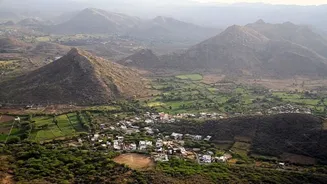
On December 29, 2025, the court had paused its November 20 order, stating that “critical ambiguities” needed to be resolved. These included whether the 100-metre elevation criterion and the 500-metre distance between hills could remove environmental protection from large parts of the Aravalli range. This December 2025 order reversed the earlier move that had restricted the definition to landforms with a height of 100 metres or more.
Under the November 20 order, the court had accepted recommendations of a committee of the Ministry of Environment, Forest and Climate Change. The committee defined an “Aravalli hill” as any landform in designated districts with an elevation of 100 metres or more above local relief, and an “Aravalli range” as two or more such hills within 500 metres of each other. The court had also banned the grant of fresh mining leases in Aravalli areas across Delhi, Haryana, Rajasthan and Gujarat until expert reports are submitted.
The bench reiterated that the definition of “forests” and the definition of the “Aravallis” will be examined separately.
The court also raised concerns over environmental damage linked to illegal construction and mining while hearing the Aravalli matter, including issues related to Chandigarh’s Sukhna Lake.
The case will be heard again after the amicus curiae files a detailed note incorporating suggestions from all parties and stakeholders.