









What is the story about?
Air pollution, which has long been linked to respiratory and heart diseases, is now being recognised as a major concern for eye health, according to doctors. Exposure to contaminated air can worsen pre-existing ocular diseases and raise the risk of eye infections, experts say.
Dr Ajay Sharma, co-founder of Eye Q Eye Hospital, told PTI, "Every winter, my clinic sees a rise in the number of people complaining of red, itchy, watery, and burning eyes." He cited high air pollution, especially fine particles known as PM 2.5, as the main cause.
How does PM2.5 affect the eyes?
PM2.5 includes tiny particulates, which are emitted by vehicles, industries, firecrackers and burning waste. Doctors have stated that solid particles can scratch and irritate the cornea, while liquid particles carry chemicals that mix with tears. This weakens the natural protective layer of the eyes.
Touching or rubbing your eyes with unclean hands can make it easier for infections to occur, Dr Taru Dewan, the head of the department of ophthalmology at RML hospital, told PTI.
Symptoms people may feel due to PM2.5
PM2.5 can cause a range of eye problems, including allergic conjunctivitis, scratches on the eye surface, dryness and blurred vision.
Who is at most risk?
Children and elderly people, because their eyes are more sensitive.
Office-goers, especially those who sit near polluted areas.
People who have had recent eye surgery.
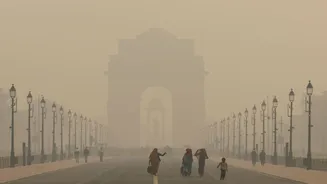
Doctors state that winter smog makes things worse. The eyes are always open and exposed to the environment, so they get affected quickly by pollution. "We are getting many allergic conjunctivitis patients with varying severity. Moreover, cases of eye dryness worsen due to exposure to smoke," said Dewan.
Smoking can also worsen eye health. Dr Umesh Bareja, senior consultant, ophthalmology, at Sitaram Bhartia Hospital, said, "Even passive smoking can affect eye health. Smoking has been linked to increased chances of cataracts, glaucoma, uveitis and macular degeneration."
How to protect eyes?
Try to stay away from polluted areas whenever possible.
Maintain good hygiene.
Wash your hands before touching your eyes.
These tips can help protect your eyes from particulate matter.
Dr Ajay Sharma, co-founder of Eye Q Eye Hospital, told PTI, "Every winter, my clinic sees a rise in the number of people complaining of red, itchy, watery, and burning eyes." He cited high air pollution, especially fine particles known as PM 2.5, as the main cause.
How does PM2.5 affect the eyes?
PM2.5 includes tiny particulates, which are emitted by vehicles, industries, firecrackers and burning waste. Doctors have stated that solid particles can scratch and irritate the cornea, while liquid particles carry chemicals that mix with tears. This weakens the natural protective layer of the eyes.
Touching or rubbing your eyes with unclean hands can make it easier for infections to occur, Dr Taru Dewan, the head of the department of ophthalmology at RML hospital, told PTI.
Symptoms people may feel due to PM2.5
PM2.5 can cause a range of eye problems, including allergic conjunctivitis, scratches on the eye surface, dryness and blurred vision.
Who is at most risk?
Children and elderly people, because their eyes are more sensitive.
Office-goers, especially those who sit near polluted areas.
People who have had recent eye surgery.
Doctors state that winter smog makes things worse. The eyes are always open and exposed to the environment, so they get affected quickly by pollution. "We are getting many allergic conjunctivitis patients with varying severity. Moreover, cases of eye dryness worsen due to exposure to smoke," said Dewan.
Smoking can also worsen eye health. Dr Umesh Bareja, senior consultant, ophthalmology, at Sitaram Bhartia Hospital, said, "Even passive smoking can affect eye health. Smoking has been linked to increased chances of cataracts, glaucoma, uveitis and macular degeneration."
How to protect eyes?
Try to stay away from polluted areas whenever possible.
Maintain good hygiene.
Wash your hands before touching your eyes.
These tips can help protect your eyes from particulate matter.