
According to The Indian Express, railway officials said Emergency Braking Distance (EBD) and coupler force trials for the longer rakes are likely to be conducted on the Virar–Dahanu Road section on January 14 and 15.
What the trials involve
The trials, scheduled for mid-January 2026, will test two separate 18-coach rakes — one equipped with Bombardier electrical systems and the other with Medha electrical equipment, The Economic Times reported.
Mandatory safety checks will include Emergency Braking Distance (EBD) and Coupler Force (CF) tests. EBD trials assess how quickly a fully loaded 18-coach train can come to a halt during an emergency, ensuring braking reliability over longer formations. Coupler Force tests, meanwhile, measure the stress between connected coaches during braking, which is critical for both mechanical integrity and passenger safety.
During the trials, Bombardier-fitted rakes will be tested at speeds of up to 110 kmph, while Medha-equipped sets will run at speeds of up to 105 kmph.
No immediate rollout
Railway officials have clarified that these trials are experimental and technical in nature and do not automatically mean that 18-coach local trains will begin regular services immediately. Any operational rollout will depend on trial outcomes, infrastructure preparedness — including platform length, signalling systems and power supply — and subsequent regulatory approvals.
Why the Virar–Dahanu stretch was chosen
The Virar–Dahanu Road section in Palghar district has been selected for the trials as it allows longer, uninterrupted runs at higher speeds. Compared to congested inner-city sections, the stretch has fewer operational constraints, making it safer and more suitable for critical safety testing.
Potential relief during peak hours
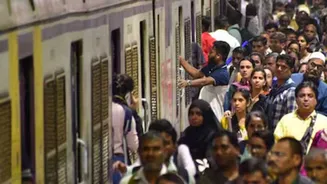
Mumbai's Western suburban railway is among the busiest commuter networks in the country, ferrying over 7.5 million passengers daily through more than 3,000 local services.
At present, most local trains operate with 12 coaches, while 15-coach services run on select sections. Introducing 18-coach trains could significantly boost passenger capacity during peak hours without increasing the number of services, offering much-needed relief on overcrowded routes.