


What is the story about?
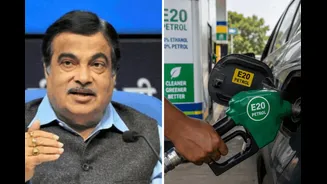
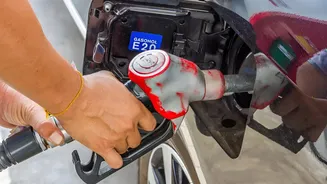
Union Road Transport and Highways Minister Nitin Gadkari has told the Rajya Sabha that some BS-III vehicles may need small part replacements to run smoothly on E20 petrol, a blend of 80% petrol and 20% ethanol.
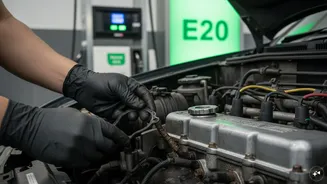
Gadkari, in a written reply on Wednesday, said BS-III vehicles introduced from April 2005 and manufactured before 2016 may need certain rubber parts and gaskets replaced. He said this "can be easily managed during the routine servicing regime of the vehicle."
Gadkari was replying to CPI MP AA Rahim's question on how E20 fuel affects vehicle performance, fuel efficiency, engine durability and maintenance costs.
Old vehicles, new worries
A joint study by the Indian Oil Corporation Limited (IOCL), the Indian Institute of Petroleum (IIP) Dehradun, the Society of Indian Automobile Manufacturers (SIAM) and the Automotive Research Association of India (ARAI) found no need to modify car or two-wheeler engines, and that BS-VI vehicles continued to meet emission standards on E20.
Gadkari said the studies showed legacy vehicles "did not exhibit any significant variations in performance, nor do they show abnormal wear-and-tear when operated with E20 fuel," with no issues reported in drivability, startability, or compatibility with metal and plastic parts.
Separately, an unpublished ARAI report — first reported by TOI earlier this month — had concluded that E20 could damage rubber parts in vehicles built to the older E10 standard.
Busting mileage myths
On worries about lower mileage, Gadkari said manufacturers and testing agencies have clarified that fuel type is only one factor among several; others include driving habits, servicing practices such as oil and air-filter changes, tyre pressure, wheel alignment and air-conditioner use.
Citing SIAM data, he said no widespread engine failures or breakdowns have been linked to ethanol blending, and that most concerns have come from public and social media commentary rather than documented cases — though scattered complaints of misfiring or breakdowns have been blamed by some users on E20 or contaminated fuel.
Years in the making
Gadkari said an Inter-Ministerial Committee, set up by NITI Aayog in December 2020 and backed by research from IOCL, ARAI and SIAM, examined vehicle compatibility and mileage before the wider E20 rollout.
Its report, the "Roadmap for Ethanol Blending in India 2020-25," published in June 2021 after talks with automakers, oil companies and agricultural experts, covered material compatibility, engine calibration, fuel systems, drivability, durability, emissions and fuel efficiency.
The minister said the Ethanol Blended Petrol programme has followed a phased, scientifically validated approach, noting ethanol blending has been used globally for over a century, including in Brazil at higher levels for decades.
India's programme began as a pilot in 2001, followed by E5 blending in 2006. Blending stood at around 1.53% in 2013-14 and rose steadily once capacity, infrastructure and rules were ready, reaching roughly 12% in 2022-23, 14.6% in 2023-24, 19.2% in 2024-25 and 20% in 2025-26.
Bharat Stage (BS) norms are India's vehicle emission standards, limiting pollutants such as carbon monoxide, nitrogen oxides, hydrocarbons and particulate matter.
Opposition parties and consumer groups have questioned whether older vehicles are fully compatible with E20, warning of possible mileage loss, higher upkeep costs and unclear liability for engine or fuel-system damage.
The government says the shift has been gradual and backed by extensive testing, while carmakers say they continue to honour warranty claims for E20-run vehicles.
Gadkari, in a written reply on Wednesday, said BS-III vehicles introduced from April 2005 and manufactured before 2016 may need certain rubber parts and gaskets replaced. He said this "can be easily managed during the routine servicing regime of the vehicle."
Gadkari was replying to CPI MP AA Rahim's question on how E20 fuel affects vehicle performance, fuel efficiency, engine durability and maintenance costs.
Old vehicles, new worries
A joint study by the Indian Oil Corporation Limited (IOCL), the Indian Institute of Petroleum (IIP) Dehradun, the Society of Indian Automobile Manufacturers (SIAM) and the Automotive Research Association of India (ARAI) found no need to modify car or two-wheeler engines, and that BS-VI vehicles continued to meet emission standards on E20.
Gadkari said the studies showed legacy vehicles "did not exhibit any significant variations in performance, nor do they show abnormal wear-and-tear when operated with E20 fuel," with no issues reported in drivability, startability, or compatibility with metal and plastic parts.
Separately, an unpublished ARAI report — first reported by TOI earlier this month — had concluded that E20 could damage rubber parts in vehicles built to the older E10 standard.
Busting mileage myths
On worries about lower mileage, Gadkari said manufacturers and testing agencies have clarified that fuel type is only one factor among several; others include driving habits, servicing practices such as oil and air-filter changes, tyre pressure, wheel alignment and air-conditioner use.
Citing SIAM data, he said no widespread engine failures or breakdowns have been linked to ethanol blending, and that most concerns have come from public and social media commentary rather than documented cases — though scattered complaints of misfiring or breakdowns have been blamed by some users on E20 or contaminated fuel.
Years in the making
Gadkari said an Inter-Ministerial Committee, set up by NITI Aayog in December 2020 and backed by research from IOCL, ARAI and SIAM, examined vehicle compatibility and mileage before the wider E20 rollout.
Its report, the "Roadmap for Ethanol Blending in India 2020-25," published in June 2021 after talks with automakers, oil companies and agricultural experts, covered material compatibility, engine calibration, fuel systems, drivability, durability, emissions and fuel efficiency.
The minister said the Ethanol Blended Petrol programme has followed a phased, scientifically validated approach, noting ethanol blending has been used globally for over a century, including in Brazil at higher levels for decades.
India's programme began as a pilot in 2001, followed by E5 blending in 2006. Blending stood at around 1.53% in 2013-14 and rose steadily once capacity, infrastructure and rules were ready, reaching roughly 12% in 2022-23, 14.6% in 2023-24, 19.2% in 2024-25 and 20% in 2025-26.
Bharat Stage (BS) norms are India's vehicle emission standards, limiting pollutants such as carbon monoxide, nitrogen oxides, hydrocarbons and particulate matter.
Opposition parties and consumer groups have questioned whether older vehicles are fully compatible with E20, warning of possible mileage loss, higher upkeep costs and unclear liability for engine or fuel-system damage.
The government says the shift has been gradual and backed by extensive testing, while carmakers say they continue to honour warranty claims for E20-run vehicles.