





What is the story about?
The Indian Oil Corporation Limited (IOCL) has advised autorickshaw drivers in Bengaluru to temporarily shift to petrol amid the growing shortage of LPG.
IOCL said LPG supply in the city has been ramped up amid disruptions caused by West Asia tensions.
The company added that around 70% of Bengaluru’s autorickshaws can run on both LPG and petrol.
The statement said, “In light of current conditions, users are encouraged to temporarily switch to petrol as an alternative fuel. Similar transitions have already been observed in markets such as Puttur and other areas where OMC-operated ALDS are limited, demonstrating the practicality of this approach.”
The fuel crunch has been aggravated by a sharp rise in demand and the closure of a large number of private auto
LPG dispensing stations across Karnataka.
Nearly 80% of over 300 private outlets in the state are currently non-operational, placing additional pressure on public sector fuel stations, the statement added.
Supply increased, but constraints persist
To address the shortage, IOCL has significantly increased its supply of auto LPG. Daily distribution has gone up from 43.5 metric tonnes in February to 59.5 metric tonnes in March, and further to 68.5 metric tonnes from early April 2026, the official statement mentioned.
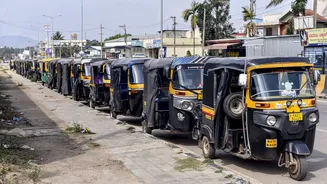
Officials, however, acknowledged that infrastructure difficulties, such as a scarcity of dispensing stations and capacity limits, continue to restrict supply. Long queues have become a common sight at PSU-operated outlets.
Price gap driving demand at PSU outlets
The situation has been further intensified by a price difference between public and private stations. Auto LPG is currently priced at around ₹89.5 per litre at PSU outlets in Bengaluru, compared to ₹99–105 per litre at private stations. This pricing gap has further led to a noticeable shift in consumer preference toward PSU stations, resulting in increased footfall and longer waiting times.
“The long queues outside our filling stations are because we have not stopped supply. Also, our rates are cheaper than whatever is being sold at private stations," The Times of India quoted an official as saying.
Drivers push back against petrol switch
Despite the IOC’s recommendation, autorickshaw drivers have expressed concerns about switching to petrol. Drivers stated that the dual-fuel option is not practical for regular commercial use.
According to Autorickshaw Drivers Union general secretary Rudra Murthy, most vehicles have very limited petrol tank capacity—typically 1–2 litres—and have not been used in petrol mode for years. This, he said, leads to poor fuel efficiency and potential engine issues.
“It is definitely not a solution for drivers who cover 100–150 km a day,” Murthy told The Indian Express.
IOCL said LPG supply in the city has been ramped up amid disruptions caused by West Asia tensions.
The company added that around 70% of Bengaluru’s autorickshaws can run on both LPG and petrol.
The statement said, “In light of current conditions, users are encouraged to temporarily switch to petrol as an alternative fuel. Similar transitions have already been observed in markets such as Puttur and other areas where OMC-operated ALDS are limited, demonstrating the practicality of this approach.”
The fuel crunch has been aggravated by a sharp rise in demand and the closure of a large number of private auto
Nearly 80% of over 300 private outlets in the state are currently non-operational, placing additional pressure on public sector fuel stations, the statement added.
Supply increased, but constraints persist
To address the shortage, IOCL has significantly increased its supply of auto LPG. Daily distribution has gone up from 43.5 metric tonnes in February to 59.5 metric tonnes in March, and further to 68.5 metric tonnes from early April 2026, the official statement mentioned.
Officials, however, acknowledged that infrastructure difficulties, such as a scarcity of dispensing stations and capacity limits, continue to restrict supply. Long queues have become a common sight at PSU-operated outlets.
Price gap driving demand at PSU outlets
The situation has been further intensified by a price difference between public and private stations. Auto LPG is currently priced at around ₹89.5 per litre at PSU outlets in Bengaluru, compared to ₹99–105 per litre at private stations. This pricing gap has further led to a noticeable shift in consumer preference toward PSU stations, resulting in increased footfall and longer waiting times.
“The long queues outside our filling stations are because we have not stopped supply. Also, our rates are cheaper than whatever is being sold at private stations," The Times of India quoted an official as saying.
Drivers push back against petrol switch
Despite the IOC’s recommendation, autorickshaw drivers have expressed concerns about switching to petrol. Drivers stated that the dual-fuel option is not practical for regular commercial use.
According to Autorickshaw Drivers Union general secretary Rudra Murthy, most vehicles have very limited petrol tank capacity—typically 1–2 litres—and have not been used in petrol mode for years. This, he said, leads to poor fuel efficiency and potential engine issues.
“It is definitely not a solution for drivers who cover 100–150 km a day,” Murthy told The Indian Express.