








What is the story about?
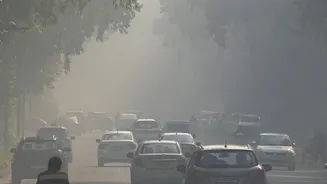
A thick blanket of toxic smog covered several parts of Delhi and the National Capital Region (NCR) on Saturday morning. A layer of dense fog also affected visibility across the national capital, with the Air Quality Index (AQI) hovering near the ‘severe’ category.
According to the data by the Central Pollution Control Board (CPCB), the AQI in several areas remained above 400. As per the CPCB classification, an AQI between 401 and 500 falls into the ‘severe’ category. Vivek Vihar reported an AQI of 435, Anand Vihar 434 and ITO 437, as per the CBCP data. Similar hazardous AQI levels were also reported in northern and western regions, including Rohini (421), Wazirpur (424), Jahangirpuri (428) and Punjabi Bagh (417). Akshardham had an AQI of 420, and Sarai Kale Khan had an AQI of 428.
According to the CPCB classification, an AQI of 0 to 50 is deemed ‘good,’ 51 to 100 is ‘satisfactory,’ 101 to 200 is ‘moderate,’ 201 to 300 is ‘poor,’ 301 to 400 is ‘very poor,’ and 401 to 500 is ‘severe.’
The worsening air quality in the national capital remains a concern for residents, particularly for vulnerable groups, including children, the elderly, and those with respiratory conditions.
The air pollution has sharply increased in Delhi-NCR due to heavy fog and slow winds. It has significantly impaired visibility, affecting traffic movement in many parts.
In response to the deteriorating air, the Commission for Air Quality Management (CAQM) has imposed Stage-IV of the Graded Response Action Plan (GRAP), the highest degree of emergency actions intended to reduce pollution.
As per the GRAP-IV measures, entry of older diesel cars into Delhi has been banned. The Delhi government has also intensified enforcement of pollution control norms in order to reduce vehicular emissions. The "No PUC, No Fuel" rule has been enforced at CNG stations and petrol pumps to make sure vehicle owners adhere to pollution regulations.
Meanwhile, the India Meteorological Department (IMD) has issued an orange alert on Saturday, forecasting severe fog in Delhi. As winter deepens, foggy conditions are expected to continue in the early mornings in the upcoming days, according to weather officials.
Amid the worsening air quality in Delhi, experts have cautioned that extended exposure to high AQI levels increases risks for both lung and cardiovascular issues, and local reports indicate an increase in respiratory symptoms.
According to the data by the Central Pollution Control Board (CPCB), the AQI in several areas remained above 400. As per the CPCB classification, an AQI between 401 and 500 falls into the ‘severe’ category. Vivek Vihar reported an AQI of 435, Anand Vihar 434 and ITO 437, as per the CBCP data. Similar hazardous AQI levels were also reported in northern and western regions, including Rohini (421), Wazirpur (424), Jahangirpuri (428) and Punjabi Bagh (417). Akshardham had an AQI of 420, and Sarai Kale Khan had an AQI of 428.
According to the CPCB classification, an AQI of 0 to 50 is deemed ‘good,’ 51 to 100 is ‘satisfactory,’ 101 to 200 is ‘moderate,’ 201 to 300 is ‘poor,’ 301 to 400 is ‘very poor,’ and 401 to 500 is ‘severe.’
The worsening air quality in the national capital remains a concern for residents, particularly for vulnerable groups, including children, the elderly, and those with respiratory conditions.
The air pollution has sharply increased in Delhi-NCR due to heavy fog and slow winds. It has significantly impaired visibility, affecting traffic movement in many parts.
In response to the deteriorating air, the Commission for Air Quality Management (CAQM) has imposed Stage-IV of the Graded Response Action Plan (GRAP), the highest degree of emergency actions intended to reduce pollution.
As per the GRAP-IV measures, entry of older diesel cars into Delhi has been banned. The Delhi government has also intensified enforcement of pollution control norms in order to reduce vehicular emissions. The "No PUC, No Fuel" rule has been enforced at CNG stations and petrol pumps to make sure vehicle owners adhere to pollution regulations.
Meanwhile, the India Meteorological Department (IMD) has issued an orange alert on Saturday, forecasting severe fog in Delhi. As winter deepens, foggy conditions are expected to continue in the early mornings in the upcoming days, according to weather officials.
Amid the worsening air quality in Delhi, experts have cautioned that extended exposure to high AQI levels increases risks for both lung and cardiovascular issues, and local reports indicate an increase in respiratory symptoms.