








What is the story about?
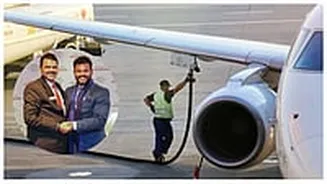
In a relief for airlines grappling with rising operational costs amid the ongoing West Asia crisis, the Maharashtra government has slashed Value Added Tax (VAT) on Aviation Turbine Fuel (ATF) from 18% to 7%, effective May 15, 2026.
The reduction will remain in place for six months till November 14, 2026, according to a state government notification issued by the Finance Department.
The move comes at a time when India’s aviation sector is facing multiple headwinds, including airspace disruptions, volatile flight schedules and a sharp spike in global aviation fuel prices due to geopolitical tensions in West Asia.
Civil Aviation Minister Ram Mohan Naidu Kinjarapu welcomed the decision, saying the aviation industry is currently navigating challenges ranging from airspace closures to rising ATF costs.
In a post on X, the minister said the Centre, under the leadership of Prime Minister Narendra Modi, had already extended support to airlines through measures such as capping ATF prices for domestic operators, lowering airport charges and introducing emergency credit support.
“One of the important expenditures in the aviation industry is VAT on ATF levied by state governments. The Ministry of Civil Aviation has been engaging with states to reduce this VAT, especially during crisis periods,” the minister said, thanking the Maharashtra government and Deputy Chief Minister Devendra Fadnavis for the “timely intervention”.
Maharashtra is a crucial aviation market, with 16 operational airports, handling nearly 75 million passengers annually and around 2 lakh daily flyers, making it the state with the highest air traffic in the country.
Industry observers believe the tax cut could provide airlines operating in Maharashtra some cushion against rising fuel costs and help prevent a sharp surge in airfares.
ATF is one of the biggest cost components for airlines, accounting for as much as 35–40% of operating expenses in India. With fuel prices rising due to geopolitical instability and rerouting costs increasing amid airspace closures, the VAT reduction is expected to ease cost pressures for carriers operating out of major Maharashtra airports, including Mumbai, Pune and Nagpur.
The state government notification amended Schedule ‘B’ under the Maharashtra Value Added Tax Act, reducing the applicable tax rate from 18% to 7% for ATF for a temporary six-month period.
The Centre hopes such interventions by states will help keep ticket prices in check even as global disruptions continue to pressure airline economics.
The reduction will remain in place for six months till November 14, 2026, according to a state government notification issued by the Finance Department.
The move comes at a time when India’s aviation sector is facing multiple headwinds, including airspace disruptions, volatile flight schedules and a sharp spike in global aviation fuel prices due to geopolitical tensions in West Asia.
Civil Aviation Minister Ram Mohan Naidu Kinjarapu welcomed the decision, saying the aviation industry is currently navigating challenges ranging from airspace closures to rising ATF costs.
In a post on X, the minister said the Centre, under the leadership of Prime Minister Narendra Modi, had already extended support to airlines through measures such as capping ATF prices for domestic operators, lowering airport charges and introducing emergency credit support.
“One of the important expenditures in the aviation industry is VAT on ATF levied by state governments. The Ministry of Civil Aviation has been engaging with states to reduce this VAT, especially during crisis periods,” the minister said, thanking the Maharashtra government and Deputy Chief Minister Devendra Fadnavis for the “timely intervention”.
Maharashtra is a crucial aviation market, with 16 operational airports, handling nearly 75 million passengers annually and around 2 lakh daily flyers, making it the state with the highest air traffic in the country.
Industry observers believe the tax cut could provide airlines operating in Maharashtra some cushion against rising fuel costs and help prevent a sharp surge in airfares.
ATF is one of the biggest cost components for airlines, accounting for as much as 35–40% of operating expenses in India. With fuel prices rising due to geopolitical instability and rerouting costs increasing amid airspace closures, the VAT reduction is expected to ease cost pressures for carriers operating out of major Maharashtra airports, including Mumbai, Pune and Nagpur.
The state government notification amended Schedule ‘B’ under the Maharashtra Value Added Tax Act, reducing the applicable tax rate from 18% to 7% for ATF for a temporary six-month period.
The Centre hopes such interventions by states will help keep ticket prices in check even as global disruptions continue to pressure airline economics.