









What is the story about?
India has begun the 2026 southwest monsoon season on a weak note, with rainfall during June 1-14 running 28% below the long-period average, raising concerns over agriculture, water availability and rural consumption.
The India Meteorological Department (IMD) has already projected a below-normal monsoon this year, estimating rainfall at around 90% of the long-period average. The latest data suggest that the season has started slower than usual, with several parts of the country witnessing a sharp rainfall deficit.
Central India has recorded the biggest shortfall so far, with rainfall 55% below normal. East and Northeast India are also facing a deficit of around 40%, while the southern peninsula has received 4% less rain than usual. Northwest India has been the only bright spot, receiving 13% more rainfall than normal.
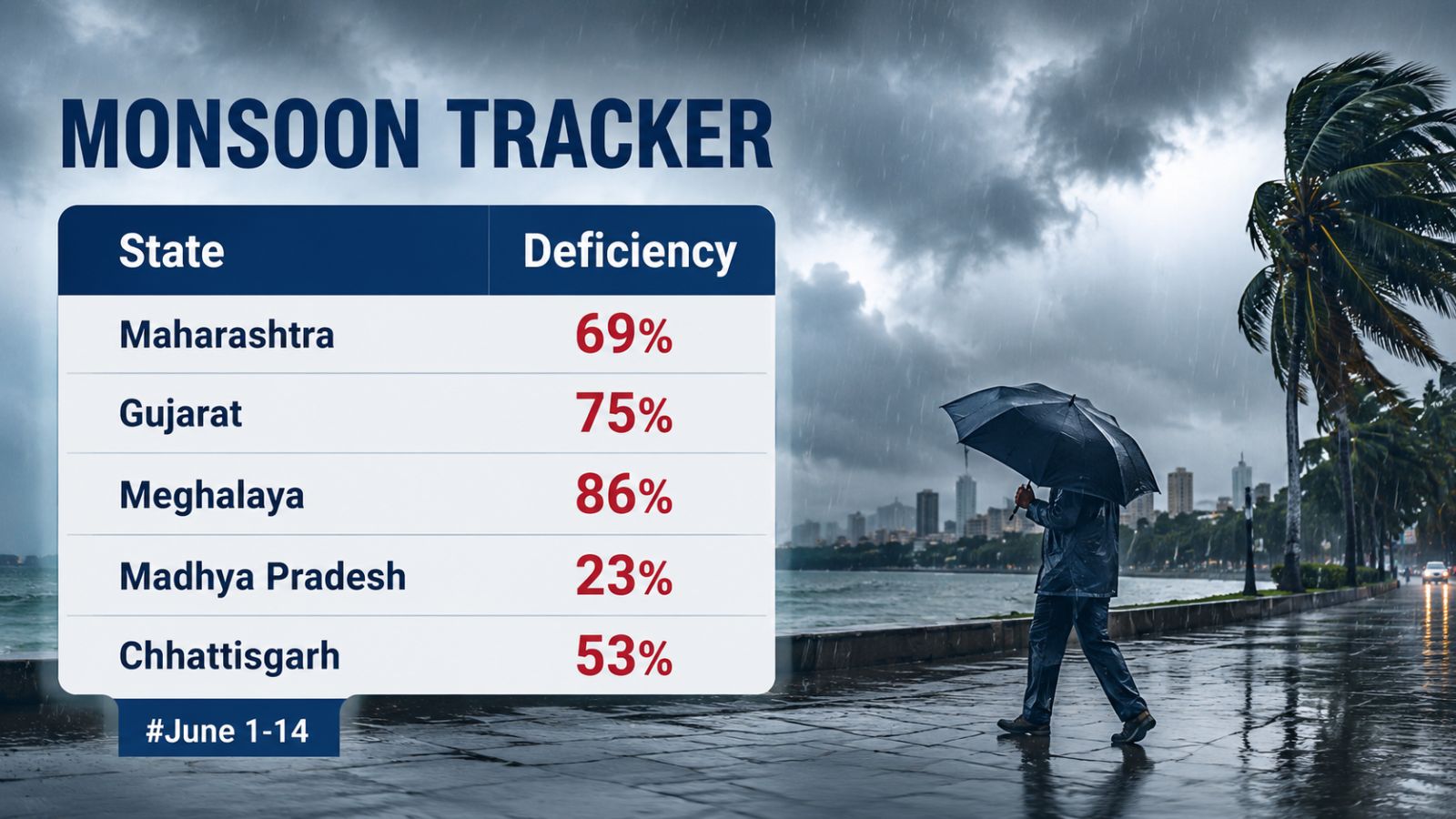
Among major states, Gujarat has seen one of the steepest declines, with rainfall nearly 75% below normal during the first two weeks of June. Maharashtra, another key agricultural state, has recorded a deficit of around 69%. Meghalaya has witnessed an even larger shortfall, with rainfall down 86% from normal levels.
Read Here | India preparing for a 'not so good monsoon' scenario; food shortage not a concern: FM
Other states have also reported weak rainfall. Madhya Pradesh has recorded a 23% deficit, while Chhattisgarh is facing a shortfall of more than 50%. Overall, nearly 200 districts across the country are experiencing deficient rainfall.
The weak start to the monsoon comes against the backdrop of El Niño conditions, which are generally associated with lower-than-normal rainfall in India. The IMD recently confirmed the onset of El Niño, adding to concerns over the progress of the monsoon in the coming months.
Global weather agencies have also highlighted the risks. The World Meteorological Organisation has estimated an 80% probability of El Niño conditions during June-August. Meanwhile, the US National Oceanic and Atmospheric Administration has indicated a 53% chance of a strong El Niño event developing between November and January.
Several regions, including Maharashtra, Goa and the Konkan belt, are yet to receive widespread rainfall, keeping concerns elevated. A prolonged rainfall deficiency could affect crop sowing, reservoir levels and rural demand, making the progress of the monsoon a key factor to watch for policymakers and markets alike.
Watch accompanying video
Follow our live blog for more stock market updates
The India Meteorological Department (IMD) has already projected a below-normal monsoon this year, estimating rainfall at around 90% of the long-period average. The latest data suggest that the season has started slower than usual, with several parts of the country witnessing a sharp rainfall deficit.
Central India has recorded the biggest shortfall so far, with rainfall 55% below normal. East and Northeast India are also facing a deficit of around 40%, while the southern peninsula has received 4% less rain than usual. Northwest India has been the only bright spot, receiving 13% more rainfall than normal.
Among major states, Gujarat has seen one of the steepest declines, with rainfall nearly 75% below normal during the first two weeks of June. Maharashtra, another key agricultural state, has recorded a deficit of around 69%. Meghalaya has witnessed an even larger shortfall, with rainfall down 86% from normal levels.
Read Here | India preparing for a 'not so good monsoon' scenario; food shortage not a concern: FM
Other states have also reported weak rainfall. Madhya Pradesh has recorded a 23% deficit, while Chhattisgarh is facing a shortfall of more than 50%. Overall, nearly 200 districts across the country are experiencing deficient rainfall.
The weak start to the monsoon comes against the backdrop of El Niño conditions, which are generally associated with lower-than-normal rainfall in India. The IMD recently confirmed the onset of El Niño, adding to concerns over the progress of the monsoon in the coming months.
Global weather agencies have also highlighted the risks. The World Meteorological Organisation has estimated an 80% probability of El Niño conditions during June-August. Meanwhile, the US National Oceanic and Atmospheric Administration has indicated a 53% chance of a strong El Niño event developing between November and January.
Several regions, including Maharashtra, Goa and the Konkan belt, are yet to receive widespread rainfall, keeping concerns elevated. A prolonged rainfall deficiency could affect crop sowing, reservoir levels and rural demand, making the progress of the monsoon a key factor to watch for policymakers and markets alike.
Watch accompanying video
Follow our live blog for more stock market updates