
India’s foreign policy in 2025 is best summed up as crisis management under uncertainty. It navigated tariff shocks, uneasy neighbours and pressure from other great powers while trying to preserve its strategic autonomy.
From punitive US trade measures to lingering tensions with China and deepening dependence on Russian energy, India spent the year balancing competing risks in an increasingly transactional global order.
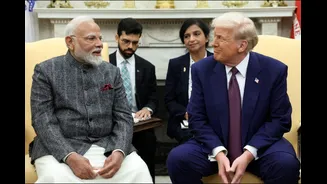
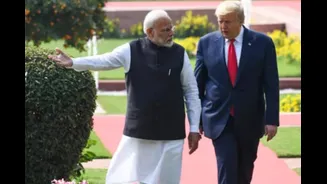
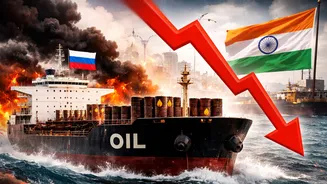
The year began with optimism over ties with Washington under US President Donald Trump’s second term; the administration’s first engagement right after Trump’s swearing in was a quad meeting that included India. That optimism collapsed after Trump announced reciprocal tariffs in April and eventually imposed a 50% tariff on Indian exports — half of this was penalty for purchasing Russian oil.
The move left India facing higher US tariffs than China, reversing two decades of“painstakingly built” ties. Analysts described the decision as a severe blow to a partnership strengthened to certain extent by shared concerns over China.
Also Read: Gold’s defining year: How 2025 became one of the metal’s strongest runs in over four decades
India defended its national interest, took a measured approach while focusing on accelerating outreach to alternative partners. The friction with the US, India’s largest trading partner, inevitably shaped India’s approach foreign trade.
Diversifying global trade
While negotiations with the US are still ongoing, India pursued trade diversification more aggressively and finalised deals with three countries including the UK, Oman, and New Zealand.
India-UK Comprehensive Economic and Trade Agreement grants duty-free access to 99% of Indian exports by value. The UK agreed to cut whisky tariffs from 150% to 75%, falling to 40% over time.
The Oman agreement provides duty-free access for 98% of Indian exports, while the New Zealand pact aims to double bilateral trade within five years.
While these are attempts to hedge against US trade volatility and a signal that India has alternatives, they are yet to have any material impact in the market. Analysts also caution that FTAs cannot replace the scale of the US market, which absorbed $87 billion of Indian exports in 2024 alone.
For the short term, piecemeal strategies are at play. Loss to marine exports was undone by the European Union’s nod to fisheries. In September, the EU approved 102 new Indian fishery units for export, raising the total number of EU-cleared establishments to 604.
However, some believe trade deals are not enough to address problems at home in the Indian economy. Anup Wadhawan, former Commerce Secretary to the Government of India, said, “The single-pointed issue that needs to be addressed is to make India more business-friendly.” Wadhawan believes that in the end, a good business environment would bring growing and keep Indians from seeking better opportunities abroad and contribute to economic growth at home.
China ties: Thaw without trust
Towards its North, India took cautious steps to stabilise ties with China in 2025, even as deep mistrust over the disputed border continued to constrain the relationship.
Prime Minister Narendra Modi and Chinese President Xi Jinping met for the first time in seven years on the sidelines of the Shanghai Cooperation Organisation (SCO) summit in August. Both sides publicly described each other as “development partners and not rivals”, signalling an attempt to move beyond the post-2020 freeze. It should be noted that there’s no significant breakthrough in the border issue besides military disengagement.
Also Read: Top 10 court cases that defined 2025: Aravalli definition, stray dogs, corporate rulings and more
Other confidence-building measures this year included the resumption of direct flights, the reopening of the Kailash Manasarovar pilgrimage, and a gradual revival of people-to-people exchanges.
However, frictions persisted. Beijing maintained close coordination with Pakistan following the April terror attack in Pahalgam and later in the year, detained two Indian travellers, reiterating its territorial claims over Arunachal Pradesh
The balancing act
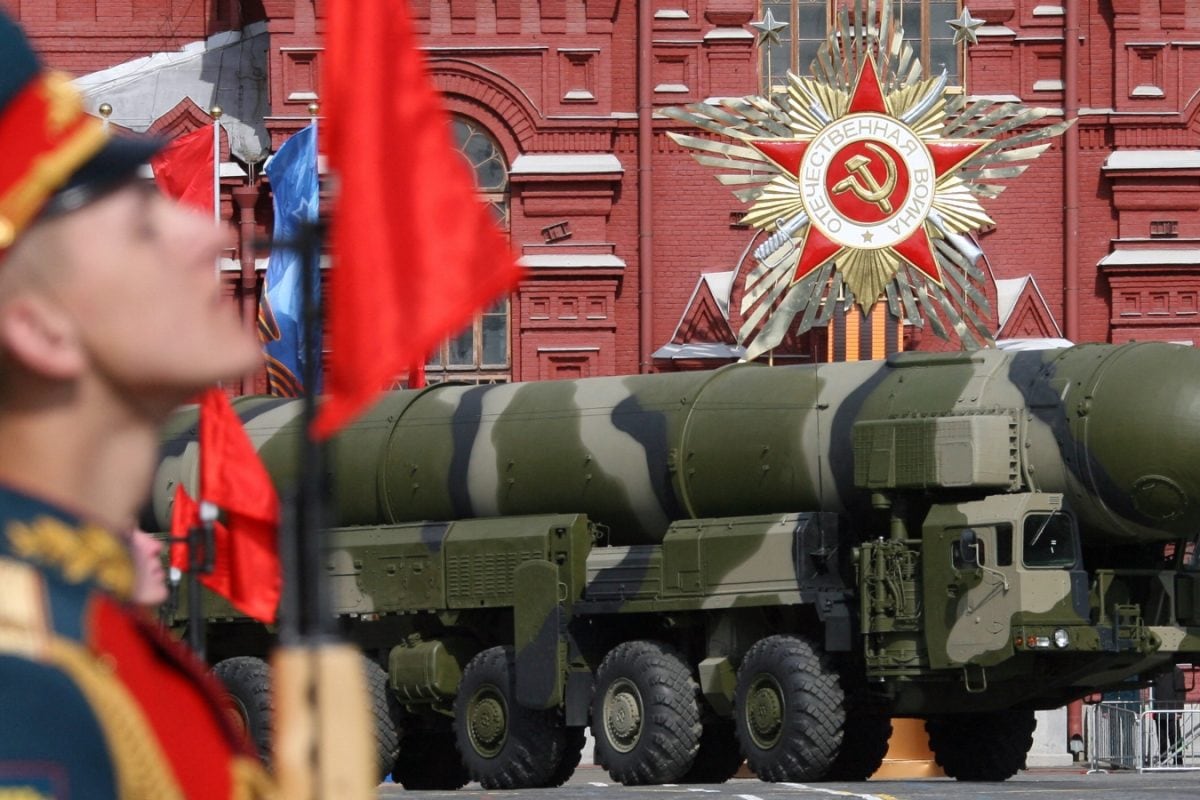
India’s relationship with Russia in 2025 showed the balancing act at the core of its foreign policy. It sustained discounted oil imports and hosted President Vladimir Putin for a summit in December where he promised “uninterrupted” oil shipping.
Russia has become India’s largest crude oil supplier, with bilateral trade reaching $68.7 billion in FY2024-25. Both countries said their partnership is “resilient to external pressure”.
As geopolitical influence and competition sharpens and tolerance for strategic ambiguity becomes less, India’s ability to manage parallel relationships without formal alignment will remain a defining test of its foreign policy.