




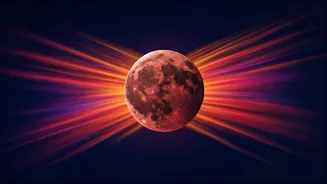
Get ready for a celestial celebration. On March 3, 2026, the night sky will host a breath-taking total lunar eclipse, coinciding perfectly with the festival
of Holi.
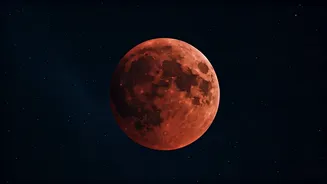
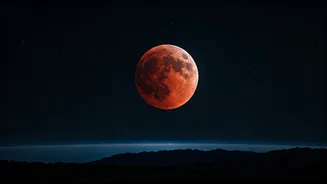
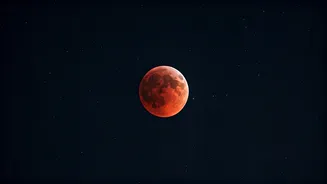
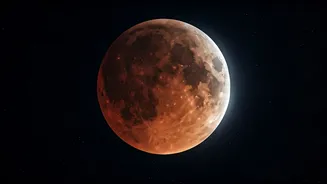
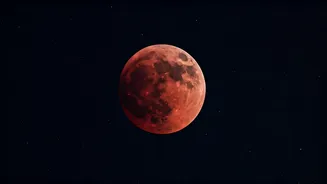
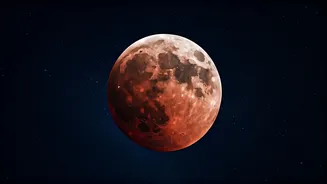
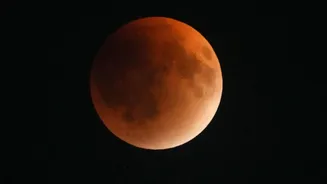
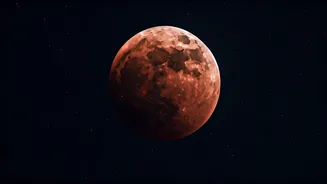
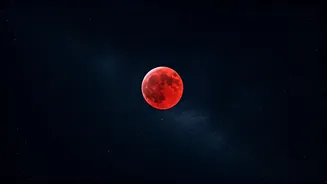
This rare 'blood Moon' — where the Earth’s shadow paints the lunar surface in a reddish hue — will be the only total eclipse of its kind this year and the final one until 2028. The phenomenon is also known as ‘chandra grahan’in India.
The blood Moon on March 3 will be a total lunar eclipse visible across much of the globe, including Asia, Australia, and the Americas, requiring nothing more than a clear sky and a quiet moment to watch it unfold.
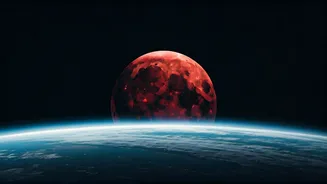
During a full Moon, a lunar eclipse unfolds as Earth aligns perfectly between the Moon and the Sun, according to NASA. This alignment casts Earth’s shadow across the lunar surface, causing it to darken and often transform into a vivid red hue over several hours, a spectacle visible to anyone from half of Earth.
Following the 2026 event, skywatchers in India will have to wait until July 6, 2028, to witness the next lunar eclipse, which will be a partial one, according to the Ministry of Earth Sciences. This follows the most recent total lunar eclipse seen from India, which took place on September 7–8, 2025.
Lunar eclipse time in India
In India, the March 3 lunar eclipse features a penumbral and total phase start at 4.58 pm IST, with the final phase ending at 7.53 pm.
The timings of the eclipse are as follows:
- Start of penumbral phase: 4.58 pm.
- Start of totality: 4.58 pm.
- End of totality: 5.32 pm.
- End of penumbral phase: 7.53 pm.
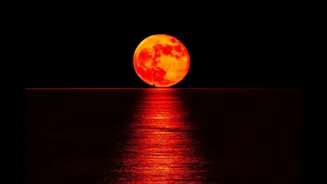
In India, the Moon will rise while already eclipsed, limiting the view to the event's concluding stages. The dramatic transformation will be visible for roughly 20 minutes around sunset, making it a brief but stunning spectacle. There is no need to stay awake; simply head outdoors at dusk and face the eastern horizon as the Moon rises to catch the show.
Regional visibility across India
While most of the country will only see a partial eclipse as the Moon rises, several cities in Northeast India are perfectly positioned to witness 100% totality. In these locations, the Earth’s shadow will completely envelop the Moon.
Cities with 100% totality:
Assam: Dibrugarh, Dispur, and Guwahati
Arunachal Pradesh: Itanagar
Meghalaya: Shillong
For these regions, the total eclipse begins in late afternoon and extends into the evening, with the peak blood Moon phase occurring between 5.10-5.25 pm, depending on your specific location.
ALSO READ | Celestial events to watch in India in 2026: Supermoons, eclipses, meteor showers and planet alignments
How to watch
The upcoming lunar eclipse on March 3 can be viewed safely without special equipment or glasses, simply by looking towards the eastern horizon. While binoculars can enhance the view, a clear sky is all that is needed to observe the dramatic shift in the Moon's colour and brightness.
Observing a lunar eclipse is remarkably simple; unlike solar eclipses, it is perfectly safe to view with the naked eye. Though the event will be brief for many in India, it serves as a reminder that some of the world's most stunning sights are visible just by looking up.
ALSO READ | Blaze Star: This once-in-a-generation celestial event may take place in June 2026