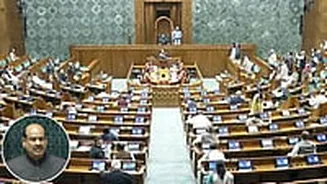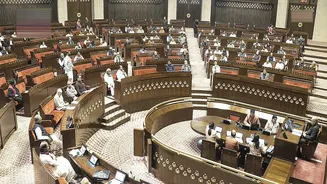

The Winter Session of Parliament 2025 concluded with the government pushing through key legislation amid sharp political confrontation, even as official
data pointed to unusually high productivity in both Houses.
According to PRS, the Lok Sabha functioned for 103% of its scheduled time, while the Rajya Sabha exceeded its schedule at 104%, underlining that despite frequent protests and walkouts, parliamentary business continued at a brisk pace. Notably, each House spent over 40% of its total time on debates, countering opposition claims that legislation was passed without discussion.
A striking feature of the session was the speed of law-making. Seven of the nine Bills introduced during the Winter Session were passed within a week, reinforcing the opposition’s charge that scrutiny was rushed. Among the key legislations cleared were the VB-G RAM G Bill, which replaces MGNREGA, the SHANTI Bill opening the civil nuclear sector to private participation, and amendments to insurance and taxation laws.
Private Members’ business, however, remained limited. Data shows that such business was taken up on only two of the three scheduled days, continuing a trend seen in previous sessions and drawing criticism from opposition MPs who argue that non-government legislative initiatives are being sidelined.
The passage of the VB-G RAM G Bill triggered the sharpest political flashpoint. Priyanka Gandhi Vadra questioned the government’s insistence on renaming schemes, saying she did not understand the “obsession with changing names,” while Rahul Gandhi described the move as weakening the rural employment safety net. Opposition parties staged walkouts, overnight protests, and accused the government of “bulldozing” legislation.
The government, however, defended the session as both productive and purposeful, pointing to extended sittings, substantial debate time, and the timely passage of priority reforms.
Also Read: Government deliberately delaying naming Navi Mumbai airport after D B Patil: Harshwardhan Sapkal