








What is the story about?
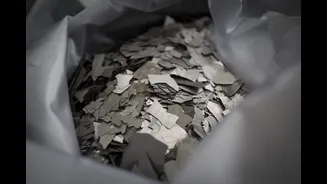
The Union Budget 2026 proposed the creation of rare-earth corridors in Odisha, Tamil Nadu, Kerala and Andhra Pradesh for mining, manufacturing, processing, and refining of rare earth magnets and critical minerals. The move is aimed at strengthening India's vision to cut the dependence on China for critical minerals manufacturing across sectors such as EVs, electronics and energy, among others.
The industry has welcomed the move which will focus on the development of new technologies for manufacturing of rare earth magnets, which are used in phones, defence and space-tech, EVs and other modern equipment.
Sanjiv Ganeriwala, Chairman of the Mining Council Eastern India at ASSOCHAM said that beneficiation and refining of graphite will lead to large-scale battery storage for solar energy and other industries, apart from boosting the refining of vanadium for alloys and batteries, and titanium for defence, space, and paint industries.
As part of continued efforts to extract more rare earth elements (REEs) from mineral waste, coal mines across India are exploring REEs in their overburden (byproducts and waste).
While exploration of REEs is aimed at unlocking new revenue streams and for improving resource utilisation in opencast mines, government sources had earlier said that enhanced exploration for REEs will cover not just overburden from existing mineral-rich areas but also coal mines and the petroleum sector.
Read more: Budget 2026 Live Updates
Rare earth elements (REE) and processed minerals are extensively used in heavy industries, robotics, batteries, and military equipment.
The move is a part of a larger plan to achieve self-reliance in critical minerals under the National Critical Minerals Mission (NCMM).
Chairman and Managing Director of Singareni Collieries Company Limited (SCCL), N Balram had told CNBC-TV18 that studies by the government-owned Non-ferrous Materials Technology Development Centre (NFTDC) show 1 kg of scandium plus strontium in 15 tonnes of clay in the Sathupalli and Ramagundam opencast mines.
While scandium is used in aircraft components, fuel cells and high-performance sports goods, strontium is used in alloys, ferrite ceramic magnets, medicines, vacuum systems, and cathode-ray tubes.
Amidst supply chain concerns over the availability of critical minerals and REEs, Minister for Commerce and Industry Piyush Goyal had earlier described China's pause on REE exports as a wake-up call for the world.
Currently, China produces around 60% of the global supply of rare earth magnets, and processes around 90% of the supply which also involves sourcing of raw materials from other countries.
Read more: Union Budget 2026: Rare earth corridors to be established in Odisha, Kerala, TN, AP, says FM Sitharaman
Government sources had told CNBC-TV18 that India is looking to hedge supply chain risks by exploring alternative sourcing destinations like Australia, Argentina, Brazil, and Chile.
Government sources had said that speedy output from the National Critical Minerals Mission along with recycling via a circular economy is being increasingly looked at to boost domestic availability.
Pointing to Africa's support to China in trade and the supply of raw materials, government sources added that increased sourcing of Lithium from Chile is vital for India's plans to convert 50% of all new vehicles into EVs by 2030.
The industry has welcomed the move which will focus on the development of new technologies for manufacturing of rare earth magnets, which are used in phones, defence and space-tech, EVs and other modern equipment.
Sanjiv Ganeriwala, Chairman of the Mining Council Eastern India at ASSOCHAM said that beneficiation and refining of graphite will lead to large-scale battery storage for solar energy and other industries, apart from boosting the refining of vanadium for alloys and batteries, and titanium for defence, space, and paint industries.
As part of continued efforts to extract more rare earth elements (REEs) from mineral waste, coal mines across India are exploring REEs in their overburden (byproducts and waste).
While exploration of REEs is aimed at unlocking new revenue streams and for improving resource utilisation in opencast mines, government sources had earlier said that enhanced exploration for REEs will cover not just overburden from existing mineral-rich areas but also coal mines and the petroleum sector.
Read more: Budget 2026 Live Updates
Rare earth elements (REE) and processed minerals are extensively used in heavy industries, robotics, batteries, and military equipment.
The move is a part of a larger plan to achieve self-reliance in critical minerals under the National Critical Minerals Mission (NCMM).
Chairman and Managing Director of Singareni Collieries Company Limited (SCCL), N Balram had told CNBC-TV18 that studies by the government-owned Non-ferrous Materials Technology Development Centre (NFTDC) show 1 kg of scandium plus strontium in 15 tonnes of clay in the Sathupalli and Ramagundam opencast mines.
While scandium is used in aircraft components, fuel cells and high-performance sports goods, strontium is used in alloys, ferrite ceramic magnets, medicines, vacuum systems, and cathode-ray tubes.
Amidst supply chain concerns over the availability of critical minerals and REEs, Minister for Commerce and Industry Piyush Goyal had earlier described China's pause on REE exports as a wake-up call for the world.
Currently, China produces around 60% of the global supply of rare earth magnets, and processes around 90% of the supply which also involves sourcing of raw materials from other countries.
Read more: Union Budget 2026: Rare earth corridors to be established in Odisha, Kerala, TN, AP, says FM Sitharaman
Government sources had told CNBC-TV18 that India is looking to hedge supply chain risks by exploring alternative sourcing destinations like Australia, Argentina, Brazil, and Chile.
Government sources had said that speedy output from the National Critical Minerals Mission along with recycling via a circular economy is being increasingly looked at to boost domestic availability.
Pointing to Africa's support to China in trade and the supply of raw materials, government sources added that increased sourcing of Lithium from Chile is vital for India's plans to convert 50% of all new vehicles into EVs by 2030.