








What is the story about?
Last Saturday, January 10, began as a normal day for the Ritti family. By around 10 a.m., however, they had no idea they would soon become the talk of not just their town, but the entire state of Karnataka.
Soon after, Chief Minister Siddaramaiah called the family, senior Congress leader and former minister H.K. Patil visited their home, and the district SP and IAS officers were seen moving around the property. Even the Archaeological Survey of India took a keen interest in the site.
Everything changed just after 10 a.m. The family was first awestruck and then shocked, as fears of losing their under-construction house and land began to sink in. Hundreds of people started visiting their home. Adding to the anxiety was the fear of a King Cobra’s curse, which made the family shiver even in broad daylight.
All this followed the discovery of an invaluable treasure—gold ornaments—found by the family’s son at the construction site.
On that Saturday, in the historic village of Lakkundi in Karnataka’s Gadag district, the Ritti family unearthed a copper pot containing around 466 grams of ancient gold ornaments while digging the foundation for their new house.
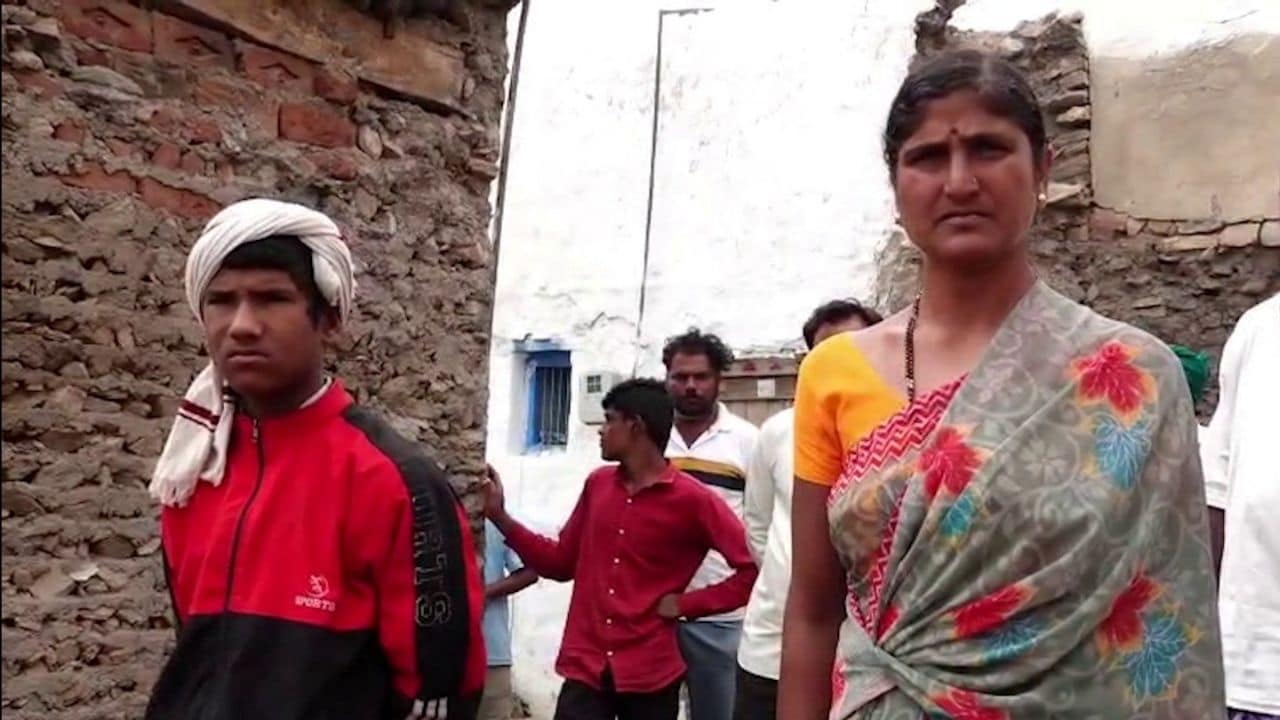
Kasturavva, also known as Gangavva, a single mother and the wife of late Basavaraj Ritti, had planned to build a house on the family’s site using her life savings and money from the sale of other land. But fate had other plans, and a hidden treasure was waiting to be unearthed.
What exactly happened?
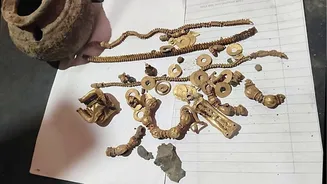
While digging the foundation for their new house, labourers uncovered a copper pot containing gold jewellery weighing about 466 grams. The cache included 22 items—necklaces, rings, bangles, bracelets and other ornaments.
Kasturavva and her 14-year-old son, Prajwal Ritti, immediately reported the discovery to local authorities and handed it over to the district administration, displaying remarkable integrity. The find initially sparked excitement, with locals and officials praising the family for their honesty.
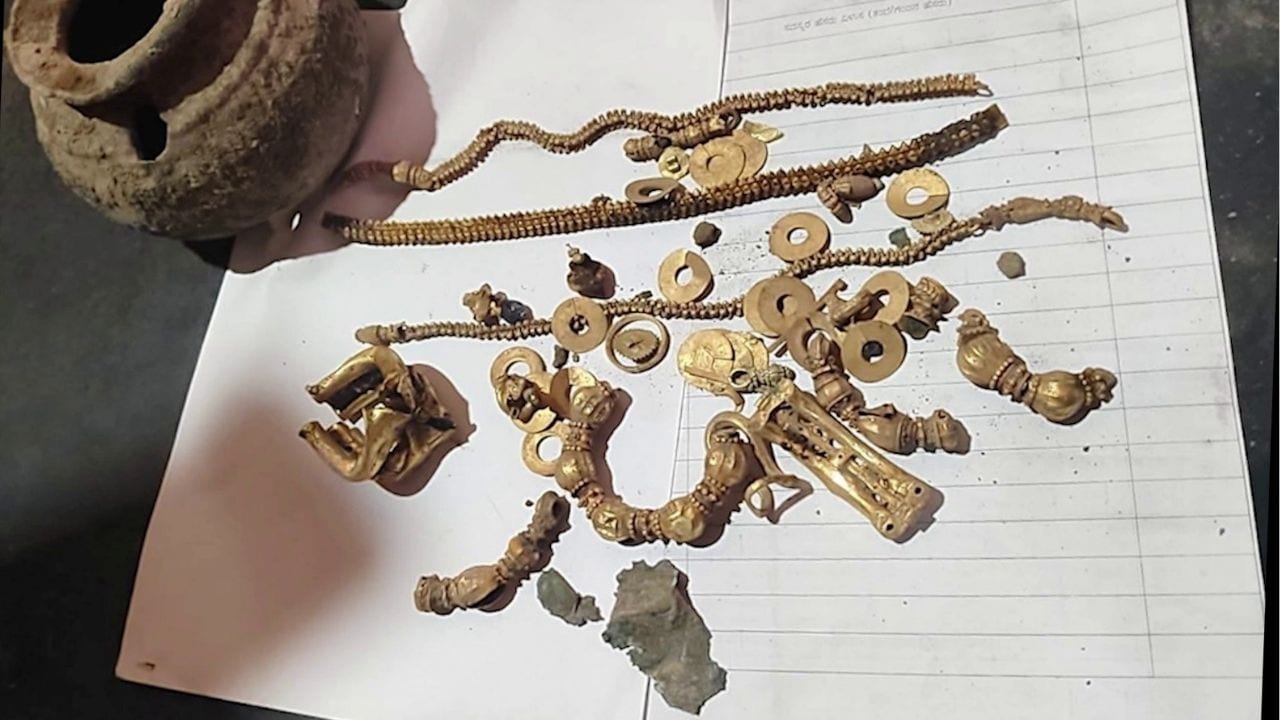
Gold ornaments found at Kasturavva Ritti's under-construction house. (Photo: NW18)The site was declared a restricted zone and construction on the house was halted midway. The family—who had sold their other land to finance the construction and were temporarily staying with relatives—was suddenly pushed into severe hardship.
Royal hoard or ancestral savings?
Researcher Appanna Hanje suggested the ornaments likely date back to the 11th or 12th century and, based on their simple design, appeared to belong to an ordinary family rather than royalty.
ASI official Ramesh Mulimani inspected the site and noted the absence of royal hallmarks, indicating the ornaments were likely hidden by ancestors under the house floor for safekeeping, rather than buried as a treasure hoard.
Other ASI officials, including Joint Director and Superintendent Ramesh Mulimani of the Dharwad circle, also inspected the site and said the gold did not qualify as an ancient treasure. They observed that the ornaments did not appear very old and lacked clear ancient characteristics, suggesting they may have belonged to the family’s ancestors and were hidden within the house. This clarification dramatically shifted the situation.
From honesty to hardship
The family and villagers then demanded the return of the gold, arguing, “If it’s not a treasure, then it’s our property—please give it back.” They urged the government to either allow construction to resume or provide an alternative plot and help build a house, citing their poverty and the child’s future needs.
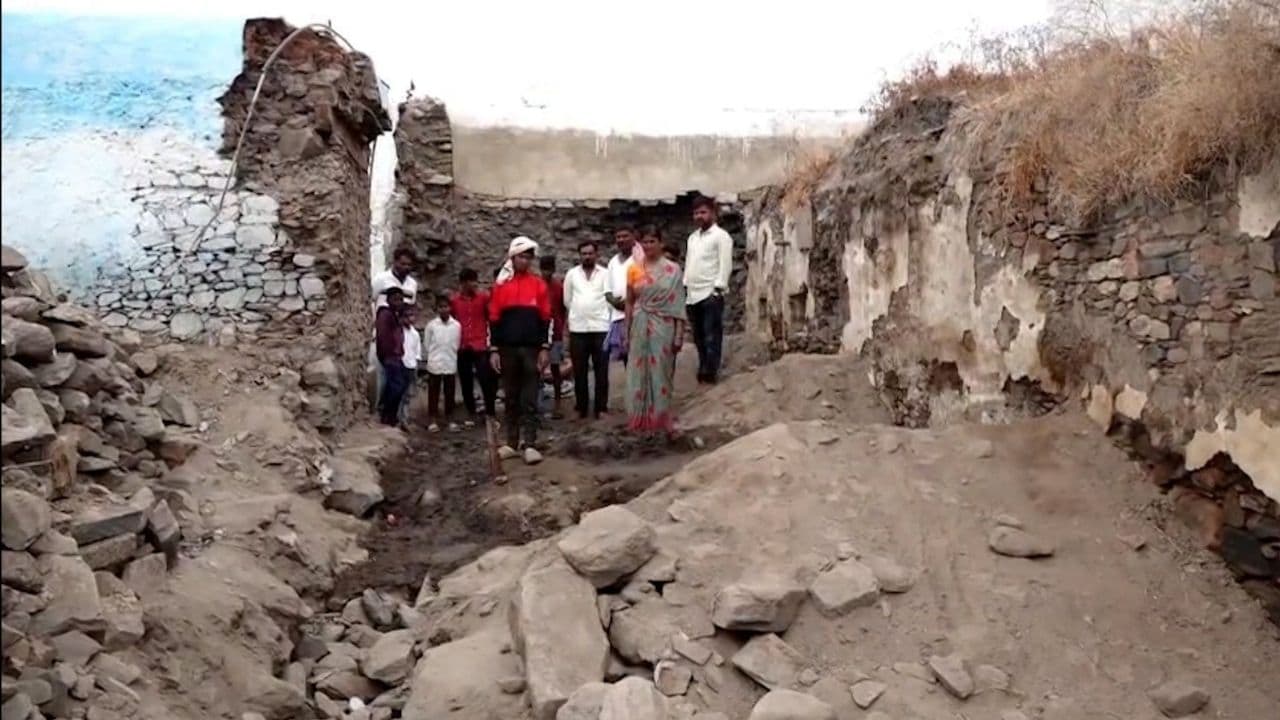
Kasturavva Ritti's under-construction house site. (Photo: NW18)Speaking to News18 Kannada, Gadag MLA C.C. Patil praised the family’s honesty and the village’s legacy. He said the government, in coordination with the district in-charge minister and Chief Minister Siddaramaiah, would discuss ways to assist the family in rebuilding their lives.
Patil also pledged personal support. The Chief Minister, he said, spoke to the family through him and congratulated them for promptly informing the authorities and handing over the ornaments.
The case drew statewide attention, with examinations underway to determine the ornaments’ exact age and origin. Meanwhile, the impoverished family continued to wait for relief, having acted with complete honesty only to face uncertainty over shelter and livelihood. Villagers demanded swift government intervention to support the mother and her son.
What does the law say
Under Indian treasure trove laws, including the Karnataka Treasure Trove Act, 1962, any valuable item worth more than ₹10 found underground must be reported to the Deputy Commissioner.
If the object is deemed over 100 years old, it becomes government property, with the finder potentially entitled to one-fifth (20%) of its value as a reward. Concealment can attract a jail term of up to one year. If the item is less than 100 years old, the District Collector conducts an inquiry and decides ownership.
New fears in the tiny town
In Lakkundi, buried treasures are often linked to deep-rooted local beliefs and lingering fears. When senior Congress leader H.K. Patil met the family, they shared these concerns with him.
According to local belief, all treasures beneath the village are guarded by the serpent king. In the past, villagers say families that failed to hand over unearthed valuables to authorities and instead used them for personal gain met with misfortune.
Fearing the same, the family requested the authorities to take over the site and instead provide an alternative plot and assistance to build a house.
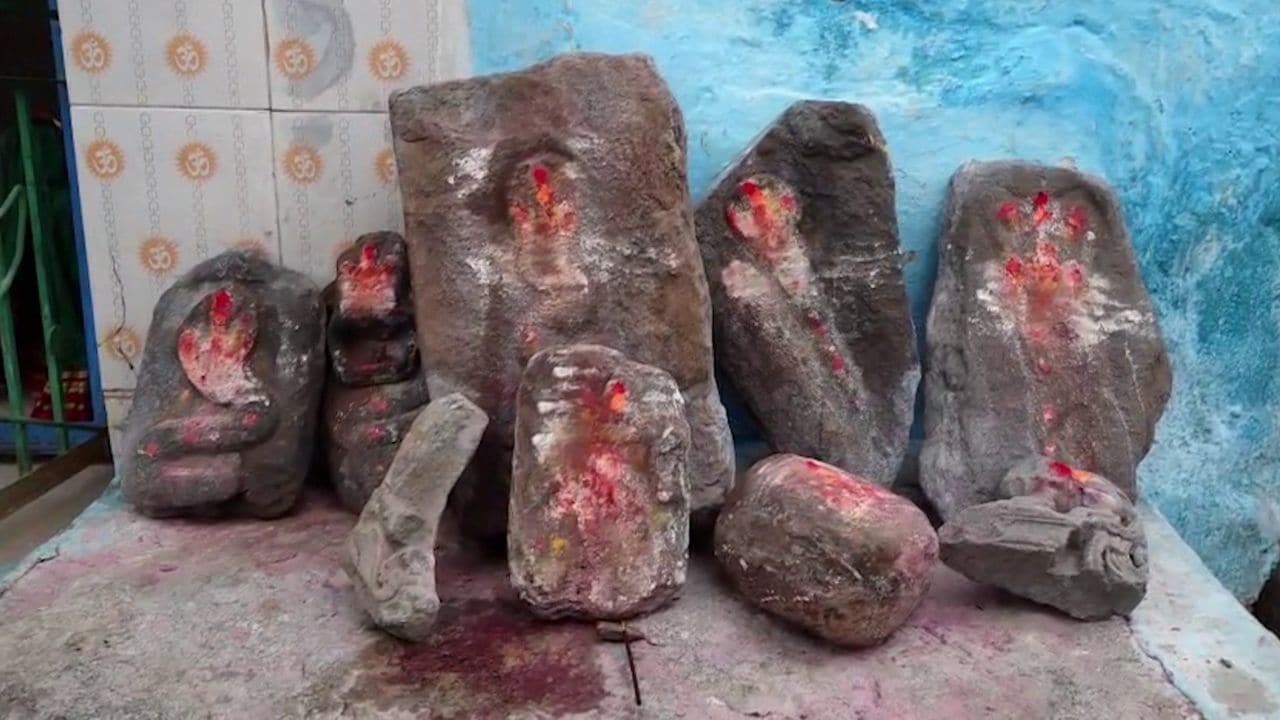
A temple site of serpent king in Karnataka near (Photo: NW18)Girijavva, Kasturavva’s mother, told News18 Kannada that several people in the town had found buried valuables over the years. While some handed them over to the authorities, others did not.
“I have seen it with my own eyes—those families were completely destroyed. We don’t want that. So please take this site and kindly give us alternative shelter,” she said.
History of Lakkundi
This was not the first such incident in the small town, which carries a rich historical legacy stretching back centuries. Between the 10th and 12th centuries, Lakkundi emerged as a major economic hub and spiritual centre, particularly under the Western Chalukyas. It was known for its mint, its intricate temples—such as Brahma Jinalaya and Kasi Visvesvara—and its distinctive Vesara-style architecture.
The village once hosted numerous Hindu and Jain temples, including a Jain shrine dedicated to Mahavira, underscoring its importance as a spiritual sanctuary. Dynasties such as the Kalyana Chalukyas, Kalachuris, Hoysalas and Sevunas played a key role in shaping Lakkundi’s architectural and cultural heritage.
As the state government and Gadag MLA C.C. Patil promised assistance, the Ritti family waited. They had acted with complete honesty, and now hoped that the government they trusted would ensure they were not left behind in the very soil that once held their ancestors’ gold.
Soon after, Chief Minister Siddaramaiah called the family, senior Congress leader and former minister H.K. Patil visited their home, and the district SP and IAS officers were seen moving around the property. Even the Archaeological Survey of India took a keen interest in the site.
Everything changed just after 10 a.m. The family was first awestruck and then shocked, as fears of losing their under-construction house and land began to sink in. Hundreds of people started visiting their home. Adding to the anxiety was the fear of a King Cobra’s curse, which made the family shiver even in broad daylight.
All this followed the discovery of an invaluable treasure—gold ornaments—found by the family’s son at the construction site.
On that Saturday, in the historic village of Lakkundi in Karnataka’s Gadag district, the Ritti family unearthed a copper pot containing around 466 grams of ancient gold ornaments while digging the foundation for their new house.
Kasturavva Ritti alias Gangavva (right) with her son Prajwal. (Photo: NW18)
Kasturavva, also known as Gangavva, a single mother and the wife of late Basavaraj Ritti, had planned to build a house on the family’s site using her life savings and money from the sale of other land. But fate had other plans, and a hidden treasure was waiting to be unearthed.
What exactly happened?
While digging the foundation for their new house, labourers uncovered a copper pot containing gold jewellery weighing about 466 grams. The cache included 22 items—necklaces, rings, bangles, bracelets and other ornaments.
Kasturavva and her 14-year-old son, Prajwal Ritti, immediately reported the discovery to local authorities and handed it over to the district administration, displaying remarkable integrity. The find initially sparked excitement, with locals and officials praising the family for their honesty.
Gold ornaments found at Kasturavva Ritti's under-construction house. (Photo: NW18)The site was declared a restricted zone and construction on the house was halted midway. The family—who had sold their other land to finance the construction and were temporarily staying with relatives—was suddenly pushed into severe hardship.
Royal hoard or ancestral savings?
Researcher Appanna Hanje suggested the ornaments likely date back to the 11th or 12th century and, based on their simple design, appeared to belong to an ordinary family rather than royalty.
ASI official Ramesh Mulimani inspected the site and noted the absence of royal hallmarks, indicating the ornaments were likely hidden by ancestors under the house floor for safekeeping, rather than buried as a treasure hoard.
Other ASI officials, including Joint Director and Superintendent Ramesh Mulimani of the Dharwad circle, also inspected the site and said the gold did not qualify as an ancient treasure. They observed that the ornaments did not appear very old and lacked clear ancient characteristics, suggesting they may have belonged to the family’s ancestors and were hidden within the house. This clarification dramatically shifted the situation.
From honesty to hardship
The family and villagers then demanded the return of the gold, arguing, “If it’s not a treasure, then it’s our property—please give it back.” They urged the government to either allow construction to resume or provide an alternative plot and help build a house, citing their poverty and the child’s future needs.
Kasturavva Ritti's under-construction house site. (Photo: NW18)Speaking to News18 Kannada, Gadag MLA C.C. Patil praised the family’s honesty and the village’s legacy. He said the government, in coordination with the district in-charge minister and Chief Minister Siddaramaiah, would discuss ways to assist the family in rebuilding their lives.
Patil also pledged personal support. The Chief Minister, he said, spoke to the family through him and congratulated them for promptly informing the authorities and handing over the ornaments.
The case drew statewide attention, with examinations underway to determine the ornaments’ exact age and origin. Meanwhile, the impoverished family continued to wait for relief, having acted with complete honesty only to face uncertainty over shelter and livelihood. Villagers demanded swift government intervention to support the mother and her son.
What does the law say
Under Indian treasure trove laws, including the Karnataka Treasure Trove Act, 1962, any valuable item worth more than ₹10 found underground must be reported to the Deputy Commissioner.
If the object is deemed over 100 years old, it becomes government property, with the finder potentially entitled to one-fifth (20%) of its value as a reward. Concealment can attract a jail term of up to one year. If the item is less than 100 years old, the District Collector conducts an inquiry and decides ownership.
New fears in the tiny town
In Lakkundi, buried treasures are often linked to deep-rooted local beliefs and lingering fears. When senior Congress leader H.K. Patil met the family, they shared these concerns with him.
According to local belief, all treasures beneath the village are guarded by the serpent king. In the past, villagers say families that failed to hand over unearthed valuables to authorities and instead used them for personal gain met with misfortune.
Fearing the same, the family requested the authorities to take over the site and instead provide an alternative plot and assistance to build a house.
A temple site of serpent king in Karnataka near (Photo: NW18)Girijavva, Kasturavva’s mother, told News18 Kannada that several people in the town had found buried valuables over the years. While some handed them over to the authorities, others did not.
“I have seen it with my own eyes—those families were completely destroyed. We don’t want that. So please take this site and kindly give us alternative shelter,” she said.
History of Lakkundi
This was not the first such incident in the small town, which carries a rich historical legacy stretching back centuries. Between the 10th and 12th centuries, Lakkundi emerged as a major economic hub and spiritual centre, particularly under the Western Chalukyas. It was known for its mint, its intricate temples—such as Brahma Jinalaya and Kasi Visvesvara—and its distinctive Vesara-style architecture.
The village once hosted numerous Hindu and Jain temples, including a Jain shrine dedicated to Mahavira, underscoring its importance as a spiritual sanctuary. Dynasties such as the Kalyana Chalukyas, Kalachuris, Hoysalas and Sevunas played a key role in shaping Lakkundi’s architectural and cultural heritage.
As the state government and Gadag MLA C.C. Patil promised assistance, the Ritti family waited. They had acted with complete honesty, and now hoped that the government they trusted would ensure they were not left behind in the very soil that once held their ancestors’ gold.