


What's Happening?
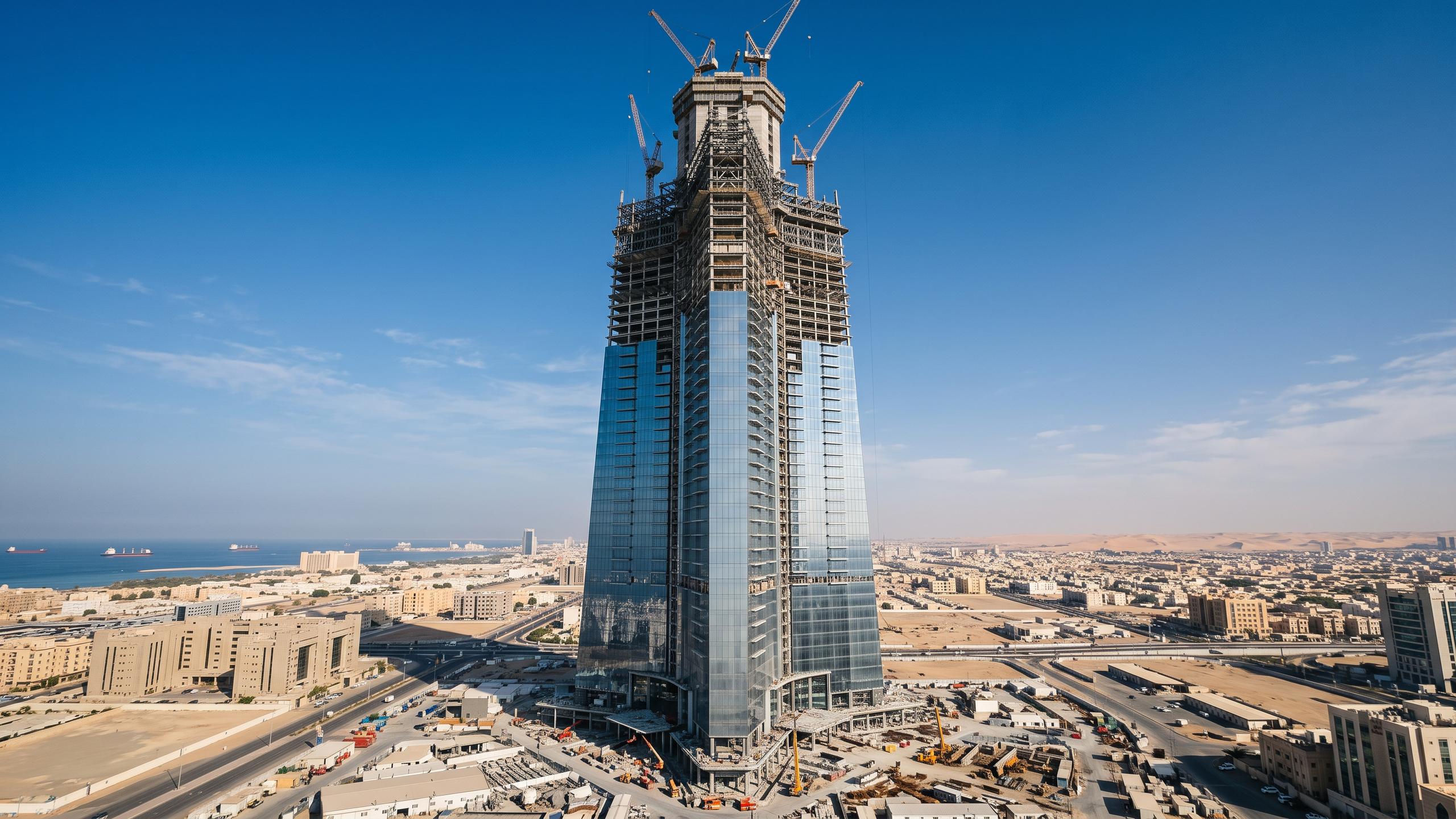
The Jeddah Tower in Saudi Arabia, designed by Adrian Smith + Gordon Gill Architecture (AS+GG), has reached the 120th floor, standing at approximately 482 meters. This milestone signifies the project is nearing
its halfway point, with expectations to surpass 500 meters by the end of the year. The construction, managed by Saudi Binladin Group, is progressing at a rate of about 4 meters per week. Once completed, the Jeddah Tower is projected to exceed 1,000 meters in height, making it the world's tallest building and surpassing the current record holder, the 828-meter-tall Burj Khalifa. The project is being developed by Jeddah Economic Company (JEC), with Kingdom Holding as a key investor. A contract worth 7.2 billion riyals (approximately 1.9 billion USD) was signed in October 2024 with Saudi Binladin Group for the tower's completion. The tower is anticipated to be finished by August 2028.
Why It's Important?
The construction of the Jeddah Tower represents a significant achievement in architectural and engineering capabilities, pushing the boundaries of skyscraper design and construction. Its completion will shift the global benchmark for supertall structures, potentially influencing future urban development and architectural trends worldwide. For the U.S. architecture and engineering sectors, this project highlights the global demand for innovative design and construction expertise, potentially opening doors for American firms to participate in similar large-scale international ventures. The involvement of a prominent U.S.-based architectural firm like Adrian Smith + Gordon Gill Architecture underscores American leadership in architectural innovation. Furthermore, the project's scale and ambition could inspire advancements in construction techniques and materials, with potential spillover benefits for U.S. infrastructure and building projects. The economic impact extends to the global construction supply chain, where U.S. manufacturers and service providers could find opportunities.
What's Next?
The immediate next step for the Jeddah Tower is to reach the 500-meter mark, which is expected by the end of November, coinciding with the U.S. Thanksgiving holiday. Construction will continue at its current pace, with the goal of completing the structure by August 2028. As the tower progresses, further contracts for interior finishing, infrastructure, and operational systems will likely be awarded. The project's completion will trigger a new era in global architecture, potentially leading to increased competition among nations to construct even taller and more ambitious structures. Stakeholders, including the Jeddah Economic Company and Kingdom Holding, will focus on attracting tenants and businesses to the tower, which is designed to be a mixed-use development. The successful completion of this project could also enhance Saudi Arabia's image as a hub for modern development and innovation, potentially attracting more foreign investment and tourism.
Beyond the Headlines
The Jeddah Tower's pursuit of the 'world's tallest' title reflects a broader global trend of architectural one-upmanship, often driven by national prestige and economic ambition. While the immediate focus is on its physical height, the long-term implications include its role in urban planning and sustainable development in extreme environments. The engineering challenges of building a structure over a kilometer tall in a desert climate necessitate innovative solutions in materials science, energy efficiency, and vertical transportation, which could have far-reaching applications. Ethically, such mega-projects often raise questions about resource allocation, labor practices, and environmental impact, particularly in regions with developing regulatory frameworks. Culturally, these iconic structures become symbols of national identity and progress, shaping perceptions of a country on the global stage. The tower's success or challenges could influence future architectural endeavors and the balance between ambition and practicality in large-scale construction.