



What's Happening?
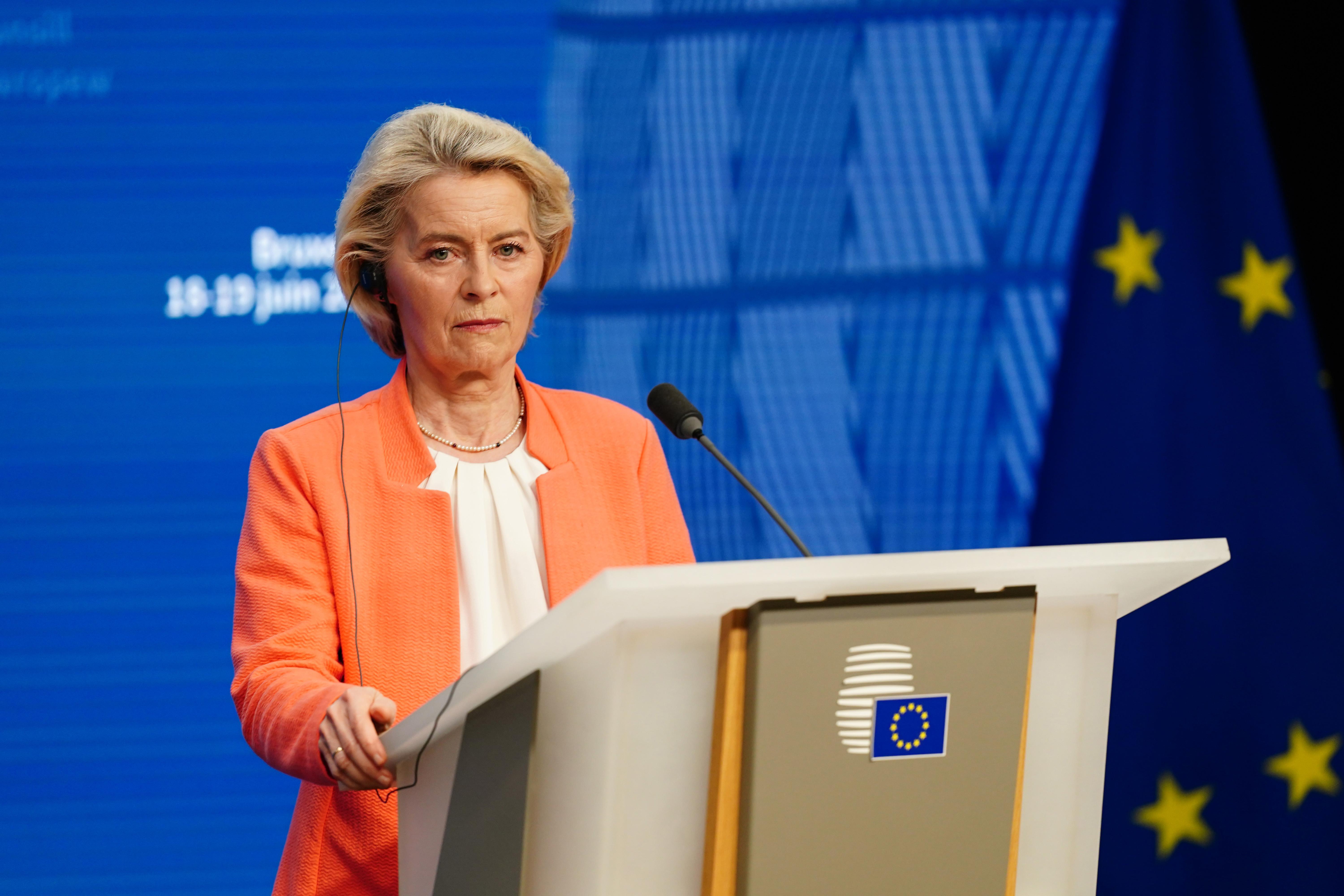
European Commission President Ursula von der Leyen has stated that artificial intelligence (AI) companies within the European Union will require investments totaling €500 billion ($551 billion). This significant
funding is primarily needed for the development of highly advanced AI models, as well as in critical areas such as chips and other hardware. Von der Leyen made these remarks following discussions with EU leaders in Dublin. She highlighted that while Europe is generating more tech startups than the United States, many of these ventures struggle to secure the necessary support to scale their operations. To address this, she emphasized the need for the EU to attract private investments, reform its existing investment rules, and establish innovation funds. This push to expand Europe's AI industry is driven by a strategic goal to reduce its reliance on technology originating from the US and China.
Why It's Important?
This call for substantial investment underscores Europe's ambition to become a major player in the global AI landscape and to achieve 'tech sovereignty.' The current reliance on US and Chinese technology poses strategic vulnerabilities, particularly in critical sectors like defense, cybersecurity, and economic competitiveness. By investing heavily in advanced AI models, chips, and hardware, the EU aims to foster indigenous innovation and reduce its dependence on external suppliers. This initiative could create numerous high-tech jobs, stimulate economic growth, and enhance Europe's overall technological capabilities. For U.S. tech companies, this could mean increased competition in the global AI market, but also potential opportunities for collaboration or partnerships with European entities. The emphasis on attracting private investments and reforming investment rules suggests a shift towards creating a more favorable environment for tech growth within the EU, which could impact global capital flows and investment strategies.
What's Next?
President von der Leyen plans to present an 'ambitious proposal' outlining how to secure this additional funding for tech sovereignty. This proposal will likely detail mechanisms for attracting private capital, potential reforms to existing investment regulations, and the establishment of new innovation funds. The success of this initiative will depend on the ability of EU member states to agree on and implement these proposals, as well as the willingness of private investors to commit significant capital. The EU's efforts to reduce dependence on US and Chinese technology could lead to increased domestic production and development, potentially altering global supply chains for AI components and software. This strategic shift could also influence international standards and regulations for AI, as Europe seeks to define its own ethical and legal frameworks for the technology.
Beyond the Headlines
The drive for 'tech sovereignty' in AI extends beyond mere economic competition; it touches upon fundamental issues of data privacy, ethical AI development, and geopolitical influence. By developing its own advanced AI capabilities, Europe aims to ensure that its values and regulatory standards are embedded in future technological advancements, rather than being dictated by external powers. This could lead to a distinct European approach to AI, potentially emphasizing human-centric and privacy-preserving designs. The challenge lies in balancing the need for rapid innovation with robust regulatory oversight, avoiding stifling growth while ensuring responsible development. Furthermore, the sheer scale of the proposed investment highlights the recognition that AI is not just another industry, but a foundational technology that will shape future economies and societies, making control over its development a strategic imperative for any major global power.