
What's Happening?
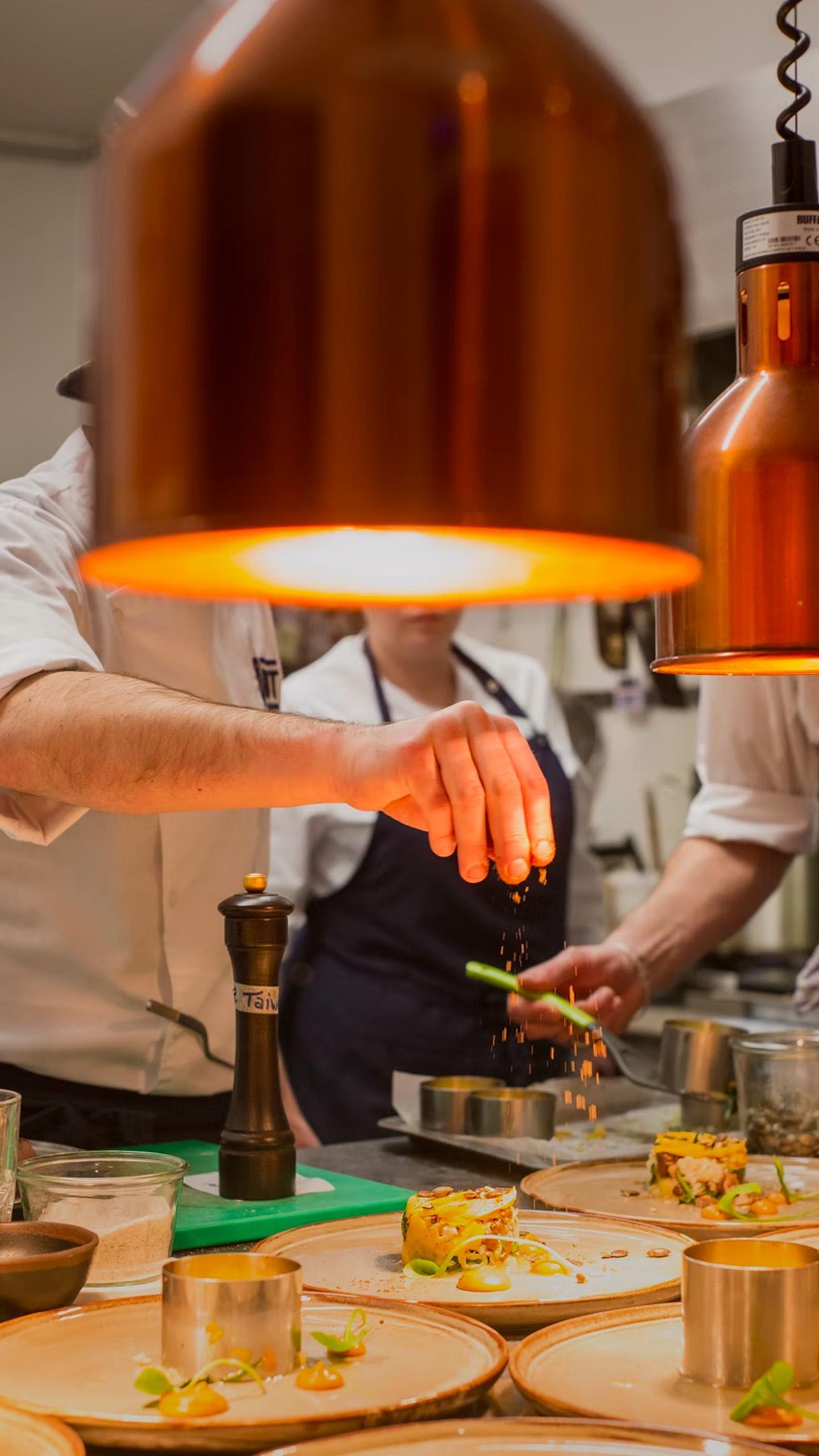
Zhu Guanlin, a 32-year-old chef, has opened his own restaurant, Plum, in Dali, China, after pursuing culinary education and working in Michelin-starred establishments in New York and San Francisco. Zhu initially
studied engineering in China but chose to attend the Culinary Institute of America in New York, a decision that surprised his family, who had a generational background in electrical engineering. After graduating, he gained experience in various high-end restaurants in the U.S., reaching the position of chef de partie. He eventually returned to China, co-managing a classmate's restaurant in Dali before investing approximately $60,000 to open Plum in February 2025. The restaurant, which seats 35 and employs 10 staff, offers a fusion menu combining Western, Chinese, Japanese, and Italian influences. Zhu reports that Plum is consistently fully booked and anticipates breaking even in four to five years.
Why It's Important?
Zhu Guanlin's journey highlights a growing trend of international culinary exchange and entrepreneurship, where individuals trained in Western culinary traditions return to their home countries to innovate within their local food scenes. His story demonstrates the global appeal and influence of U.S. culinary education, as well as the entrepreneurial spirit driving the development of diverse dining experiences in emerging markets like China. For the U.S. culinary industry, this signifies its role as a training ground for global talent, potentially fostering future collaborations and cultural exchanges. The success of Plum also reflects a broader consumer demand for unique, fusion-style cuisine, indicating evolving tastes and a willingness to embrace innovative culinary concepts that blend different cultural elements. This trend could inspire other U.S.-trained chefs to explore similar ventures abroad, further solidifying the U.S.'s position as a leader in culinary arts and innovation.
What's Next?
Zhu Guanlin plans to continue developing Plum, focusing on refining its unique fusion cuisine and establishing its brand in Dali. His immediate goal is to achieve profitability within the next four to five years. The restaurant's success could lead to expansion opportunities, either through additional locations or by influencing the local culinary scene in Dali and beyond. Zhu also aims to further develop his kitchen culture, emphasizing employee well-being with policies like two consecutive days off per week, which is a departure from traditional Chinese restaurant practices. This approach could serve as a model for other establishments seeking to improve working conditions in the industry. Furthermore, his story may inspire other young Chinese professionals to pursue non-traditional career paths, potentially increasing enrollment in U.S. culinary schools and fostering more cross-cultural culinary ventures.
Beyond the Headlines
Zhu Guanlin's narrative extends beyond a simple restaurant opening; it represents a significant cultural and professional shift. His decision to deviate from a family legacy of engineering to pursue culinary arts challenges traditional career expectations in many societies, particularly in China where STEM fields are often prioritized. This move underscores a growing global appreciation for vocational and creative professions. The fusion nature of Plum's cuisine also reflects a broader cultural globalization, where culinary boundaries are increasingly blurred, leading to innovative and diverse dining experiences. This trend can foster greater understanding and appreciation of different cultures through food. Moreover, Zhu's emphasis on a positive kitchen culture, prioritizing staff well-being, signals a potential shift in industry norms, moving towards more sustainable and humane working environments within the demanding culinary world.