
By Holger Hansen and James Mackenzie
BERLIN, Nov 13 (Reuters) - Germany's budget committee finalised the 2027 budget, including more than €210 billion ($222 billion) in total new borrowing, the second-highest
amount since World War Two, people familiar with the matter said on Friday.
The committee agreed the package, which proposed spending of €561 billion, in the early hours of the morning after weeks of negotiations that saw plans for taxes on plastics and sweetened drinks as well as cuts to social security dropped or delayed to secure agreement.
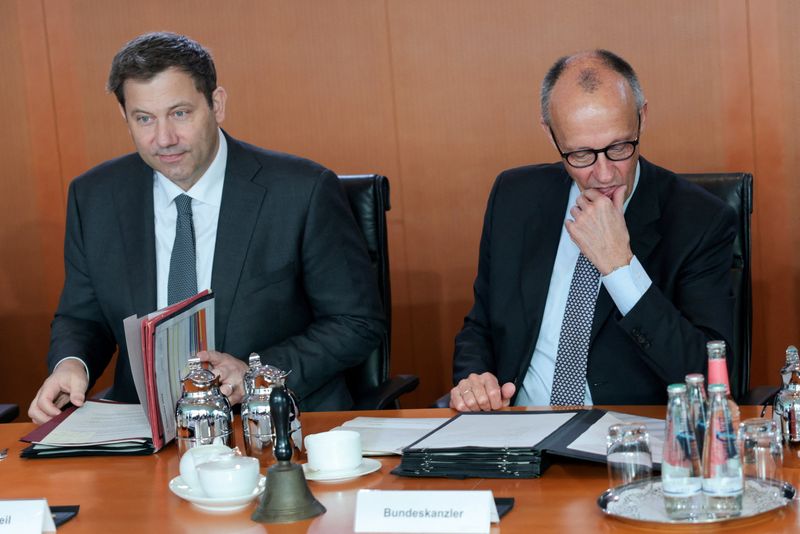
Chancellor Friedrich Merz's coalition has vowed a major push to strengthen Germany's core infrastructure and rebuild its military after decades of underinvestment and last year agreed to ease borrowing limits on defence spending.
But it has struggled to reconcile the competing priorities of his conservative Christian Democrats (CDU) and their centre-left Social Democrat (SPD) partners, which joined forces after last year's election.
Following agreement by the budget committee, the package is now free to be passed by parliament. However, opposition parties accused the government of "brazen tricks" to conceal borrowing and spending on basic income support.
"This is not sound budgetary policy, but a massive smokescreen," Sebastian Schaefer, budget spokesperson for the opposition Greens, said in a statement.
Total new borrowing reached €210.4 billion, just under the record €215.4 billion recorded in 2021 during the COVID-19 pandemic, the figures showed.
That included new borrowing of some €123 billion from the core budget, which does not include additional borrowing authorised under special measures to allow greater spending on infrastructure and defence agreed last year.
Late on Wednesday, officials in the coalition agreed to scrap a proposed tax on plastic packaging materials that had been agreed by cabinet in July, and to delay a tax on sugared drinks until 2028. A planned cut to an electricity tax that had been championed by Merz was also delayed.
They also agreed to roll back plans to cut benefits for the children of low-income families.
(Reporting by Holger Hansen, James Mackenzie; Editing by Muralikumar Anantharaman, Thomas Derpinghaus and Lincoln Feast.)