



By Satoshi Sugiyama
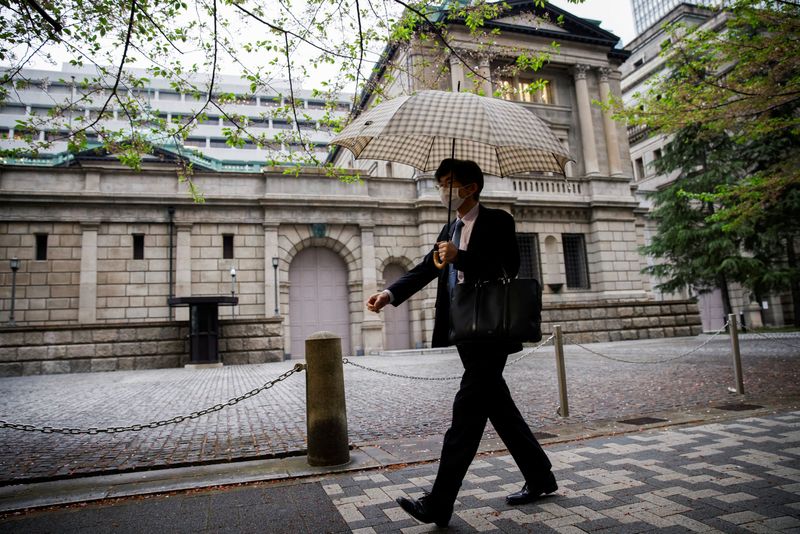
TOKYO, Nov 19 (Reuters) - The Bank of Japan will raise interest rates for the third time this year at its December meeting and follow up with another by end-March, according to a majority
of economists in a Reuters poll, as the central bank remains focused on inflation and a weak currency.
While Japan's economy unexpectedly contracted for the first time in a year in July-September, BOJ policymakers appear more concerned about inflation overshooting the 2% target and are set to carry on with a more than 2-1/2 year-long campaign to lift borrowing costs.
On Wednesday, BOJ Governor Kazuo Ueda said the central bank should continue raising interest rates. His comments followed news Japan's core consumer inflation exceeded the 2% target for the first time in nine months in September.
In a November 11-18 survey, 86% of economists, 61 of 71, expected the central bank to raise the overnight call rate by 25 basis points to 1.50% at its December 17-18 meeting, three months after its last hike.
If correct, it would be the first time in 37 years the bank raised rates three times in one calendar year.
"The BOJ’s assessment upside risks to prices are large under accommodative financial conditions has not changed, and monetary policy is likely to remain tight," said Kei Fujimoto, senior economist at Sumitomo Mitsui Trust Asset Management.
Nearly 60% of economists, or 35 of 61, expected the policy rate to go up another 25 basis points to 1.75% by end-March, three months earlier .than predicted in an October poll.
Among 31 respondents who answered an additional question, nearly half, 48%, said 1.75% would be the terminal rate, while an equal proportion expected it to reach 2% or higher. That is roughly the same as October's survey, although the sample in November was a bit lower.
The BOJ is also monitoring the yen's impact on inflation through higher import prices. The exchange rate is back near the 160-per-dollar level despite authorities having spent nearly $100 billion selling dollar reserves to prop up the currency.
Also, now the US Federal Reserve has begun raising interest rates - it too is due to hike the federal funds rate again in December - the yen has come under renewed selling pressure.
That is keeping pressure on the BOJ to continue hiking, despite risks to the economy.
"Because of the US-Japan interest rate gap, the yen is more likely to weaken...If the BOJ does not hike in December, the yen could weaken further, which could add to upward pressure on prices," Fujimoto said.
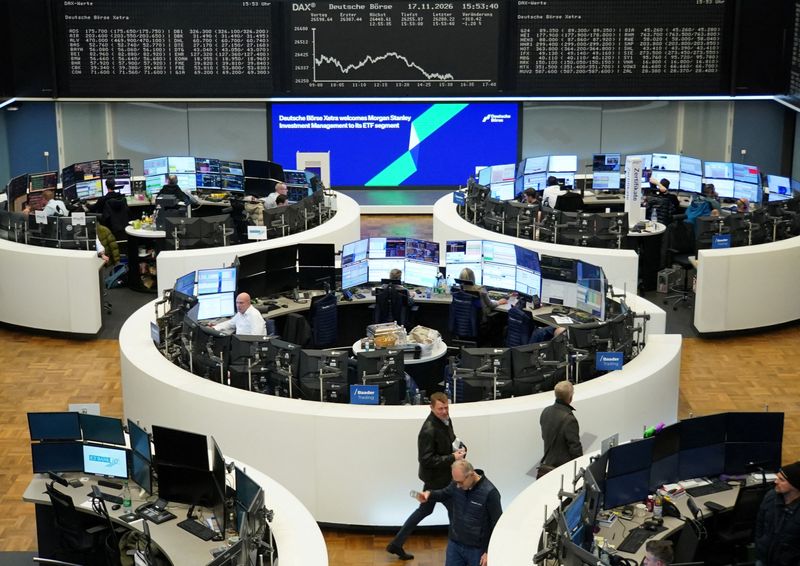
Japan's benchmark Nikkei 225 index has fallen around 7% this month, in large part over renewed uncertainty about whether growth and investment in the global AI sector can be sustained at their recent rapid pace.
A large 83% majority of respondents to an additional question, 24 of 29, said market volatility would not deter the BOJ from raising rates next month.
"If concerns over the AI-driven market rally continue to roil financial markets, a December pause remains possible. But as the baseline, we see a high likelihood the BOJ will raise rates in December," said Masato Koike, senior economist at Sompo Institute Plus.
Next year's wage negotiations were expected to deliver a 5.00% wage hike, just below this year's 5.01%, pointing to a fourth consecutive year of growth at around that level. Forecasts ranged from 4.25% to 5.50%.
(Other stories from the Reuters global economic poll)
(Reporting by Satoshi Sugiyama; Polling by Rahul Trivedi and Renusri K; Editing by Ross Finley and Ros Russell)