



What's Happening?
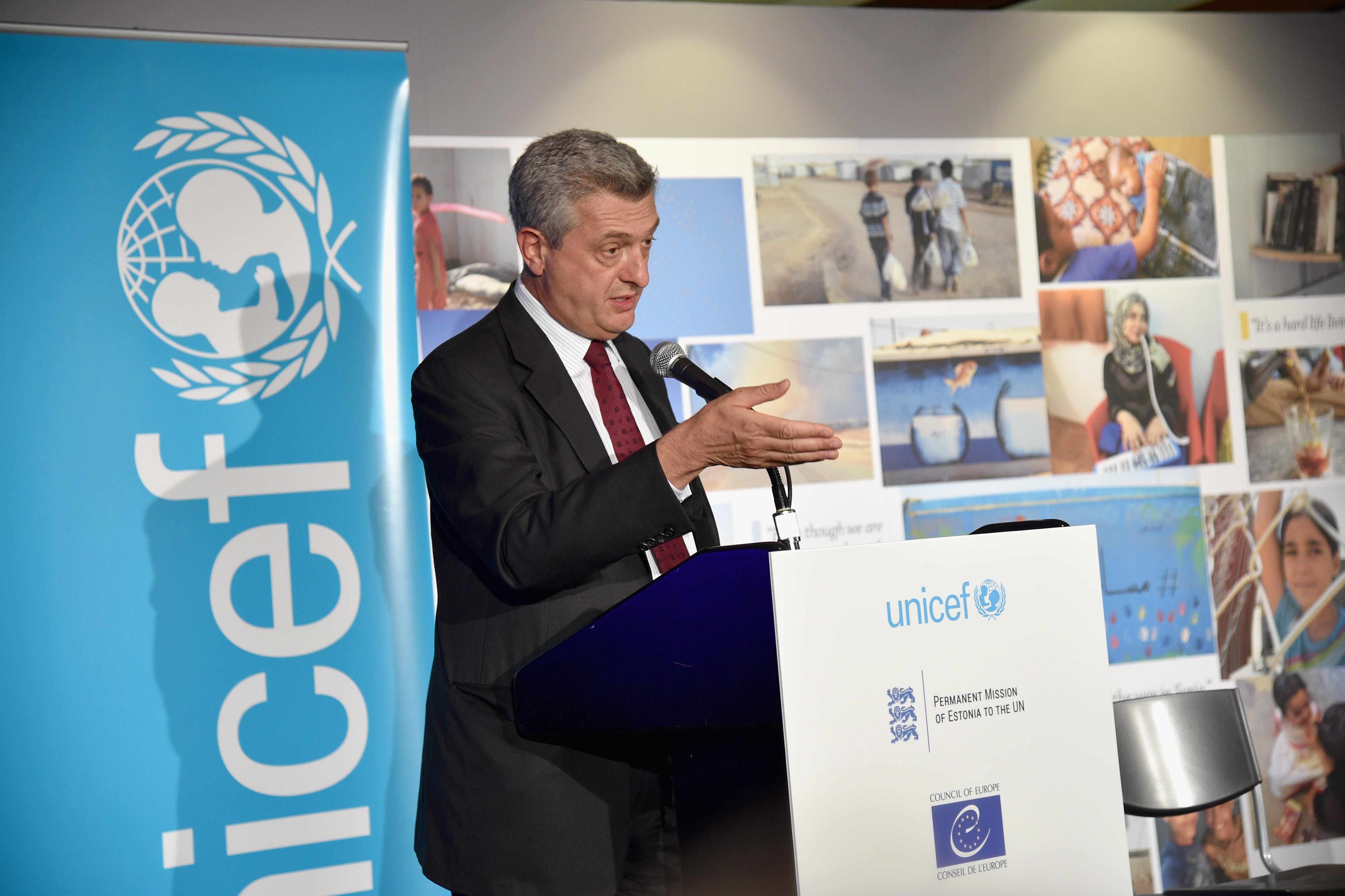
UNICEF Executive Director Catherine Russell delivered a powerful message at the Paris Peace Forum's Child Summit, urging global leaders to prioritize children in all critical decisions. The summit, which
opened with calls to action from four UNICEF youth ambassadors, served as a platform for UNICEF to advocate for children's rights and well-being. Russell challenged political leaders to make choices that put children first, particularly in diplomacy, budgeting, the conduct of war, and the development of new technologies. UNICEF representatives also participated in panels discussing the scientific agenda for children in the age of artificial intelligence, nutrition, and child survival at scale, and the practical implementation of the Child Priority Framework. The overarching sentiment was that the true measure of the summit's success would be the tangible changes that occur as a result of these discussions, rather than just the declarations made.
Why It's Important?
This call to action from UNICEF Executive Director Catherine Russell is profoundly important for global policy and humanitarian efforts, with significant implications for the U.S. The emphasis on prioritizing children in diplomacy and the conduct of war directly challenges traditional geopolitical approaches, advocating for a child-centric lens in conflict resolution and international relations. For the U.S., this could mean re-evaluating its foreign aid strategies, military engagements, and diplomatic initiatives to ensure they align with the 'Children First' principle. The discussions on children in the age of AI and child survival highlight emerging and persistent challenges that require innovative solutions and substantial investment. The U.S., as a leader in technology and humanitarian aid, stands to play a crucial role in shaping policies and funding research that protects children from the potential harms of AI and addresses critical health needs. The push for accountability when children's rights are violated also aligns with U.S. values concerning human rights and could influence its advocacy efforts on the international stage.
What's Next?
Following the Paris Peace Forum's Child Summit, the immediate focus for UNICEF and its partners will be to translate the political momentum into concrete actions. This involves sustained investment in child-focused programs, ensuring accountability for violations of children's rights, and fostering partnerships that deliver tangible results for children. The 'Children First Declaration' is expected to evolve beyond a mere statement of intent into a guiding framework for policy-making. Future conversations will likely center on developing robust data collection methods to measure children's well-being from birth to adulthood, covering areas like early childhood development, learning, mental health, and the impact of AI. This data will be crucial for informing funding choices and ensuring that problems affecting children are not rendered invisible in budgets. Member States will be supported in creating official statistical standards, particularly concerning access to and use of AI among children, to ensure that technological advancements benefit rather than harm the younger generation.
Beyond the Headlines
The 'Children First' initiative transcends typical policy discussions by embedding a moral imperative at the heart of global governance. It challenges the often-abstract nature of international relations by focusing on the most vulnerable population group. The call to consider children in the 'conduct of war' raises profound ethical questions about modern warfare and the responsibility of states to protect non-combatants. Furthermore, the discussion on the scientific agenda for children in the age of AI highlights the long-term societal implications of technological advancements. It underscores the need for proactive ethical frameworks and regulations to ensure that AI development is guided by principles that safeguard children's futures, rather than exposing them to unforeseen risks. This initiative also implicitly critiques the current global economic and political systems that often fail to adequately allocate resources for children's health and education, suggesting a need for a fundamental reorientation of priorities towards human development and well-being.