


What's Happening?
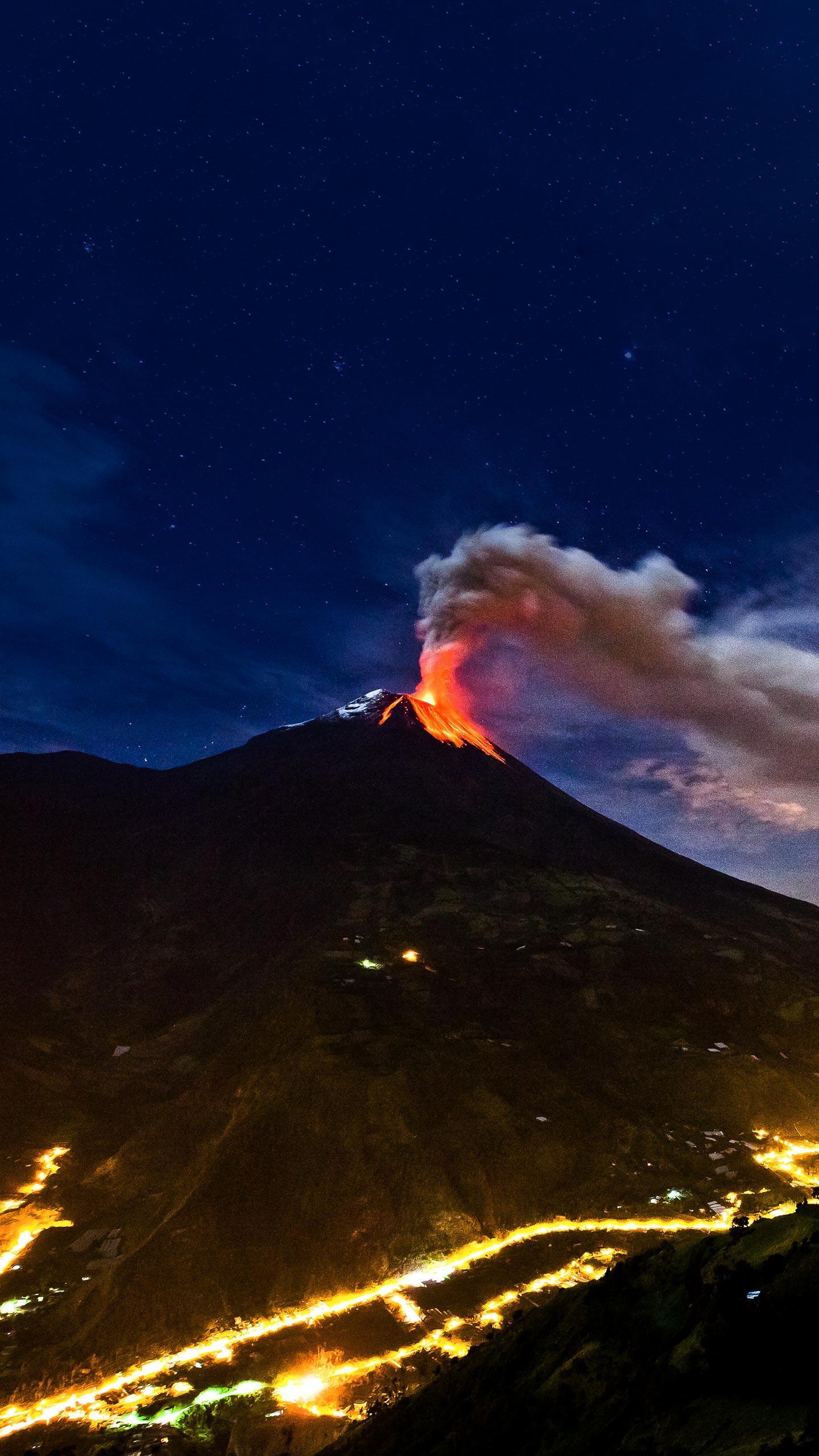
Mayon Volcano, located in Albay province on Luzon Island in the Philippines, recently experienced a moderately explosive eruption, sending a dark column of ash thousands of meters into the sky. This volcanic
activity led to the evacuation of thousands of residents. Mayon Volcano is recognized as the Philippines' most active volcano and is situated within the Pacific Ring of Fire. It is a stratovolcano, characterized by alternating layers of lava and ash, and is known for its symmetrical cone. The volcano rises 2462 meters above the Albay Gulf and has a base circumference of 130 kilometers. Its peak features a circular volcanic crater approximately 250 meters across. The volcano is a popular site for climbers and campers and is the centerpiece of Mayon Volcano National Park, which UNESCO designated an official biosphere reserve in 2016. Large abaca plantations are found on its lower slopes.
Why It's Important?
The eruption of Mayon Volcano highlights the ongoing geological instability within the Pacific Ring of Fire, a region prone to frequent seismic and volcanic activity. While this specific event is in the Philippines, it underscores the broader risks faced by countries, including the U.S. territories and states located along or near the Ring of Fire, such as Alaska and the West Coast. The need for robust disaster preparedness and evacuation protocols is critical in such areas to protect populations and infrastructure. The economic impact on local communities, particularly those reliant on agriculture like the abaca plantations on Mayon's slopes, can be significant, leading to displacement and livelihood disruption. Historically, Mayon's eruptions have been deadly, with the 1814 eruption killing over 1200 people and a 1993 eruption causing 79 deaths, emphasizing the severe human cost associated with such natural disasters.
What's Next?
Following the recent eruption, authorities will likely continue to monitor Mayon Volcano's activity closely, assessing the potential for further eruptions and their intensity. Evacuated residents will remain displaced until conditions are deemed safe for their return, which could depend on the volcano's stability and the clearing of ash and debris. Disaster relief efforts will focus on providing aid and support to those affected by the evacuations. Scientists will analyze the volcanic activity to better understand its patterns and improve early warning systems. The long-term recovery will involve rebuilding and restoring affected areas, and there may be ongoing discussions about enhancing infrastructure resilience and community preparedness in the face of future volcanic events.
Beyond the Headlines
The recurring volcanic activity in the Philippines, exemplified by Mayon Volcano, serves as a stark reminder of the profound interplay between human settlements and natural geological forces. Beyond the immediate physical dangers, these events often carry significant cultural and psychological impacts on affected communities, who may view the volcano as both a source of life and destruction. The designation of Mayon Volcano National Park as a UNESCO biosphere reserve highlights the ecological importance of such areas, even amidst their volatility. The challenge lies in balancing conservation efforts with the safety of human populations and economic development. This situation also prompts broader discussions on international cooperation in disaster management and scientific research to mitigate the global risks associated with the Pacific Ring of Fire.