



What's Happening?
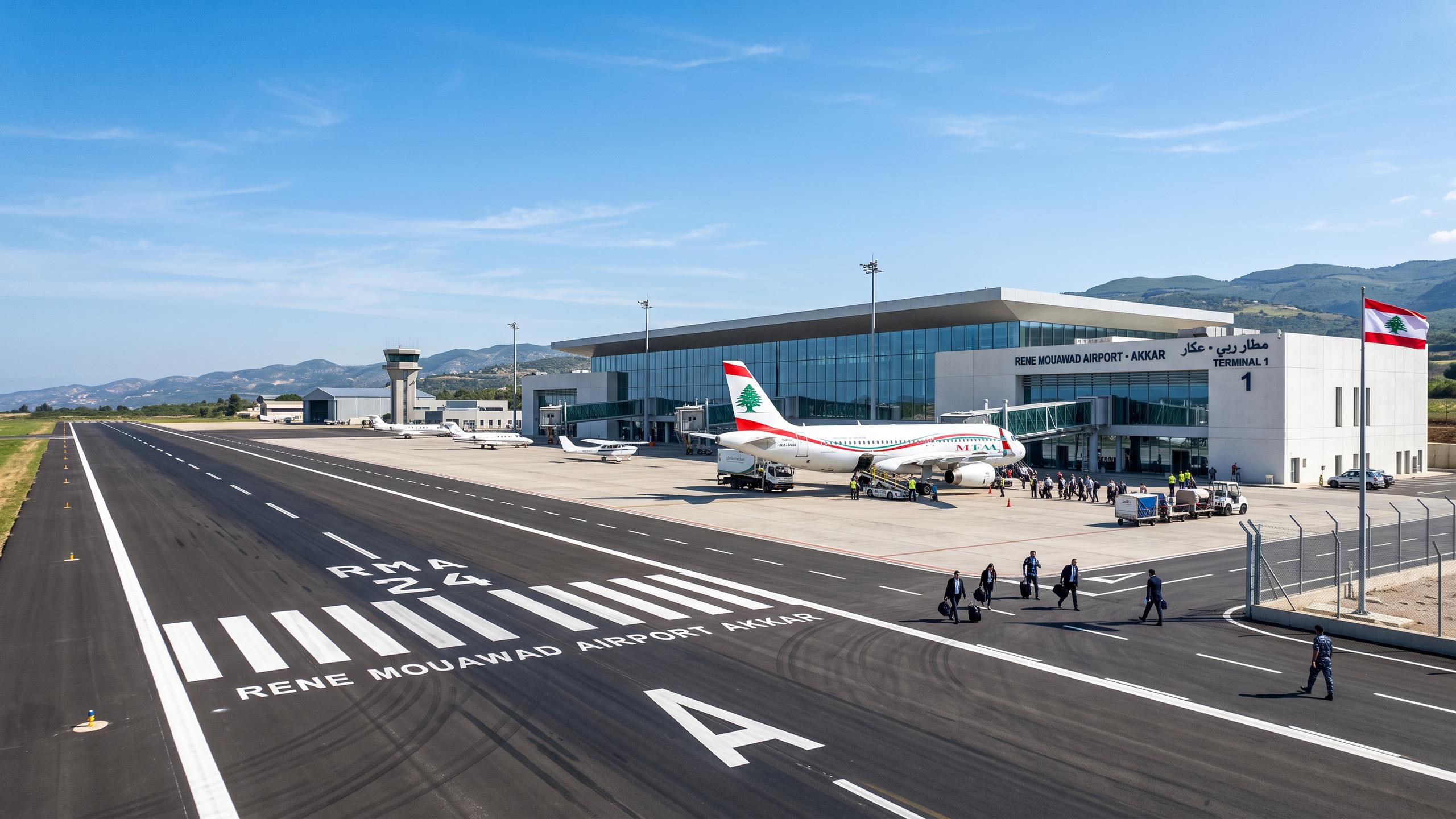
Lebanon's second airport, Rene Mouawad airport in Qlayaat, is scheduled to commence commercial flights on December 14, following construction delays. Initially slated for test flights on November 22, the
project aims to provide the war-devastated country with additional air travel options. Located in the northern Akkar region, approximately 6km from the Syrian border, the new airport is expected to stimulate economic growth in one of Lebanon's most underserved areas. Prime Minister Nawaf Salam and other officials conducted a test flight in June. The airport's opening is seen as a strategic move to offer alternatives to Rafik Hariri International Airport in Beirut, which has been susceptible to political and regional disputes, including blockades by Hezbollah supporters. Officials anticipate the Qlayaat airport will serve 115,000 passengers in its first year, potentially reaching 600,000 by the fourth year, with confirmed destinations including Istanbul, Mersin, and Dubai.
Why It's Important?
The establishment of Rene Mouawad airport holds significant importance for Lebanon, offering both economic revitalization and a degree of political resilience. Economically, the airport is projected to boost growth in the northern Akkar region, a historically neglected area. This development comes as Lebanon grapples with an economic crisis, with inflation expected to hit 17.5 percent and the World Bank predicting a 6.4 percent economic contraction in 2026. The airport could attract low-cost airlines and serve as a gateway for Syrian cities like Homs, Latakia, and Tartous, which lack modern airport facilities. Politically, the new airport provides an alternative to Rafik Hariri airport, which has been a 'chokepoint' vulnerable to disruptions by Hezbollah. While analysts like Bassel Doueik believe it won't entirely eliminate Hezbollah's strategic advantage, it could decrease it by offering the state more maneuverability during future conflicts or political tensions. Marcel Baloukji, a Lebanese political and security analyst, notes that the airport offers alternatives for foreign nationals and diplomatic missions if Beirut airport is shut down.
What's Next?
Commercial flights are set to begin on December 14, coinciding with the winter holiday season when many Lebanese diaspora members return home. The airport is expected to initially receive low-cost airlines, with Istanbul, Mersin, and Dubai confirmed as early destinations. More locations are likely to be announced soon. The success of Rene Mouawad airport in generating public revenue and efficiently managing operations could help rebuild citizens' trust in state institutions, according to Dania Arayssi, assistant director of the New Lines Institute for Strategy and Policy. This would demonstrate the government's ability to enforce authority and deliver services. The long-term impact will depend on the airport's capacity to attract more airlines and passengers, its ability to remain free from political interference, and its contribution to the economic recovery of the northern region and the country as a whole.
Beyond the Headlines
Beyond the immediate economic and political benefits, the opening of Rene Mouawad airport touches upon deeper implications for Lebanon's sovereignty and regional dynamics. The airport's location outside Hezbollah's traditional zone of influence could subtly shift internal power balances, even if it doesn't fundamentally alter Hezbollah's overall military and political strength. The project also highlights the ongoing struggle for state institutions to assert authority and provide essential services in a country marked by prolonged conflict and economic hardship. The fall of Bashar al-Assad's regime in Syria in December 2024, which had previously opposed the airport project, underscores how regional geopolitical shifts can create opportunities for domestic development. The airport's potential to serve Syrian cities also points to a future where Lebanon could play a more significant role in regional connectivity, fostering economic ties beyond its immediate borders.