
What's Happening?
The western section of Bangkok's Orange Line mass transit project has achieved a 38.5% completion rate. The Mass Rapid Transit Authority of Thailand (MRTA) is actively implementing advanced engineering
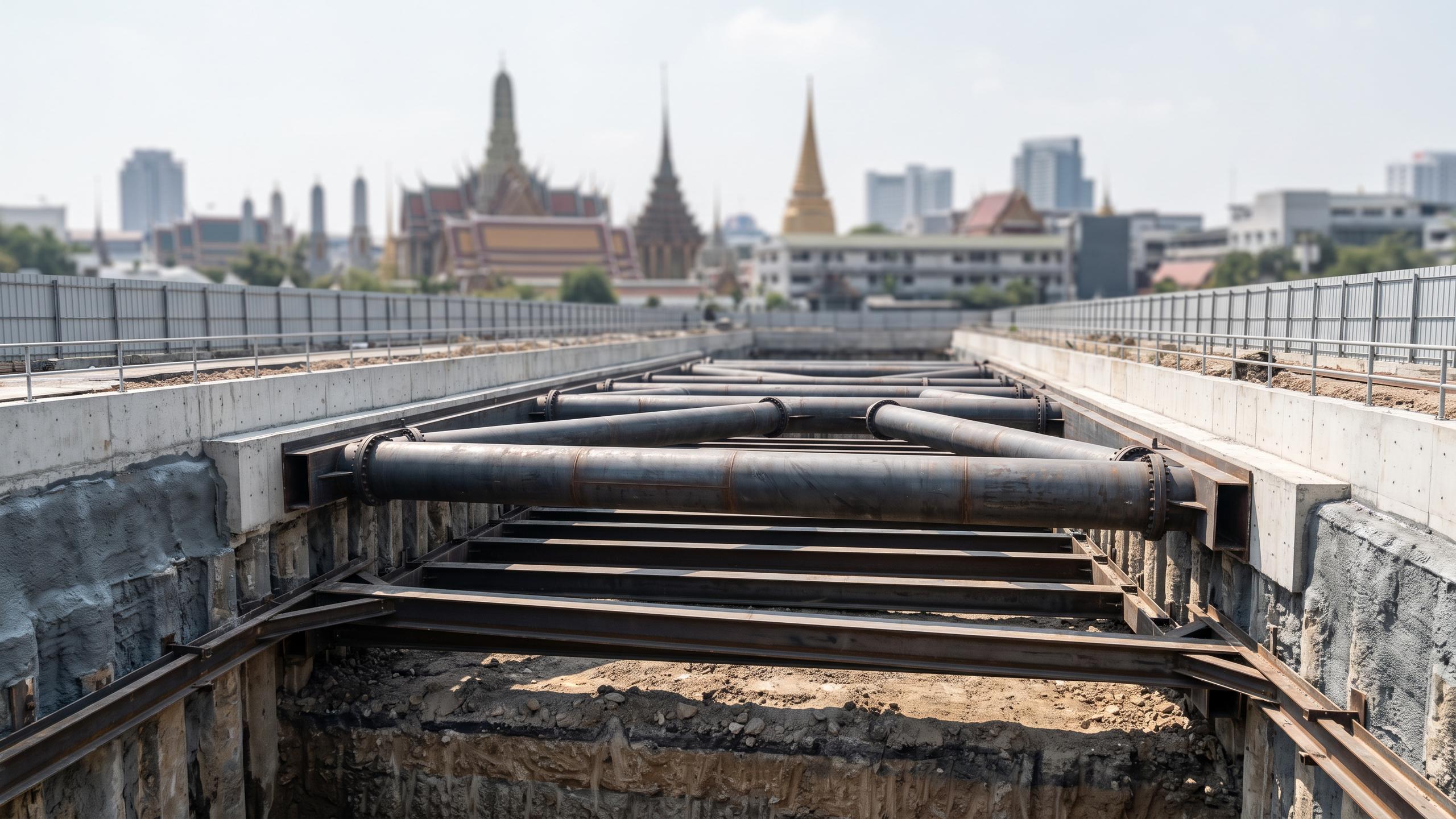
techniques, specifically the 'Pipe Roof' method, during the construction of the Democracy Monument Station. This technique is being utilized to mitigate the impact on traffic flow and preserve the historical area surrounding the monument. Thailand is investing significantly in various infrastructure projects, including high-speed rail, urban mass transit, airport expansion, and logistics, to bolster its regional competitiveness. The ongoing construction of the Orange Line is a key component of these broader efforts to enhance the country's transportation network and urban development.
Why It's Important?
The progress of the Orange Line's western section is crucial for Bangkok's urban development and the daily lives of its residents. The use of innovative construction methods like 'Pipe Roof' demonstrates a commitment to minimizing disruption, which is vital in a densely populated city. Efficient mass transit systems are essential for reducing traffic congestion, improving air quality, and enhancing accessibility for commuters. This infrastructure investment also signals Thailand's strategic focus on strengthening its position as a regional hub, attracting further investment and facilitating economic growth. The successful completion of such projects can lead to increased property values along the route, stimulate local businesses, and create employment opportunities, contributing to overall economic prosperity.
What's Next?
Construction on the western section of the Orange Line will continue, with ongoing efforts to maintain the current pace of development while adhering to methods that minimize public inconvenience. The MRTA will likely provide further updates on the project's progress and any new engineering techniques employed. As the project advances, there will be continued focus on integrating the new line with existing transportation networks to create a seamless travel experience for commuters. Future phases will involve testing and commissioning the new infrastructure, followed by the eventual opening of the line for public use, which will significantly alter Bangkok's urban landscape and transportation dynamics.
Beyond the Headlines
The development of Bangkok's mass transit system, exemplified by the Orange Line, reflects a broader global trend of megacities investing in sustainable and efficient urban infrastructure. Beyond the immediate benefits of reduced travel times and improved connectivity, these projects often have profound long-term impacts on urban planning, social equity, and environmental sustainability. The careful consideration of historical preservation, as seen with the Democracy Monument Station, highlights the complex balance between modernization and cultural heritage. Such large-scale infrastructure initiatives can also serve as catalysts for technological innovation in construction and urban management, setting precedents for future projects both domestically and internationally.