

What's Happening?
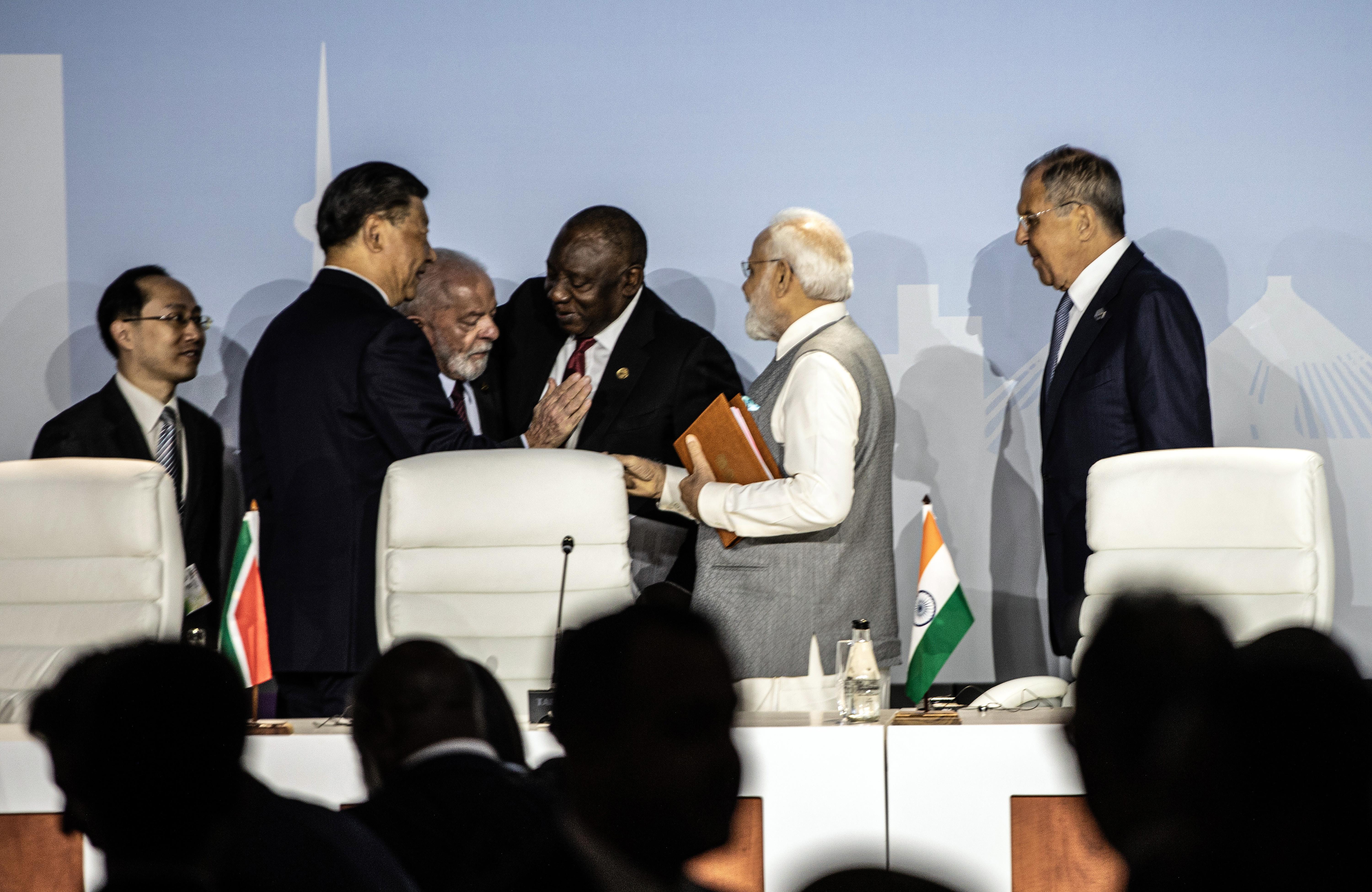
The Chinese foreign ministry has confirmed that a trilateral meeting between Chinese President Xi Jinping, U.S. President Donald Trump, and Russian President Vladimir Putin will take place this week in Shenzhen,
on the sidelines of the Asia-Pacific Economic Cooperation (APEC) summit. This marks the first such trilateral discussion among these leaders. According to Chinese foreign ministry spokesperson Mao Ning, the leaders will 'exchange views in-depth on safeguarding world peace and promoting strategic stability in major-power relations,' describing the meeting as being of 'groundbreaking significance.' President Trump stated he would discuss denuclearization, the war in Iran, economics, trade, and Ukraine. There is also speculation that North Korean leader Kim Jong Un might attend, with President Trump indicating a possible meeting.
Why It's Important?
This unprecedented trilateral meeting among the leaders of China, the United States, and Russia holds immense importance for global stability and international relations. It provides a direct channel for dialogue among the world's three largest nuclear powers on critical issues such as denuclearization, regional conflicts, and economic cooperation. For China, hosting this meeting solidifies its role as a significant global power broker. For the U.S., it offers an opportunity to engage directly with both Russia and China on pressing geopolitical challenges, including the war in Ukraine and tensions in the Middle East. The discussions could potentially lead to de-escalation of conflicts, new diplomatic initiatives, or at least a clearer understanding of each nation's positions. However, analysts caution that the symbolism of the meeting might outweigh its substantive outcomes, given the differing priorities of the three leaders.
What's Next?
The trilateral meeting is scheduled to take place on Thursday. The immediate focus will be on the specific agenda items discussed and any joint statements or agreements that emerge. President Trump's stated intention to discuss Ukraine, despite earlier indications from U.S. officials that it might not be a primary topic, suggests potential for contentious discussions. The possibility of North Korean leader Kim Jong Un's attendance and a meeting with President Trump adds another layer of complexity and potential for significant diplomatic developments. The outcomes of these high-level interactions could influence global security policies, trade relations, and the trajectory of ongoing international conflicts. Stakeholders will be closely watching for any signs of progress on denuclearization, de-escalation in conflict zones, or shifts in major power dynamics.
Beyond the Headlines
The very occurrence of this trilateral meeting, particularly with China as the convener, signifies a potential recalibration of global power dynamics. It suggests a move towards a more multipolar world where major decisions are increasingly shaped by a complex interplay of these three powers, rather than a unipolar or bipolar framework. The Chinese emphasis on 'safeguarding world peace' and 'strategic stability' highlights a desire to project an image of responsible global leadership, even as it navigates its own geopolitical interests. The ethical implications include the challenge of ensuring that such high-level discussions genuinely serve the interests of global peace and stability, rather than merely reinforcing the power of a few nations. There's also the risk that discussions on 'redistribution of influence,' as feared by Ukrainian President Volodymyr Zelenskyy, could undermine the sovereignty of smaller nations and established international norms, reminiscent of historical power-sharing agreements.