
What's Happening?
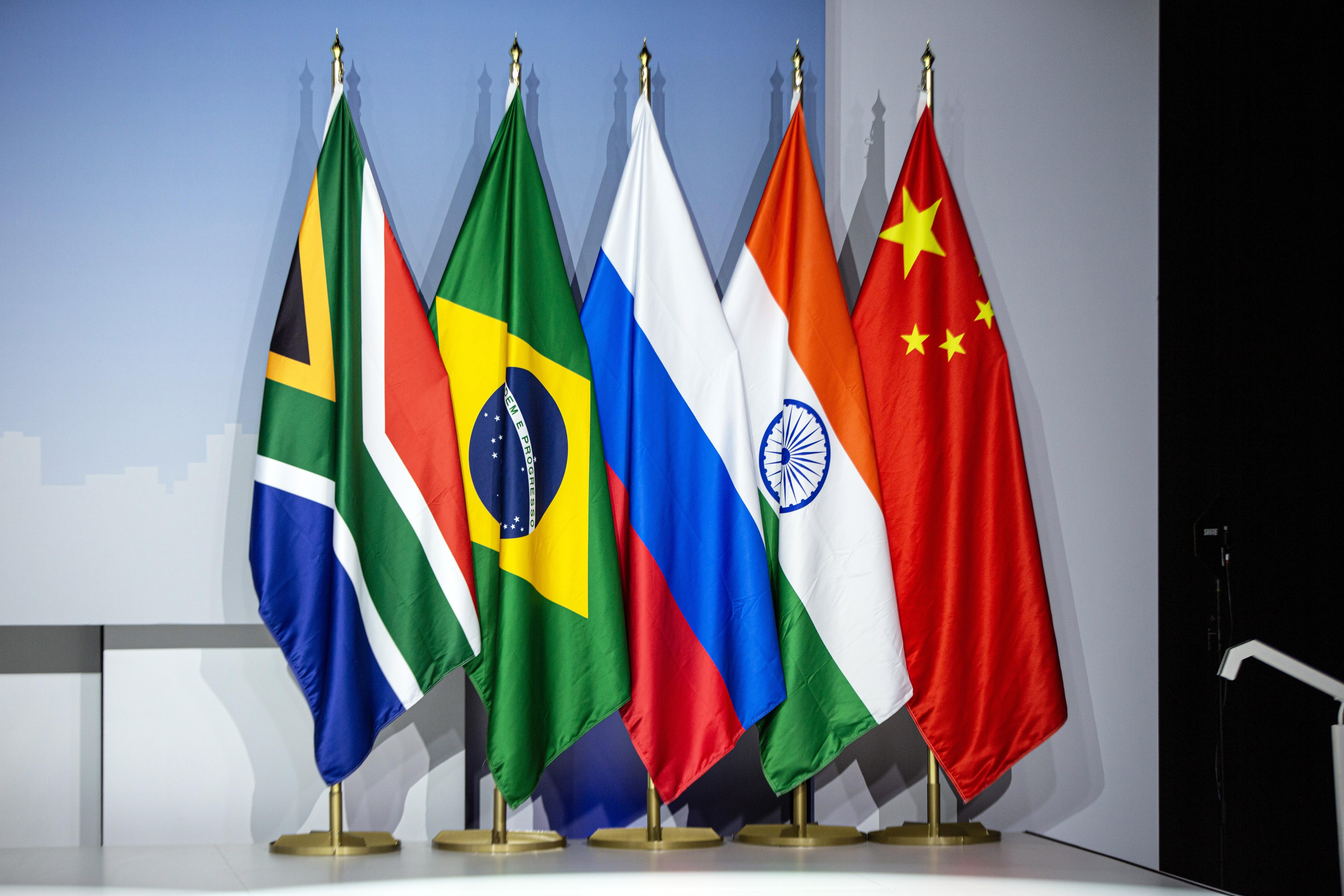
China is actively communicating with relevant parties concerning a possible trilateral summit involving the leaders of China, Russia, and the United States. This development was confirmed by Chinese Foreign
Ministry spokesman Guo Jiakun on Tuesday. Guo addressed inquiries about a Wall Street Journal report that highlighted differences regarding the proposed summit's format and agenda. While acknowledging the ongoing discussions, Guo stated that he currently had no specific information to provide on the issues raised in the report. The Chinese Foreign Ministry's engagement suggests a diplomatic effort to facilitate high-level talks between these three global powers, despite reported complexities in the planning stages.
Why It's Important?
The potential for a trilateral summit between China, Russia, and the United States carries significant implications for global geopolitics and U.S. foreign policy. Such a meeting could serve as a crucial platform for addressing a range of international issues, from economic stability to regional conflicts. For the U.S., engaging in direct dialogue with both China and Russia simultaneously could offer opportunities to de-escalate tensions, find common ground on certain challenges, or at least clarify positions on contentious matters. Conversely, the complexities of coordinating such a summit, as indicated by reports of differing views on format and agenda, underscore the deep-seated geopolitical rivalries and divergent interests among these nations. The outcome of these communications, whether leading to a summit or not, will likely influence future diplomatic strategies and international relations.
What's Next?
The immediate next steps involve continued communication and negotiation among the involved parties to resolve differences regarding the summit's format and agenda. The Chinese Foreign Ministry's statement indicates that these discussions are ongoing, but no concrete details or dates have been announced. Future developments will depend on the willingness of all three nations to compromise and find a mutually agreeable framework for the talks. The international community will be closely watching for any official announcements or further reports on the progress of these diplomatic efforts, as a successful trilateral summit could reshape global diplomatic landscapes, while a failure to convene could signal persistent geopolitical divides.
Beyond the Headlines
Beyond the immediate diplomatic maneuvering, the very notion of a trilateral summit involving China, Russia, and the U.S. reflects a shifting global power dynamic. It highlights the increasing multipolarity of international relations, where major decisions often require the input and cooperation (or at least acknowledgment) of multiple influential states. The reported difficulties in agreeing on a format and agenda also reveal the underlying mistrust and strategic competition that characterize the relationships between these powers. This situation underscores the challenge of forging consensus in a complex international environment, where national interests often diverge significantly. The pursuit of such a summit, even with its inherent difficulties, signifies an ongoing search for mechanisms to manage global challenges and prevent further deterioration of international stability.